Table of Contents
MDF vs HDF: Which Board Should Furniture Buyers Specify?
MDF is generally a practical starting point for routed doors, furniture panels and decorative interiors. HDF is often selected for thin components such as cabinet backs, drawer bottoms and specialist flooring substrates. The better purchase depends on the component—not density alone.
For importers, wholesalers and project buyers, choosing between MDF and HDF affects machining, finishing, shipment weight and production cost. Ordering the denser board without checking the application can add expense without solving a performance problem.
This guide explains the differences and the specifications worth confirming before a bulk order.
What Is the Difference Between MDF and HDF?
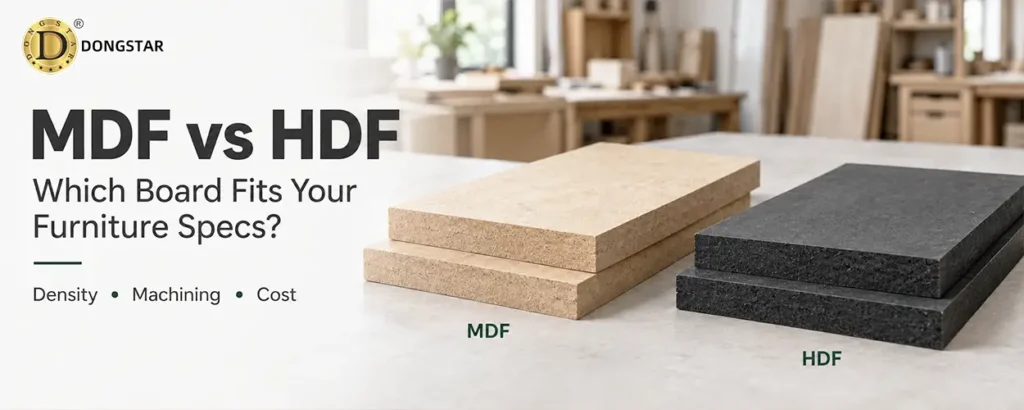
MDF means medium-density fiberboard. HDF means high-density fiberboard. Both are manufactured from refined wood fibers bonded with resin under heat and pressure.
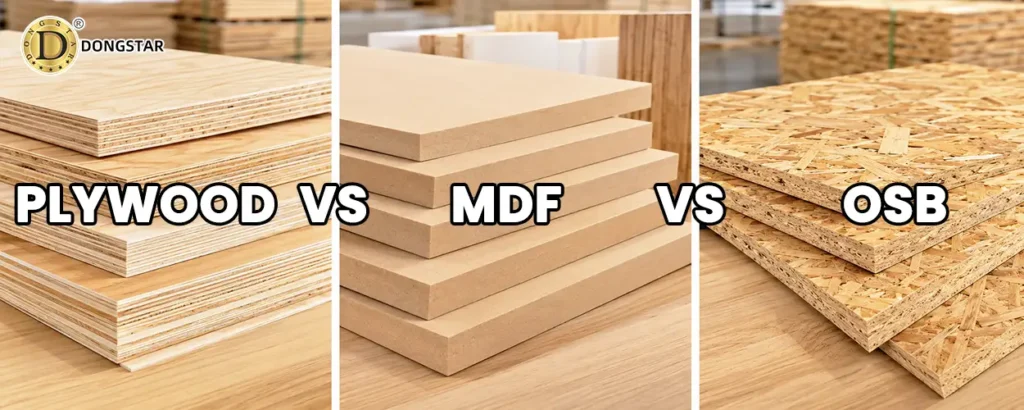
HDF belongs to the same broad family of dry-process fiberboards. The European Panel Federation describes it as high-density MDF, rather than an entirely different material.
Density is the main distinction, but commercial product names do not tell the whole story. Resin formulation, density distribution, thickness and surface preparation also influence performance.
| Buying Consideration | MDF | HDF |
|---|---|---|
| Typical purchasing focus | Machining, finishing and general furniture components | Thin panels requiring specified density and performance |
| Density reference | Commonly around 650–800 kg/m³ | Commonly above 800 kg/m³ |
| Thickness availability | Broad range, including thin and thick panels | Frequently supplied in thin formats; availability varies |
| Common applications | Cabinet fronts, furniture panels, mouldings and interior fitments | Furniture backs, drawer bottoms, door components and flooring substrates |
| Finishing options | Paint, veneer, melamine, HPL and foil, depending on grade | Paint, lacquer, veneer and laminates, depending on grade |
| Moisture resistance | Must be specified separately | Must be specified separately |
| Main purchasing check | Machining quality and suitability for the component | Required properties at the actual supplied thickness |
The density figures are industry reference points, not universal acceptance limits. Equipment manufacturer Dieffenbacher describes MDF production at 650–800 kg/m³ and HDF above 800 kg/m³. Always use the supplier’s product-specific technical data for purchasing.
1. Is HDF Stronger Than MDF?
Higher density can improve hardness and certain mechanical properties. However, “HDF is stronger” is not a complete specification.
A buyer may need resistance to bending, screw withdrawal, surface indentation or internal separation. These are different properties, and one density figure cannot replace their test results.
Thickness also matters. A thin HDF panel should not replace a thicker MDF shelf simply because its density is higher.
For a proposed substitution, compare:
- Bending strength and stiffness.
- Internal bond strength.
- Screw withdrawal, where relevant.
- Thickness swelling under the specified test conditions.
- Performance of the finished component.
Approve the material in its intended construction, including supports, joints and hardware.
2. MDF vs HDF for Furniture: Which Fits Each Component?
Painted cabinet doors and routed fronts
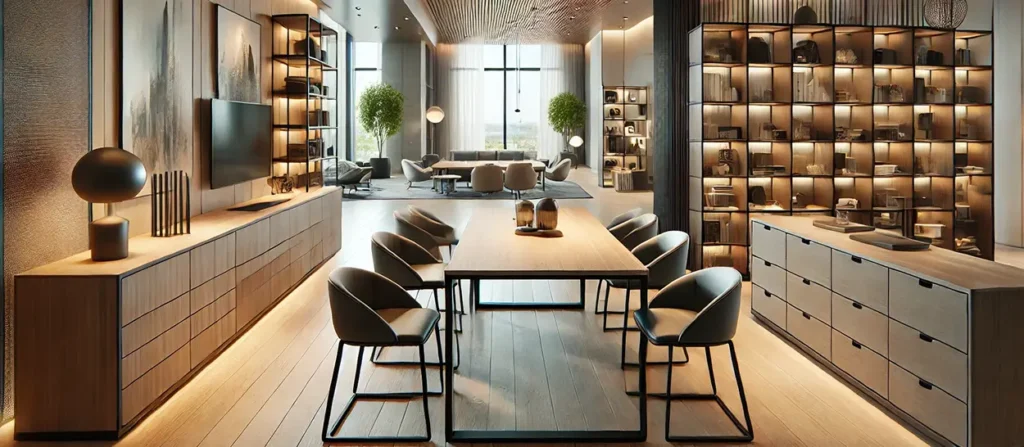
MDF is widely used for profiled furniture components because its fine fiber structure supports machining and decorative finishing. The European Panel Federation identifies doors, drawer fronts and moulded components among established applications.
For MDF cabinet doors, request a routed and finished sample. Inspect edge fuzzing, coating absorption, profile detail and hinge drilling.
High-density grades may also suit demanding profiles. Their value should be demonstrated through machining trials and finished quality rather than the HDF label alone.
Cabinet backs and drawer bottoms
Thin HDF is worth evaluating where the design requires a compact panel with a smooth surface. Published HDF applications include cupboard backs and other furniture components.
Thin MDF can serve similar functions. Compare the two at the required thickness, using the actual fixing method and load.
For drawer bottoms, check the unsupported span, groove engagement and expected contents. For cabinet backs, assess fixing strength, squareness and the back panel’s contribution to the assembled cabinet.
Shelves and full-size furniture panels
Start with panel thickness, span and loading requirements. Suitable MDF may meet the specification without the weight or cost of a denser grade.
Do not select shelving from density alone. Long-term sag and joint performance require attention even when the board looks rigid during initial assembly.
Laminate flooring substrates
HDF is commonly used as a carrier board for laminate flooring.
However, ordinary furniture-grade HDF is not automatically flooring-grade material. Confirm the required swelling performance, dimensional tolerances and suitability for the intended flooring system.
3. Is HDF More Water-Resistant Than MDF?
Higher density does not make a board waterproof. Moisture performance depends on its formulation, classification, protective finish and installation conditions.
A standard HDF product can be intended specifically for dry interiors. For example, Kronospan describes its standard HDF as a non-load-bearing panel for interior use in dry conditions.
For humid environments, request a grade explicitly designed for the exposure. The European Panel Federation distinguishes moisture-resistant, exterior and high-density grades as separate product developments.
Before ordering moisture-resistant MDF or HDF, confirm:
- The declared service conditions.
- Thickness-swelling results and test method.
- Protection required at cut edges and drilled holes.
- Whether the finished assembly may encounter standing water.
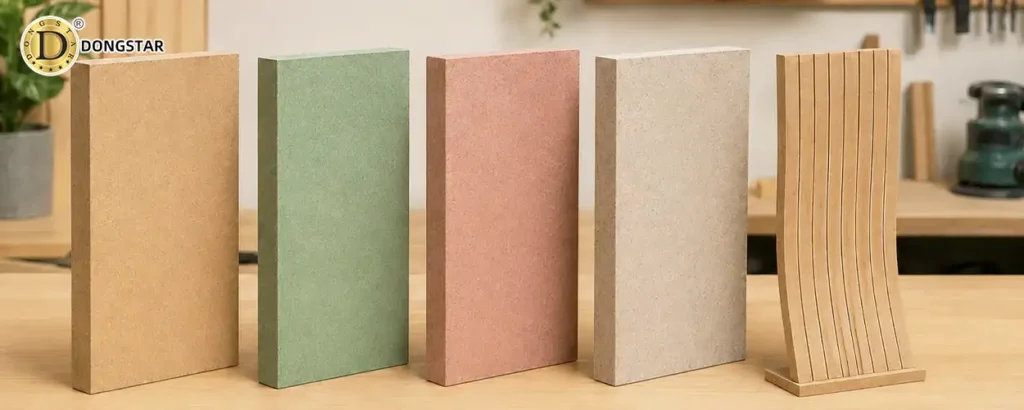
Color is not proof of performance. Green, black or red pigmentation should be checked against the technical specification.
4. Which Board Produces a Better Finish?
Both MDF and HDF can provide suitable substrates for decorative surfaces. The right choice depends on the finishing process.
For painted components, inspect both the face and machined edges. A smooth face does not guarantee that a routed profile will require little preparation.
For melamine-faced MDF, veneered panels or laminated HDF, check:
| Production Check | Why It Matters |
|---|---|
| Thickness consistency | Supports machining accuracy and repeatable assembly |
| Surface preparation | Influences coating and adhesive performance |
| Edge condition | Affects sealing, painting and edge banding |
| Balanced panel construction | Helps control distortion after surfacing |
| Finished sample approval | Reveals defects that raw-board inspection can miss |
Request samples processed with your intended tools, adhesive and finish. An unfinished hand sample cannot demonstrate production yield.
5. MDF vs HDF Cost: Compare the Finished Component
HDF may carry a higher price for comparable dimensions and specifications, but there is no reliable universal premium.
Compare quotations using the same:
- Thickness and sheet dimensions.
- Surface finish and grade.
- Performance and emission requirements.
- Quantity, packing and delivery terms.
For importers, shipment weight deserves particular attention.
Estimated sheet weight = length × width × thickness × density
Using meters and kg/m³, an illustrative 1220 × 2440 × 3mm sheet weighs approximately:
| Assumed Density | Calculated Sheet Weight |
|---|---|
| 750 kg/m³ | 6.70 kg |
| 900 kg/m³ | 8.04 kg |
These are calculated examples, not Dongstar product specifications. Coatings, moisture and packaging affect actual shipment weight.
A useful purchasing measure is cost per accepted finished component. Include material, machining, finishing, waste, freight and rework. A more expensive board is justified when its production or performance advantage exceeds the added cost.
6. What Should Bulk Buyers Include in an MDF/HDF RFQ?
Avoid sending only “HDF board, best price.” A clear RFQ produces quotations that are easier to compare.
Specify:
- Application: cabinet door, back panel, drawer bottom or another component.
- Dimensions: sheet size, thickness and permitted tolerances.
- Grade: required density range and relevant performance properties.
- Surface: raw, sanded, painted, melamine-faced, veneered or laminated.
- Environment: dry interior, humid interior or another defined exposure.
- Documentation: destination-market requirements and applicable test reports.
- Inspection: agreed sampling, defects and acceptance criteria.
- Delivery: quantity, packing, destination and Incoterm.
Keep an approved production-representative sample. For repeat orders, compare incoming shipments against the written specification as well as the sample.
FAQ
No. HDF may suit thin components or applications requiring particular mechanical properties. MDF can be a more economical choice when it already meets machining, finishing and performance requirements.
Potentially, if the required thickness and grade are available. Validate routing, finishing, hardware fixing, weight and flatness before approving the change.
No. Color does not establish density or classification. Request the product’s declared density, grade and test data.
Yes. Suitable grades can accept decorative surfaces. Confirm surface preparation, adhesive compatibility and the finished panel’s balance with the supplier.
Approve a component made from the proposed production material. Review its machining, finish, fixing and application performance alongside the technical documentation.
Source MDF and HDF to Your Furniture Specification
Dongstar’s MDF and HDF board range includes raw and specialty panels with decorative surface options. Its published range covers multiple thicknesses and densities; confirm availability for the exact grade and finish required.
Send your component drawings, thickness, finish, destination and estimated quantity to request specifications and samples. Compare suitable options before committing to a bulk order.