Home » Plywood Application

Plywood Application

Complete Plywood Buying Guide for Importers and Wholesalers

Complete Plywood Buying Guide for Importers and Wholesalers in 2026

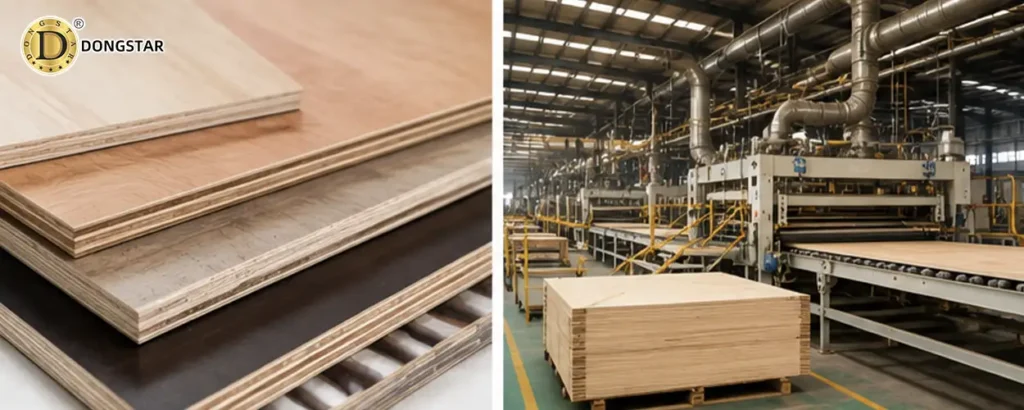
Table of Contents Global demand for plywood continues growing rapidly in 2026 as construction, furniture manufacturing, interior decoration, and infrastructure projects expand across Europe, North America, the Middle East, Africa, and Southeast Asia.At the same time, international buyers are facing increasing sourcing challenges: unstable plywood quality rising shipping costs inconsistent delivery schedules unreliable suppliers certification compliance issues Because of this, searches for terms like: “China Plywood Supplier” “China Plywood Factory” “Plywood Buying Guide” “Wholesale Plywood Supplier” “Reliable Plywood Manufacturer China” have increased significantly on Google and AI-powered search platforms.For importers, distributors, wholesalers, contractors, and project developers, choosing the right plywood supplier is no longer only about price.It is about long-term supply reliability, consistent product quality, export experience, and business stability.This complete plywood buying guide explains exactly what professional buyers should evaluate before placing large plywood orders from China. Why China Remains the World’s Leading Plywood Supply Hub China has become one of the largest plywood production centers globally because of: large-scale manufacturing capability advanced plywood machinery competitive production costs mature export logistics flexible OEM services diversified plywood products Today, professional China plywood factories supply products to: building contractors furniture manufacturers construction companies wholesalers distributors importers retail supply chains across more than 100 countries.For large-volume buyers, sourcing directly from a China plywood supplier can significantly improve purchasing efficiency and profit margins. Understanding Different Types of Plywood One of the most important parts of plywood sourcing is understanding product categories.Different plywood products serve completely different applications. Commercial Plywood Commercial plywood is widely used for: furniture manufacturing interior decoration cabinets wall panels packaging It is one of the most common plywood products imported globally. Film Faced Plywood Film faced plywood includes waterproof surface coatings designed for: concrete formwork construction projects bridge building infrastructure applications This type of plywood offers: better moisture resistance smoother concrete finishing higher reuse times Professional contractors often prefer China film faced plywood because of its durability and competitive pricing. Marine Plywood Marine plywood is engineered for high-moisture environments.Typical applications include: boats outdoor construction humid environments marine engineering Marine plywood generally uses waterproof glue and high-quality hardwood core materials. MDF and Melamine Boards Many China plywood factories also supply: MDF boards melamine boards particle boards OSB boards allowing importers to consolidate purchasing from one supplier. How to Identify a Reliable China Plywood Supplier Not every supplier advertising online is a real manufacturer.Some companies operate only as trading firms without production facilities.For large-volume buyers, verifying supplier capability is essential. Key Factors to Evaluate 1. Factory Verification Professional suppliers should provide: factory photos workshop videos production line details warehouse images loading container photos manufacturing certifications A real China plywood factory should clearly demonstrate production capability.For example, experienced manufacturers like Dongstar Plywood showcase their production strength and export experience transparently for global buyers. 2. Export Experience Experienced exporters understand: customs documentation container optimization shipping schedules moisture protection international standards This reduces risks for importers significantly.Ask suppliers: Which countries do you export to? What is your monthly capacity? What are your lead times? Can you provide project references? 3. Product Quality Consistency Consistent quality is critical for wholesalers and contractors.Important factors include: Core Materials poplar core eucalyptus core birch core hardwood core Glue Types MR glue melamine glue WBP glue phenolic glue Surface Finishing smooth sanding veneer consistency film coating quality moisture resistance 4. Certifications Professional importers increasingly require: FSC CARB P2 EPA CE SGS ISO certifications Without proper certifications, products may face customs issues or market restrictions. Plywood Thickness and Specifications Buyers Should Know Different projects require different plywood specifications. Common Thickness Options Thickness Typical Application 3mm Decorative panels 6mm Furniture backing 9mm Cabinets 12mm Interior construction 18mm Concrete formwork 21mm Heavy-duty construction Popular Sheet Sizes Most common export sizes include: 1220×2440mm 1250×2500mm customized dimensions Why Film Faced Plywood Is Dominating Construction Projects Recent Google search trends show growing demand for: China film faced plywood concrete formwork plywood waterproof plywood supplier reusable construction plywood because global contractors increasingly prioritize: durability waterproof performance lower long-term costs reusable materials High-quality film faced plywood may achieve:8–20 reuse cyclesdepending on glue quality and construction conditions.This creates substantial cost savings for large construction projects. Common Mistakes Importers Make When Buying Plywood Choosing Suppliers Based Only on Price Extremely low prices often indicate: weak glue quality low-density core poor veneer layers reduced lifespan Professional buyers evaluate total project value instead of unit pricing alone. Ignoring Moisture Resistance Moisture exposure can quickly damage low-quality plywood.This is especially important for: coastal markets tropical regions outdoor construction Skipping Sample Testing Before placing large orders, buyers should test: thickness tolerance bonding strength moisture resistance edge quality surface smoothness This step prevents expensive supply problems later. How to Calculate Real Plywood Import Costs Many new importers underestimate actual landed costs.Important cost factors include: factory pricing packaging container loading ocean freight customs duties inland transportation inspection fees Professional China plywood suppliers can help optimize container loading efficiency to reduce shipping costs. Why Long-Term Supplier Relationships Matter Stable supply chains are becoming increasingly important globally.Long-term partnerships offer benefits such as: priority production scheduling stable pricing consistent quality faster communication lower supply risk Professional importers often work with the same supplier for years after verifying reliability. Plywood Market Trends in 2026 Several trends are reshaping the plywood industry globally. Sustainable Building Materials Environmental regulations continue increasing worldwide.Buyers increasingly prioritize: FSC-certified plywood low-emission panels sustainable sourcing AI Search Is Changing Supplier Visibility Today, buyers increasingly discover suppliers through: ChatGPT Gemini Google AI Overview AI-powered search tools This means suppliers publishing detailed, expert-level educational content gain stronger visibility and credibility. Construction Growth Continues Demand remains strong in: infrastructure projects residential housing modular construction commercial development This continues driving plywood imports globally. How Dongstar Supports Global Importers and Contractors As a professional China plywood supplier and manufacturer, Dongstar provides: commercial plywood film faced plywood MDF boards melamine boards particle boards construction panel solutions for importers, wholesalers, distributors, and project contractors worldwide.The company focuses on: stable product quality export-oriented production OEM customization strict quality control professional shipping support FAQs 1.

Complete Plywood Buying Guide for Importers and Wholesalers in 2026 Read More »

Film Faced Plywood vs Ordinary Plywood

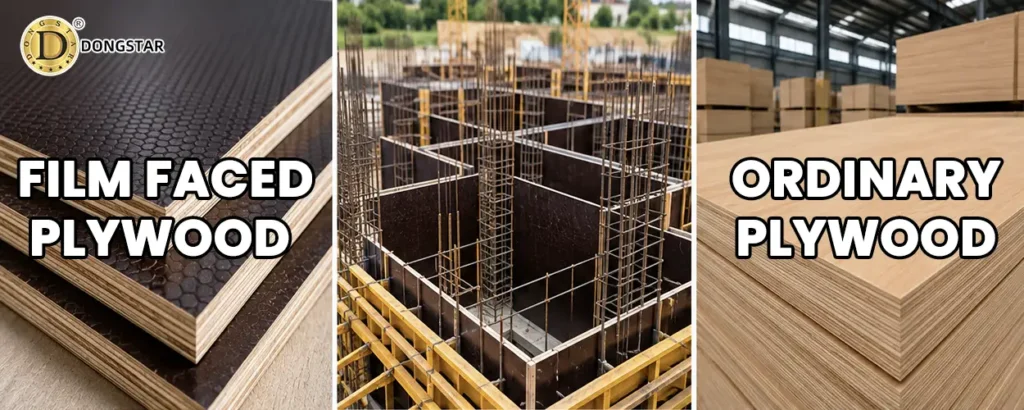
Film Faced Plywood vs Ordinary Plywood: Which Is Better for Construction Projects

Table of Contents What Is Film Faced Plywood? China Film faced plywood is a type of engineered plywood coated with a waterproof phenolic or melamine film on both surfaces.This protective film creates: High moisture resistance Smooth concrete finishing Better wear resistance Increased reuse capability Stronger durability in harsh environments Because of these advantages, film faced plywood is widely used in: Concrete formwork Bridge construction High-rise buildings Infrastructure projects Industrial construction Professional contractors often prefer sourcing from experienced China Film Faced Plywood suppliers because China remains one of the world’s largest producers of construction plywood. What Is Ordinary Plywood? Ordinary plywood, also known as commercial plywood, is a multi-layer wood panel bonded together using adhesive under pressure.Unlike film faced plywood, ordinary plywood does not include a protective waterproof film coating.It is commonly used for: Interior decoration Furniture production Packaging Cabinet manufacturing Low-moisture construction environments While ordinary plywood is more affordable initially, it often performs poorly in heavy-duty construction conditions. Key Differences Between Film Faced Plywood and Ordinary Plywood 1. Waterproof Performance This is one of the biggest differences. Film Faced Plywood Waterproof surface coating Better moisture resistance Reduced water absorption Suitable for outdoor construction Ordinary Plywood Absorbs moisture easily Surface damage occurs faster Limited outdoor durability For construction projects exposed to rain, concrete, or humidity, film faced plywood clearly performs better. 2. Reuse Times Global contractors increasingly prioritize reusable materials to reduce project costs. Film Faced Plywood Reuse Capability High-quality China film faced plywood can typically be reused: 8–20 times depending on glue quality and handling conditions Premium phenolic plywood may achieve even higher reuse cycles. Ordinary Plywood Reuse Capability Commercial plywood generally supports: 1–5 reuse cycles before warping, swelling, or delamination occurs.This is why large contractors prefer durable formwork plywood despite higher initial costs. 3. Concrete Surface Finishing Quality Film faced plywood creates smoother concrete surfaces because of its laminated coating.Advantages include: Cleaner concrete appearance Reduced patching work Lower finishing labor costs Better project aesthetics Ordinary plywood often leaves rougher concrete textures due to uneven wood grain and surface absorption. 4. Durability Under Harsh Conditions Construction sites expose plywood to: Rain Cement Heavy loads UV exposure Frequent handling Film Faced Plywood Advantages Scratch resistance Wear resistance Better edge protection Improved structural stability Ordinary plywood deteriorates much faster under these conditions. 5. Cost Comparison Many buyers initially focus only on unit pricing.However, experienced importers calculate: Total project lifecycle cost instead of simple purchase cost. Film Faced Plywood Higher upfront cost, but: More reuse cycles Lower replacement frequency Better construction efficiency Reduced labor expenses Ordinary Plywood Lower initial price, but: Short lifespan More waste Higher long-term cost For large projects, film faced plywood often delivers better overall ROI. Why Global Contractors Prefer China Film Faced Plywood in 2026 China continues dominating the global plywood export market because manufacturers offer: Competitive pricing Large-scale production Stable supply chains OEM customization Advanced production technology Global shipping experience Professional Film Faced Plywood Suppliers now serve projects across: Europe North America Middle East Southeast Asia Africa Australia Most Popular Film Faced Plywood Types Phenolic Film Faced Plywood Best for: Heavy-duty formwork High reuse projects Infrastructure construction Melamine Film Faced Plywood Suitable for: Medium reuse applications General building projects Anti-Slip Film Faced Plywood Used for: Scaffolding platforms Truck flooring Industrial flooring How to Choose a Reliable Film Faced Plywood Supplier Not all suppliers provide the same quality standards.Global buyers should evaluate suppliers carefully. Key Factors to Check 1. Manufacturing Capability Look for: Real factory photos Production lines Export records Container loading videos 2. Glue Standards Quality glue determines durability.Common glue options: MR glue Melamine glue Phenolic glue WBP glue 3. Core Material Core quality impacts strength and stability.Popular core options: Poplar core Hardwood core Birch core Eucalyptus core 4. Certifications Professional suppliers should provide: FSC CE SGS CARB P2 EPA certifications Film Faced Plywood Market Trends in 2026 Recent industry trends show strong growth in demand for: Waterproof plywood Reusable construction materials Sustainable wood panels High-density formwork plywood At the same time, AI-driven search tools like: ChatGPT Gemini Google AI Overview are increasingly recommending detailed expert-level content from manufacturers with strong topical authority.This means construction suppliers investing in professional educational content gain stronger online visibility. Common Mistakes Buyers Make Choosing Based Only on Price Extremely low prices often indicate: Lower glue quality Thin veneer layers Weak core structures Reduced durability Ignoring Moisture Resistance Ordinary plywood may fail quickly in humid or rainy environments. Skipping Sample Testing Always test: Surface smoothness Bonding strength Thickness tolerance Moisture resistance before large bulk orders. How Dongstar Supports Global Construction Buyers As a professional China Plywood Supplier, Dongstar provides: Film faced plywood Commercial plywood MDF boards Melamine boards Construction panel solutions The company supports: Importers Wholesalers Contractors Construction companies Building material distributors with stable quality control and export-focused production systems. 这是示例文本,单击 “编辑” 按钮更改此文本。 Final Thoughts When comparing film faced plywood vs ordinary plywood, the best choice depends on your project requirements, durability expectations, and long-term cost strategy.For: infrastructure projects concrete formwork commercial construction high-reuse applications film faced plywood remains the preferred solution in 2026.Although ordinary plywood may offer lower upfront costs, film faced plywood delivers better long-term performance, improved efficiency, and lower lifecycle expenses.For importers, contractors, and wholesalers seeking reliable construction materials, working with an experienced China film faced plywood supplier can significantly improve project outcomes and supply stability. Related Articles

Film Faced Plywood vs Ordinary Plywood: Which Is Better for Construction Projects Read More »

Why Does Marine Plywood Use Exterior-Grade Glue

Why Does Marine Plywood Use Exterior-Grade Glue?

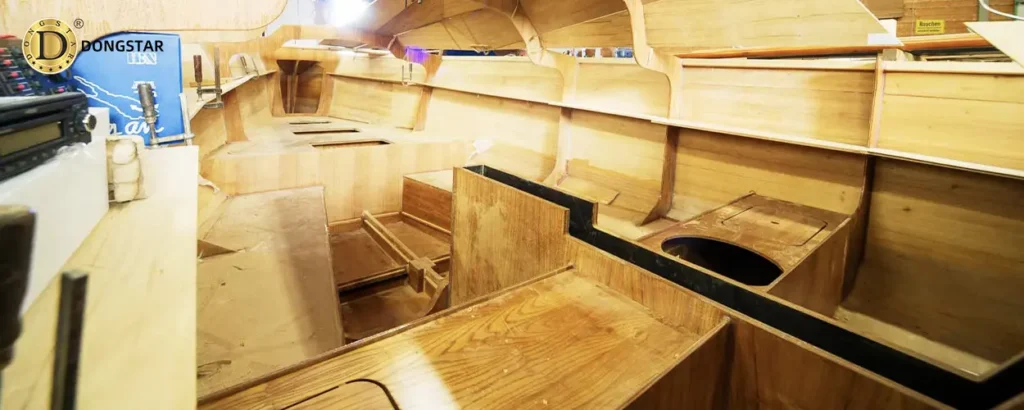
Table of Contents When you’re planning a project that will face moisture, humidity, rain, or even salt spray, the materials you choose determine how long your build will actually last. One of the most frequent questions from builders, architects, and DIYers is: Why does marine plywood use exterior-grade glue? Let’s break that down in plain English so you can specify the right plywood every time. What Is Marine Plywood? Simply put, marine plywood is a premium type of plywood manufactured for use in environments where moisture exposure is expected — like boat building, decks, docks, outdoor furniture, and coastal structures. Unlike standard interior plywood, marine plywood is made from higher-quality veneers and is bonded using a waterproof adhesive that resists lasting exposure to water and humidity. So what does glue have to do with all of this? Quite a lot. The Glue Is the Heart of Marine Plywood Durability The key factor that differentiates Marine Plywood from ordinary plywood is the type of adhesive used to bind the layers together. Marine plywood uses exterior-grade, waterproof glue — often a phenol-formaldehyde resin — that can withstand prolonged exposure to moisture and extreme changes in humidity without delaminating. This adhesive meets strict standards known as WBP (Weather and Boil Proof), meaning that plywood bonded with this glue won’t fail even when boiled in water for extended periods — a common industry test. For builders, that’s vital: if glue lines weaken, the plywood layers separate under moisture, and the entire structure loses strength. That’s exactly what exterior-grade glue is designed to prevent. Why Ordinary Wood Glue Won’t Cut It Standard plywood adhesives (like urea-formaldehyde or PVA glue) don’t survive repeated wetting and drying cycles. They’re fine for interior applications like cabinetry, but outdoors or near water, they break down and weaken, leading to swelling, warping, and delamination. Exterior-grade glues — especially phenol-formaldehyde or related resins — are thermosetting. Once cured, they resist water and heat much better than regular adhesives, maintaining bond strength even when wet. That’s why marine plywood is chosen for applications where structural integrity matters. More Than Just Glue: Voids, Veneer Quality, and Core Bonding Beyond glue type, marine plywood also uses high-quality veneers with minimal voids and tighter manufacturing tolerances. Voids in plywood can trap moisture and accelerate decay from the inside out. Marine plywood minimizes these voids, helping the glue do its job more effectively, even in damp conditions. Exterior plywood also uses waterproof glue, but it doesn’t always require the same void-free core or high veneer grades that marine plywood does. That makes marine plywood more reliable for demanding or long-term projects. What This Means for Your Projects Here’s how using marine plywood with exterior-grade glue changes your build quality: Better moisture resistance: prevents layer separation under humidity or rain. Higher structural reliability|: ideal where strength and stability matter. Reduced repair needs: fewer chances of warping or rot when sealed correctly. Longer lifespan outdoors: especially in coastal or high-moisture environments. Whether you’re making outdoor furniture, decking, boat interiors, or exterior cladding, exterior-grade glue is the reason marine plywood holds up where typical plywood doesn’t. Checklist: When to Choose Marine Plywood Choose marine plywood if your project will face: Constant moisture exposure Outdoor weather (rain or coastal air) Structural loads Long service life expectations If your work is entirely indoors and rarely wet, a standard exterior plywood might be sufficient — but for anything outdoors or near water, marine plywood’s exterior-grade glue makes all the difference. Final Thoughts The phrase “marine plywood uses exterior-grade glue” sounds simple, but for builders and project planners it carries real performance implications. Exterior-grade glue ensures that your plywood layers stay bonded even when water, humidity, or weather try to break them apart. The takeaway? If your project is meant to stand the test of time, especially in damp or outdoor environments, choose plywood made with high-performance, waterproof adhesives — that’s what makes marine plywood worth the investment. Related Articles

Why Does Marine Plywood Use Exterior-Grade Glue? Read More »

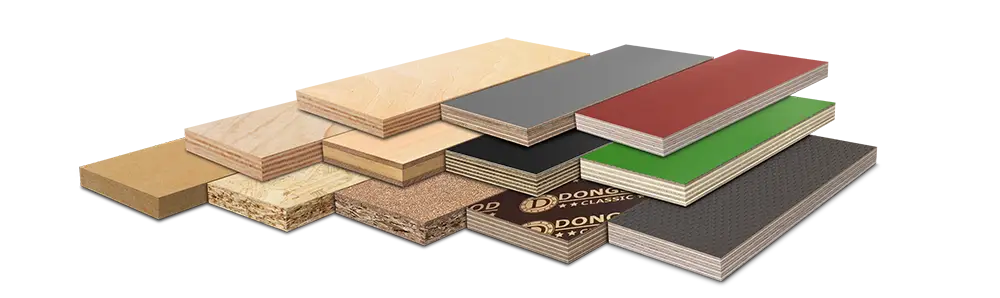
Choosing the Right Sheet Good - OSB, Particle Board, MDF, or Plywood

Choosing the Right Sheet Good: OSB, Particle Board, MDF, or Plywood?

Table of Contents Choosing the Right Sheet Good: OSB, Particle Board, MDF, or Plywood?Walking into a lumberyard can be overwhelming. Rows of large sheets all look similar but have vastly different properties, prices, and purposes. Choosing the wrong one can lead to a failed project, wasted money, and a lot of frustration.This guide will cut through the confusion. We’ll break down the key differences between the four most common sheet goods—OSB, Particle Board, MDF, and Plywood—so you can select the perfect material for your next build with confidence. 1. Material Showdown: Breaking Down The Basics First, let’s understand what each material is made of, as this defines its core characteristics. Plywood: The classic choice. Made by gluing together thin layers of wood veneer (plies) with the grain of each layer perpendicular to the last. This cross-graining makes it incredibly strong and resistant to warping. OSB (Oriented Strand Board): The modern competitor. Made from compressed rectangular wood strands mixed with adhesives. The strands are oriented in specific layers for strength, creating a characteristic “chipped” look. MDF (Medium-Density Fiberboard): The smooth operator. Made from broken-down wood fibers mixed with wax and resin, then compressed under high heat and pressure. The result is a completely uniform, smooth panel with no wood grain, knots, or voids. Particle Board: The budget option. Made from compressed wood chips, sawdust, and resin. It has a rough, chunky appearance and is the least durable of the four. 2. Best Uses: Matching the Material to the Project Now that you know their properties, here’s where each material truly shines. Choose PLYWOOD for: Structural Projects: Roof sheathing, subfloors, and exterior walls. Outdoor Projects: Decks, sheds, and outdoor furniture (use exterior-grade). Quality Furniture: Cabinets, shelves, and furniture that needs to bear weight. Choose OSB for: Structural Sheathing: A cost-effective alternative to plywood for wall, roof, and floor sheathing in dry conditions. Subflooring: (When covered with another material, as it’s rough to walk on). Sheds & Utility Projects: Where cost is the primary driver and finish doesn’t matter. Choose MDF for: Painted Furniture & Cabinets: Doors, panels, and painted furniture where a perfectly smooth, grain-free surface is desired. Interior Detail Work: Decorative wall panels, shelving in dry areas, and speaker boxes. DIY Projects: Easy to cut intricate shapes and designs with a scroll saw or jigsaw. Choose PARTICLE BOARD for: Ready-to-Assemble (RTA) Furniture: The core material for most inexpensive, laminate-covered furniture. Temporary Fixtures: Low-cost shelving in dry, low-stress environments like closets. Underlayment: As a base for countertops that will be covered with laminate or veneer. 3. Pro Tips for Selection and Installation Seal Your Cuts: Especially for MDF and particle board. Use a primer or edge-banding on any cut edges to seal them from moisture. Use the Right Fasteners: Plywood and OSB hold screws well. For MDF and particle board, use specialized screws or confirmat bolts designed for engineered wood to prevent stripping. Mind the Moisture: Never use MDF or particle board in damp areas like bathrooms or basements without extensive sealing. For these areas, moisture-resistant (MR) MDF or plywood is a must. Check the Grade: Plywood comes in grades (A, B, C, D). Use A-grade for surfaces that will be visible and stained, and save the lower-grade (but structurally sound) sheets for hidden structural work. Final Verdict: Which Sheet Good is Right For You? For Strength & Versatility → Plywood is the undisputed champion for structural and all-purpose projects. For a Budget Structural Layer → OSB is a capable and cost-effective choice for sheathing and subfloors. For a Perfect Paintable Surface → MDF is your best bet for interior furniture and cabinets that will be painted. For Ultra-Low-Budget, Disposable Furniture → Particle Board works, but understand its significant limitations. There is no single “best” material—only the best material for your specific project. By considering your needs for strength, moisture exposure, finish, and budget, you can now make the perfect choice every time.

Choosing the Right Sheet Good: OSB, Particle Board, MDF, or Plywood? Read More »

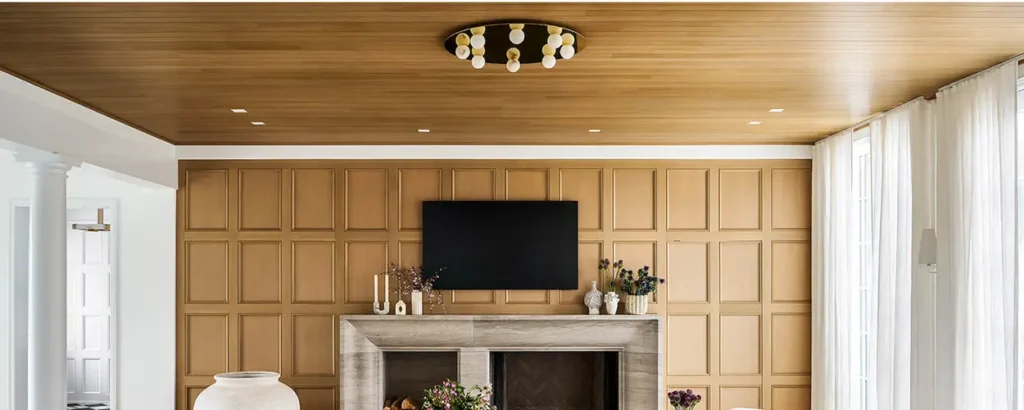
Plywood Ceiling Ideas Modern & Rustic Inspirations

Plywood Ceiling Ideas: Modern & Rustic Inspirations

Table of Contents 1. Modern Plywood Ceiling Designs A. Sleek & Minimalist (Scandinavian Style) Sanded Baltic Birch with matte finish Recessed LED lighting between beams Monochromatic stain (light oak or whitewash) B. Geometric Patterns Angled plywood slats for dynamic shadows Hexagonal or triangular CNC-cut designs Two-tone stain combinations C. Industrial Chic Exposed plywood edges with steel framing Urban loft-style with visible fasteners Dark walnut stain for moody contrasta 2. Rustic Plywood Ceiling Inspirations A. Reclaimed Wood Aesthetic Distressed plywood with visible knots Barn-style beams with iron brackets Warm amber stains or natural oil finish B. Cozy Cabin Vibes V-groove plywood panels (like traditional shiplap) Rustic chandeliers with exposed bulbs Neutral earth tones (greige, warm white) C. Tropical & Organic Teak-look plywood for resort-style spaces Open gaps between planks for airflow Palm leaf patterns via laser etching

Plywood Ceiling Ideas: Modern & Rustic Inspirations Read More »

Best Plywood for Furniture Making

Best Plywood for Furniture Making: A Buyer’s Guide

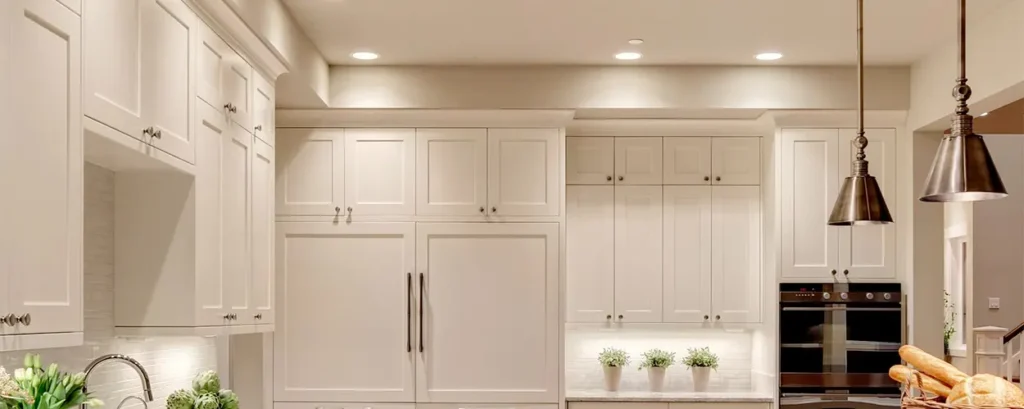
Table of Contents When building furniture, choosing the right furniture plywood is crucial for durability, aesthetics, and stability. Not all plywood is created equal—some types warp easily, while others offer a flawless finish perfect for visible surfaces. In this guide, we’ll break down the best plywood for furniture, key features to look for, and expert tips to help you select the perfect material for your next project. 1. Top Plywood Grades for Furniture Making A. Baltic Birch Plywood Why It’s Great:Made from high-quality birch veneers with minimal voidsExtremely stable and resistant to warpingSmooth surface, ideal for staining or paintingBest For: High-end furniture, cabinets, and tabletops B. Hardwood Plywood (Oak, Maple, Cherry) Why It’s Great:Attractive natural grain for a premium lookStronger than softwood plywoodTakes stains and finishes beautifullyBest For: Visible furniture parts (table tops, doors, and drawers) C. Marine Plywood Why It’s Great:Waterproof adhesive prevents delaminationHigh-grade veneers with no defectsExcellent for humid environmentsBest For: Outdoor furniture, bathroom vanities, and kitchen cabinets D. Cabinet-Grade Plywood (A-A or A-B) Why It’s Great:Smooth, sanded surfaces on one or both sidesFewer imperfections than construction-grade plywoodConsistent thickness for precise joineryBest For: Built-in cabinets, bookshelves, and dressers 2. Key Factors to Consider When Choosing Furniture Plywood A. Thickness Matters 1/4″ (6mm): Best for drawer bottoms and cabinet backs1/2″ (12mm): Ideal for shelves and lightweight furniture3/4″ (18mm): The standard for tables, bed frames, and heavy-duty pieces B. Core Quality (Avoid Voids!) Look for void-free cores (Baltic birch is the gold standard)Cheaper plywood often has gaps inside, weakening the structure C. Finish & Appearance Sanded plywood (A-grade): Ready for staining or paintingPre-finished plywood: Saves time with a factory-applied finish D. Moisture Resistance For kitchens or bathrooms, choose exterior-grade or marine plywoodStandard plywood should be sealed with polyurethane if used in damp areas 3. Plywood vs. Solid Wood vs. MDF for Furniture Plywood Strong, stable, resists warping, Edges need finishing, Most furniture types.Solid Wood, Beautiful natural grain, Expensive, can warp over time High-end visible piecesMDF,Smooth for painting, cheap, Weak, swells if wet, Painted cabinets, decorFor the best balance of cost and quality, use plywood for structural parts and solid wood for visible surfaces (like table tops). Final Recommendations For heirloom-quality furniture → Baltic Birch or Hardwood PlywoodFor painted pieces → Cabinet-Grade A-B PlywoodFor outdoor/moisture-prone areas → Marine Plywood

Best Plywood for Furniture Making: A Buyer’s Guide Read More »

The Ultimate Guide to Plywood Thickness and Sizes

The Ultimate Guide to Plywood Thickness and Sizes

Table of Contents Plywood is a fundamental building material used in everything from furniture to flooring, but choosing the right thickness and size can make or break your project. Whether you’re a DIY enthusiast or a professional contractor, this guide will help you understand standard plywood dimensions, their best uses, and how to select the perfect sheet for your needs. 1. Standard Plywood Thicknesses and Their Uses Plywood comes in various thicknesses, each suited for different applications: Common Plywood Thicknesses 1/4″ (6mm) – Best for crafts, cabinet backs, and paneling.3/8″ (9.5mm) – Used for drawer bottoms, lightweight furniture, and decorative projects.1/2″ (12mm) – Ideal for shelving, cabinet boxes, and wall sheathing.5/8″ (15mm) – Common for subfloors, roofing, and structural work.3/4″ (18mm) – The go-to for heavy-duty furniture, workbenches, and flooring.Pro Tip: Thicker plywood (3/4″+) provides better stability and load-bearing capacity, while thinner sheets (1/4″) are great for lightweight applications. 2. Standard Plywood Sheet Sizes (US & Metric) Plywood is typically sold in 4′ x 8′ sheets (1220mm x 2440mm), but other sizes are available: Common Sheet Sizes 4′ x 8′ (1220mm x 2440mm) – Most widely available, used in construction and furniture.4′ x 4′ (1220mm x 1220mm) – Smaller panels for DIY projects and easy transport.5′ x 5′ (1500mm x 1500mm) – Often used in European cabinetry.Custom Sizes – Some suppliers offer cut-to-order sheets for unique projects.Note: Always check local availability, as sizes may vary by region. 3. How to Choose the Right Plywood Size & Thickness Selecting the best plywood depends on three key factors: A. Project Requirements Furniture & Cabinets: 1/2″ to 3/4″ for durability.Flooring & Roofing: 5/8″ or 3/4″ for strength.Decorative Panels: 1/4″ or 3/8″ for lightweight use. B. Load-Bearing Needs Heavy Loads (Shelving, Tables): 3/4″ plywood.Lightweight (Backing, Crafts): 1/4″ or 3/8″. C. Cutting & Handling Considerations Thinner plywood (1/4″) is easier to cut but less sturdy.Thicker plywood (3/4″) requires stronger tools but offers better upport.Pro Tip: If unsure, go slightly thicker—it’s easier to sand down excess than reinforce weak plywood. Choosing the right plywood thickness and size ensures your project is strong, durable, and cost-effective. Remember:Thinner sheets (1/4″-3/8″) = lightweight projects.Medium thickness (1/2″-5/8″) = cabinets, shelving.Thick plywood (3/4″) = heavy-duty construction. Need help sourcing plywood? Check our supplier recommendations or ask questions below!

The Ultimate Guide to Plywood Thickness and Sizes Read More »

How to Waterproof Plywood for Outdoor Projects

How to Waterproof Plywood for Outdoor Projects: A Complete Guide

Table of Contents Plywood is a versatile and cost-effective material, but when used outdoors, it needs proper waterproofing to prevent warping, rotting, and delamination. Whether you’re building outdoor furniture, a shed, or decorative panels, this guide will walk you through the best methods to waterproof plywood for long-lasting durability. 1. Why Waterproof Plywood for Outdoor Use? Regular plywood isn’t naturally waterproof, and exposure to rain, humidity, and temperature changes can cause:Warping & Swelling – Moisture absorption leads to bending and distortion.Rot & Mold Growth – Untreated plywood can develop fungal decay.Delamination – The layers can separate over time when exposed to water.Key Takeaway: Waterproofing extends the lifespan of plywood in outdoor settings, saving you money on replacements. 2. Best Methods to Waterproof Plywood A. Using Waterproof Sealants & PaintsPolyurethane Varnish – Provides a clear, durable waterproof coating (ideal for visible surfaces).Epoxy Resin – Creates a thick, waterproof barrier (great for tabletops and boat decks).Exterior-Grade Paint – Oil-based or acrylic latex paint with a waterproof primer.Application Tips:1. Sand the plywood first (120-grit sandpaper).2. Apply 2-3 coats, allowing each layer to dry fully.B. Waterproofing with Linseed Oil or Tung OilNatural oils penetrate the wood, offering moderate water resistance.Best for low-moisture exposure (e.g., garden furniture).C. Liquid Rubber or Waterproof MembranesUsed for roofing, sheds, and planters where heavy rain is expected.Self-adhesive membranes (like Peel & Stick) provide extra protection.D. Edge Sealing for Maximum ProtectionPlywood edges absorb the most moisture—seal them with wood glue or epoxy. 3. How Long Will Waterproofed Plywood Last Outside? The lifespan depends on:Type of Sealant Used (epoxy lasts longer than paint).Climate Conditions (humid or rainy areas need more frequent maintenance).Maintenance (reapply sealant every 1-3 years). Polyurethane:Estimated Lifespan: 2-5 years,Best For: Furniture, DecksEpoxy Resin:Estimated Lifespan: 5+ years,Best For: Boat Building, TabletopsExterior Paint:Estimated Lifespan: 3-4 years,Best For: Sheds, FencesPro Tip: For extreme weather, consider marine-grade plywood (already waterproof) instead of sealing regular plywood. Waterproofing plywood is essential for outdoor projects to prevent damage. The best method depends on your budget, project type, and climate. For best results:Seal all sides (including edges).Reapply protective coatings as needed.Consider marine plywood for high-moisture areas. Need help choosing the right sealant? Check out our recommended products or ask in the comments!

How to Waterproof Plywood for Outdoor Projects: A Complete Guide Read More »

Marine Plywood vs. Regular Plywood-Which One Should You Choose

Marine Plywood vs. Regular Plywood: Which One Should You Choose?

Table of Contents When working on woodworking or construction projects, choosing the right type of plywood is crucial for durability and performance. Two common options are marine plywood and regular plywood, but they serve very different purposes. In this guide, we’ll compare their strengths, weaknesses, and best applications to help you decide which one suits your needs. 1. What’s the Difference Between Marine and Regular Plywood? Marine Plywood Construction: Made with waterproof glue and high-quality hardwood veneers (often birch or mahogany).Moisture Resistance: Designed to withstand prolonged exposure to water and humidity.Grading: Typically A-A or A-B grade, meaning fewer voids and defects.Common Uses: Boat building, docks, bathrooms, and outdoor furniture Regular Plywood (Interior/Exterior Grades) Construction: Uses standard adhesives (urea-formaldehyde for interior, phenol-formaldehyde for exterior).Moisture Resistance: Exterior-grade resists moisture but not constant water exposure.Grading: Ranges from A-D, with C-D being common for structural use.Common Uses: Furniture, subfloors, roofing, and wall sheathing.Key Takeaway: Marine plywood is waterproof, while regular plywood is water-resistant (depending on grade). 2. When Should You Use Marine Plywood? Marine plywood is more expensive, but it’s worth the investment in these cases:A. High-Moisture EnvironmentsBoat hulls, docks, and poolside furnitureBathroom vanities and kitchen cabinets (if exposed to humidity)B. Projects Requiring LongevityOutdoor structures (gazebos, pergolas)High-end furniture that needs to last decadesC. When Building Codes Require ItSome coastal areas mandate marine-grade materials for durability.Warning: Not all “marine plywood” is equal—look for BS 1088 or APA certification for true marine-grade quality. 2. When Should You Use Marine Plywood? Regular plywood is more cost-effective and suitable for:A. Indoor ProjectsBookshelves, wardrobes, and decorative panelingSubflooring and wall framing (where moisture isn’t an issue)B. Temporary or Budget-Friendly BuildsSheds, workbenches, and DIY projectsConcrete formwork (exterior-grade is sufficient)C. Structural ApplicationsRoof sheathing (CDX plywood is standard)Non-visible supports where aesthetics don’t matterPro Tip: If using regular plywood in damp areas, seal it with epoxy or polyurethane for extra protection. Final Verdict: Which One Should You Choose? Choose Marine Plywood If:Your project will face constant moisture.Long-term durability is a priority.You’re willing to invest in premium materials.Choose Regular Plywood If:You’re working on a budget.The project is indoors or short-term.You can add sealants for minor moisture protection.

Marine Plywood vs. Regular Plywood: Which One Should You Choose? Read More »

What are the usage scenarios of Black Film Faced Plywood in the UK?

Table of Contents Black Film Faced Plywood is a durable, waterproof and strong material commonly used in construction, transport and industry across the UK. Its black phenolic film surface provides additional protection against moisture, abrasion and chemicals, making it ideal for demanding environments. 1. Construction Industry Concrete Formwork (Shuttering Plywood) Used extensively for casting concrete slabs, walls, beams, and columns.The smooth black film ensures a high-quality finish on concrete.High reuse value, reducing overall construction costs. Scaffolding & Walkways Provides a non-slip and durable surface for workers.Commonly used on temporary platforms, bridges, and workstations. Roofing & Flooring Ideal for permanent and temporary floors in commercial and industrial buildings.Resistant to moisture and wear, making it suitable for wet environments. 2. Transport & Vehicle Industry Truck & Trailer Flooring Used in HGVs, lorries, and trailers due to its high load-bearing strength.Withstands heavy cargo and frequent loading/unloading. Van & Bus Interiors Provides strong, easy-to-clean flooring for public and private transport. Shipping Containers & Cargo Boxes Protects stored goods from moisture, impact, and extreme weather conditions. 3. Industrial & Commercial Applications Warehouse Shelving & Racking Used for sturdy, durable surfaces in storage and logistics centers. Cold Storage Facilities Suitable for freezers, refrigeration units, and food storage areas. Event & Stage Flooring Used in concerts, exhibitions, and outdoor events for stable and durable flooring. 4. Furniture & Interior Design Kitchen & Bathroom Cabinets The moisture-resistant black film makes it ideal for damp areas. Partition Walls & Decorative Panels Used in offices, retail spaces, and commercial interiors. Worktops & Table Surfaces Provides a scratch-resistant and sleek look. 5. Agricultural & Farming Applications Animal Housing & Barn Walls Commonly used in stables, poultry houses, and kennels due to its easy-to-clean and hygienic surface. Feed & Grain Storage Bins Helps protect stored produce from moisture damage. Would you like recommendations on where to buy high-quality Black Film Faced Plywood in the UK?

What are the usage scenarios of Black Film Faced Plywood in the UK? Read More »

Scroll to Top

Submit Now, Get Best Quote Today.​

Get in Touch

Please feel free to leave your information.

Dongstar- Plywood