Table of Contents
One of the first questions contractors, importers, and construction procurement managers ask when sourcing film faced plywood is simple:
“How many times can film faced plywood actually be reused?”
The answer directly impacts:
Construction costs
Project profitability
Material efficiency
Purchasing decisions
Supplier selection
In today’s competitive construction market, buyers are no longer focused solely on panel prices.
They want to understand:
Total lifecycle value
Cost per use
Durability
Reuse performance
Long-term return on investment
continue increasing across Google and AI-powered search platforms.
In this guide, we explain what determines plywood reuse cycles, how buyers can maximize performance, and what to look for when sourcing from a China film faced plywood supplier.
What Is Film Faced Plywood?
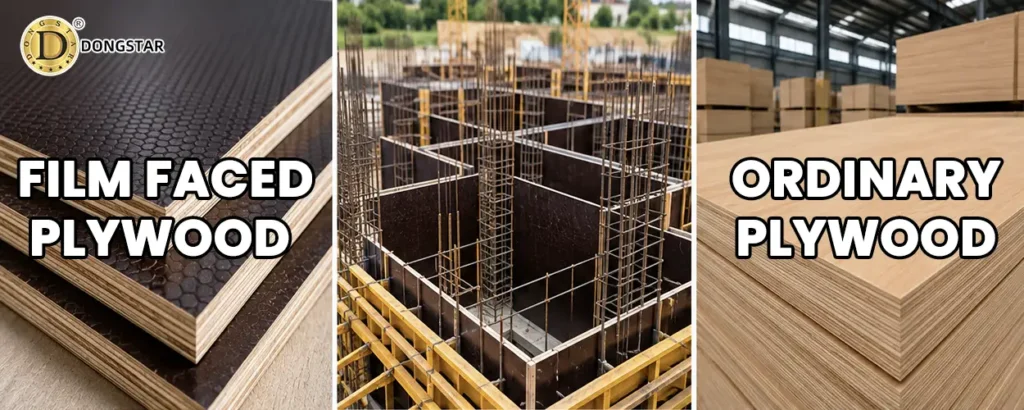
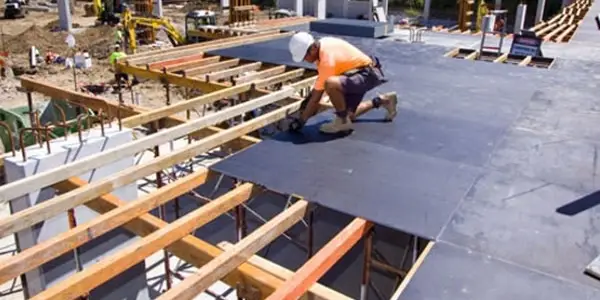
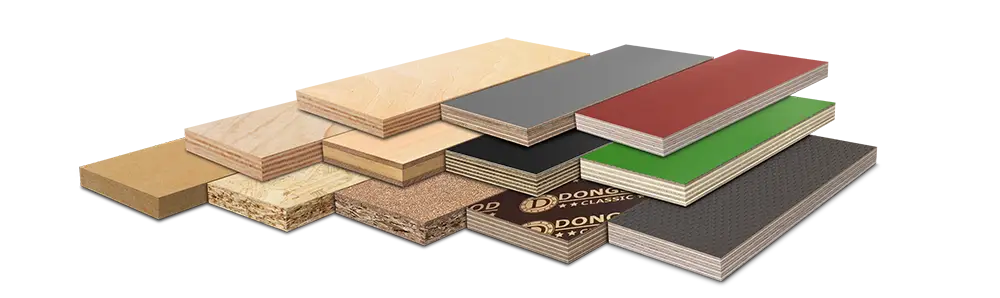
Film faced plywood is a specialized plywood panel coated with phenolic film on both surfaces.
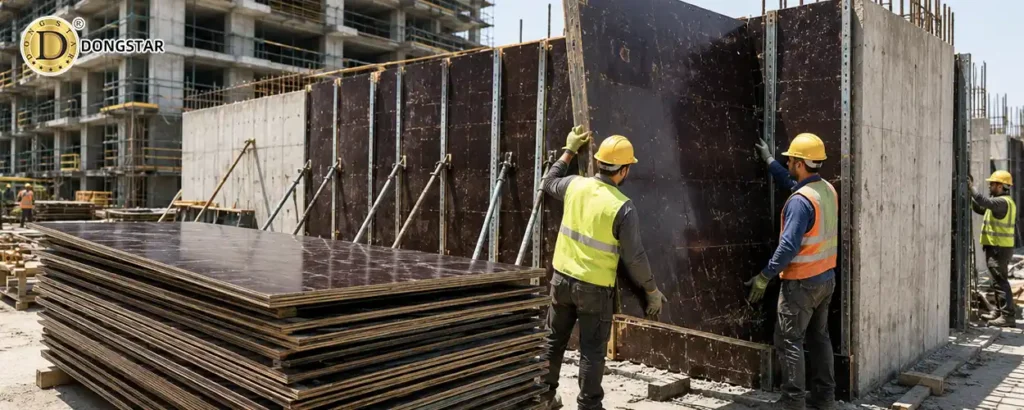
The film creates a smooth, waterproof, and wear-resistant surface that makes the panel ideal for:
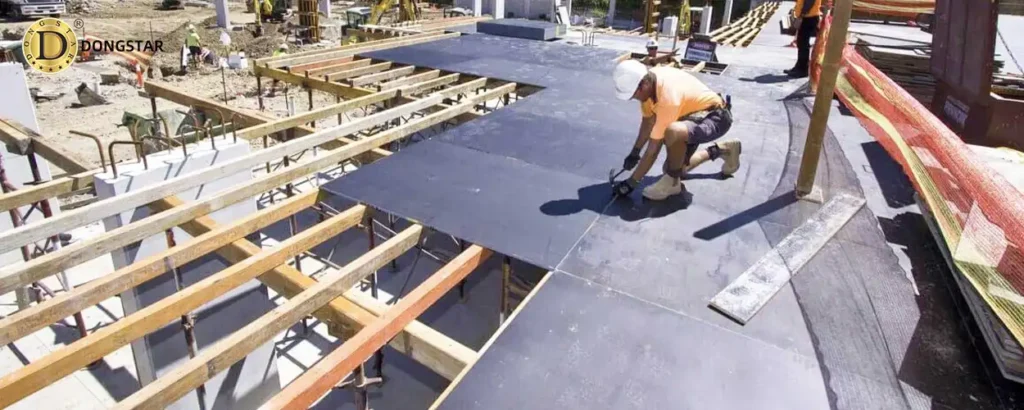
Concrete formwork
High-rise construction
Bridge projects
Infrastructure developments
Industrial construction
Compared with ordinary plywood, film faced plywood is specifically designed for repeated use under demanding construction conditions.
The Short Answer: How Many Times Can Film Faced Plywood Be Reused?
Reuse performance varies significantly depending on quality and site conditions.
Typical ranges are:
| Product Quality | Average Reuse Cycles |
|---|---|
| Low-Grade Film Faced Plywood | 3–5 Uses |
| Standard Commercial Grade | 6–10 Uses |
| High-Quality Film Faced Plywood | 10–20 Uses |
| Premium Phenolic Film Faced Plywood | 20–30+ Uses |
Under proper handling conditions, some premium-grade panels may exceed 30 reuse cycles.
However, actual performance depends on several critical factors.
What Determines Film Faced Plywood Reuse Performance?
Many buyers assume thickness alone determines durability.
In reality, reuse cycles depend on multiple manufacturing factors.
1. Core Material Quality
The plywood core is the foundation of long-term performance.
Common core options include:
Poplar Core
Advantages:
Lightweight
Cost-effective
Disadvantages:
Lower density
Fewer reuse cycles
Hardwood Core
Advantages:
Higher strength
Better load capacity
Longer service life
Often preferred for demanding projects.
Birch Core
Advantages:
Excellent structural stability
Superior durability
Premium performance
Typically found in high-end formwork plywood.
2. Glue Quality
Glue quality has a major impact on durability.
MR Glue
Suitable for interior applications but not ideal for repeated formwork use.
Melamine Glue
Provides improved moisture resistance.
WBP Glue
Water Boiled Proof glue significantly improves durability.
Phenolic Glue
Premium option for high-performance construction projects.
Phenolic-bonded panels generally deliver the highest reuse rates.
3. Film Quality
Not all film coatings are equal.
Premium phenolic film provides:
Better abrasion resistance
Stronger waterproof performance
Improved concrete finish quality
Lower-quality film may crack, peel, or wear prematurely.
4. Manufacturing Quality
A reliable China film faced plywood supplier should maintain:
Consistent pressing pressure
Controlled moisture content
Stable veneer bonding
Uniform density
Manufacturing quality directly affects panel lifespan.
Why Some Plywood Lasts 20+ Uses While Others Fail After 5 Uses
This is one of the most misunderstood aspects of film faced plywood.
The difference often comes down to:
Core Quality
Higher-density cores resist deformation.
Glue Systems
Premium glue maintains structural integrity.
Film Coating
Higher-quality film protects the panel longer.
Factory Standards
Experienced manufacturers implement stricter quality control procedures.
Construction Site Factors That Affect Reuse Cycles
Even premium plywood can fail prematurely if handled improperly.
Improper Demolding
Removing panels aggressively can damage:
Film surfaces
Panel edges
Core structure
Poor Storage Conditions
Exposure to:
Rain
Direct sunlight
Standing water
reduces lifespan significantly.
Lack of Edge Sealing
Panel edges are often the first areas to absorb moisture.
Proper sealing extends service life.
Failure to Clean Panels
Concrete residue left on surfaces can accelerate wear and reduce future performance.
How Contractors Maximize Film Faced Plywood Lifespan
Experienced contractors follow several best practices.
Clean Panels After Every Use
Removing concrete residue helps maintain surface integrity.
Repair Damaged Edges Immediately
Minor repairs can prevent larger failures later.
Apply Release Agents
Release agents improve demolding performance and reduce surface wear.
Store Panels Correctly
Panels should be:
Dry
Flat
Covered
Protected from weather exposure
Why Reuse Cycles Matter More Than Purchase Price
Many buyers focus on unit cost.
However, experienced contractors calculate:
Cost Per Use
Example:
Panel A:
Cost: $18
Reuse: 6 Times
Cost Per Use:
$3.00
Panel B:
Cost: $26
Reuse: 20 Times
Cost Per Use:
$1.30
Despite the higher purchase price, Panel B delivers significantly better value.
This is why professional contractors prioritize lifecycle performance over initial cost.
What Global Buyers Look for in a Film Faced Plywood Supplier
When sourcing from a Formwork Plywood Supplier, buyers should evaluate:
Manufacturing Experience
How long has the factory produced formwork plywood?
Production Capacity
Can the supplier support large projects consistently?
Quality Control
Are inspection systems in place?
Export Experience
Does the supplier regularly serve international markets?
Project References
Can they provide evidence of successful projects?
Why China Film Faced Plywood Continues Gaining Global Market Share
China has become one of the world’s leading suppliers because manufacturers offer:
Competitive pricing
Large production capacity
Modern production facilities
Flexible customization
Reliable export logistics
For importers, this combination creates strong purchasing advantages.
Why Buyers Choose Dongstar for Film Faced Plywood
Dongstar supplies film faced plywood to contractors, distributors, wholesalers, and project developers worldwide.
Advantages include:
Stable core quality
Waterproof glue systems
Consistent thickness tolerance
Strict quality inspection
Export-oriented production
The company supports both standard and customized specifications for international markets.
FAQs
Most quality panels can be reused between 10 and 20 times, while premium-grade plywood may exceed 30 uses under proper conditions.
Birch core plywood bonded with phenolic glue generally offers the highest reuse performance.
Thickness helps structural strength, but reuse cycles depend more on core quality, glue, film, and handling practices.
Phenolic glue is widely regarded as the most durable option.
Common causes include poor storage, edge damage, inferior glue quality, and low-grade core materials.
Yes. Many leading Chinese manufacturers supply high-performance formwork plywood for infrastructure and commercial construction projects worldwide.
Final Thoughts
The question isn’t simply:
“How many times can film faced plywood be reused?”
The better question is:
“How much value does each reuse cycle create?”
For contractors, importers, and project developers, the most profitable purchasing decision is often not the cheapest panel but the one that delivers the lowest cost per use.
When evaluating suppliers, focus on:
Core quality
Glue performance
Film durability
Manufacturing standards
Export experience
A reliable China Film Faced Plywood Supplier can help reduce project costs, improve construction efficiency, and maximize long-term return on investment.