Plywood Application

What are the uses of mdf in various industries

What are the uses of mdf in various industries?

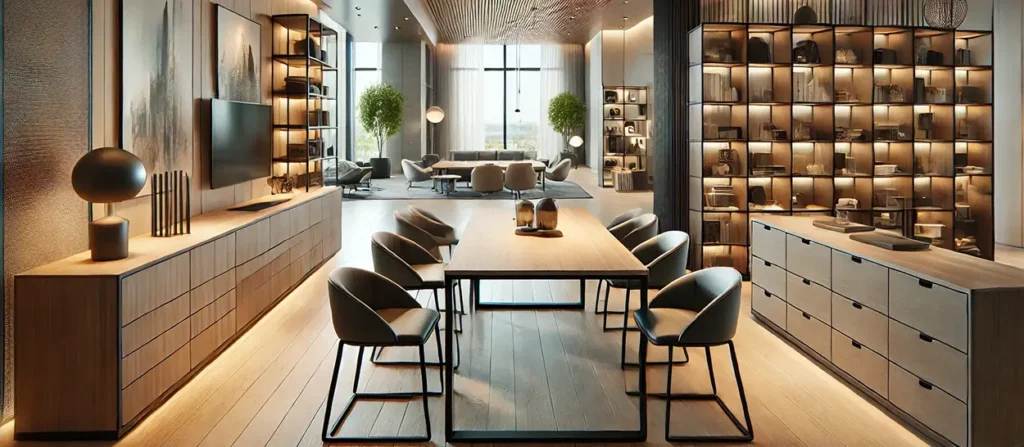
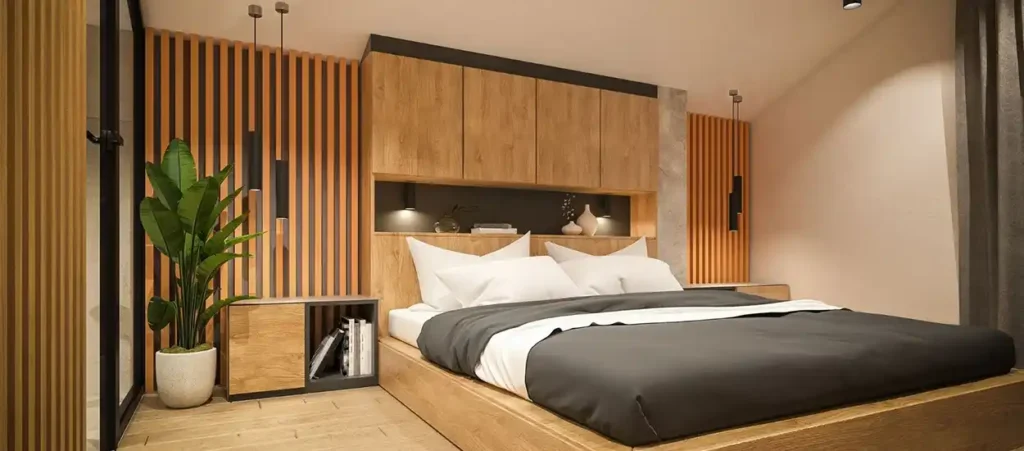
Table of Contents Medium-Density Fiberboard (MDF) is a versatile material used across multiple industries due to its affordability, smooth surface, and ease of machining. Below are the most common industries that utilize MDF: 1. Furniture Making MDF is widely used in furniture manufacturing because of its workability and smooth finish. Common MDF Furniture Pieces: Tables & Desks: Used in offices and homes due to its cost-effectiveness.Shelves & Bookcases: Smooth surface allows for easy painting and laminating.Wardrobes & Cabinets: MDF panels are sturdy and offer a seamless appearance.Bed Frames & Headboards: Often used with veneers to mimic solid wood. 2. Interior Design & Decorative Elements MDF is a staple in modern interior design, allowing for intricate detailing and custom shapes. MDF Applications in Interior Design: Wall Paneling & Cladding: Adds texture and depth to walls.Decorative Moldings & Trims: Carved MDF is used for cornices, skirting boards, and door frames.Partition Walls: Lightweight MDF panels help in space division.Ceiling Panels: Often used for acoustic and aesthetic purposes. 3. Cabinetry & Kitchen Units Kitchen and bathroom cabinetry often utilize MDF due to its versatility and cost-efficiency. MDF Uses in Cabinetry: Kitchen Cabinets & Drawers: MDF doors are laminated or veneered for an elegant look.Bathroom Vanities: Moisture-resistant MDF is used in humid environments.Closets & Storage Units: Provides a cost-effective alternative to solid wood. 4. Flooring Although MDF is not commonly used as a top-layer flooring material, it is often found in engineered wood flooring systems. MDF in Flooring Applications: Laminate Flooring Core: MDF serves as the base layer for laminate flooring.Underlayment: Provides a stable, moisture-resistant base for hardwood or vinyl floors.Floating Floors: Some engineered flooring systems use MDF as a sublayer. 5. Decorative Panels & Wall Coverings MDF is frequently used for artistic and functional decorative panels. Decorative MDF Panel Applications: 3D Wall Panels: Used for modern interior aesthetics.Acoustic Panels: MDF with perforations helps in sound absorption.Feature Walls & Claddings: Enhances the visual appeal of interiors.Retail & Exhibition Stands: MDF panels are widely used in commercial displays. MDF plays a crucial role in various industries, from furniture and interior design to cabinetry, flooring, and decorative panels. Its affordability, ease of use, and versatility make it a preferred material for both residential and commercial applications. However, selecting the right type of MDF (standard, moisture-resistant, or fire-retardant) is essential for durability and longevity.

What are the uses of mdf in various industries? Read More »

What are the Commercial Applications of Particle Board

What are the Commercial Applications of Particle Board?

Table of Contents Particle board, often referred to as chipboard, is an engineered wood product made from wood particles like sawdust, wood chips, and fibers, bound together with resin under high pressure. Although it’s often viewed as a lower-cost alternative to other wood products, particle board is widely used across several commercial sectors due to its affordability, versatility, and ease of production. Below is a comprehensive look at the commercial applications of particle board. 1. Furniture Manufacturing One of the largest commercial applications of particle board is in the furniture industry. Its lightweight nature, ease of shaping, and ability to be laminated or veneered makes it an ideal material for producing a wide range of furniture items. Types of Furniture Made from Particle Board: Cabinets: Particle board is commonly used in kitchen, bathroom, and storage cabinets. When laminated with melamine or other materials, it offers a durable and aesthetically pleasing surface, making it perfect for mass-market cabinetry.Desks and Tables: Office furniture, including desks, tables, and workstations, often utilize particle board as a core material, with a decorative laminate or veneer finish.Bookshelves and Storage Units: Due to its affordability, particle board is frequently used for shelving units and bookcases in both residential and commercial spaces. Its consistency in thickness allows for easy production of shelves in different lengths and widths.Particle board’s cost-effectiveness makes it especially popular in the production of ready-to-assemble (RTA) furniture, commonly found in big-box retailers. 2. Construction and Building Materials While particle board isn’t typically used in structural applications, it does find extensive use in the construction industry, primarily for non-load-bearing elements. Applications in Construction: Subflooring: Particle board is often used as a subfloor material in residential and commercial buildings. While it is not as durable as plywood, it provides an inexpensive alternative in areas that will later be covered by tile, carpet, or other floor finishes.Wall Panels: Particle board is used for interior paneling and wall systems in homes and commercial buildings. It is often employed in temporary partition walls in office spaces and retail settings.Roofing Underlayment: In some cases, particle board serves as underlayment for roofing systems, particularly when a more durable material like plywood is cost-prohibitive.Though not suited for areas exposed to moisture, moisture-resistant variants are sometimes used for insulation in non-exposed applications. 3. Packaging and Shipping Another common use of particle board is in the packaging industry, where its strength and low weight make it an ideal choice for creating shipping materials. Applications in Packaging: Pallets: Particle board is widely used to produce pallets for the transport of goods. While not as strong as wooden pallets, particle board pallets are lightweight and cost-effective, often used for transporting less heavy or fragile goods.Shipping Crates: In some commercial shipping applications, particle board is used to build shipping crates. This material is often used for lightweight or lower-cost shipping needs but may be reinforced with additional materials for higher strength.Particle board’s recyclability also makes it an environmentally friendly choice for temporary packaging solutions. 4. Flooring Underlayment In commercial construction, particle board is frequently used as a floor underlayment. It provides a smooth, even surface that can support a variety of flooring materials, including vinyl, tile, and carpeting. Specific Uses: Specific Uses:Affordable Flooring Option: Particle board is used for floors that are not expected to bear heavy loads but require a smooth surface. It is ideal for use in areas like office buildings, retail stores, and residential apartments where budget constraints exist.Moisture-Resistant Variants: Moisture-resistant versions of particle board are sometimes used in commercial environments where humidity levels are higher, such as in bathrooms and kitchens.5. Architectural Panels and Decorative SurfacesParticle board’s ability to be veneered, laminated, or coated with a decorative surface makes it an attractive material for architectural panels and decorative elements in commercial settings.

What are the Commercial Applications of Particle Board? Read More »

DONGSTAR 135th Canton Fair Booth No.11.2 L31-L32

Dongstar, a renowned manufacturer specializing in a diverse range of building materials, made a splash at the Canton Fair, China’s largest trade exhibition, with its impressive showcase of plywood, film-faced plywood, melamine board, MDF, OSB, and WPC products. The company, situated at Booth 11.2 L31-L32, attracted a steady stream of visitors interested in its high-quality offerings. Dongstar’s plywood products, a key highlight of its display, are known for their durability, strength, and versatility. The company’s film-faced plywood, in particular, stands out for its smooth finish and resistance to scratches and moisture, making it a popular choice for various construction and furniture-making applications. The melamine board, another star attraction, is praised for its resistance to stains and scratches, as well as its ease of cleaning and maintenance. This product is ideal for use in kitchens, bathrooms, and other high-traffic areas. Dongstar’s MDF (Medium-Density Fiberboard) is another top seller, offering a smooth surface that is perfect for painting or laminating. Its OSB (Oriented Strand Board) products, meanwhile, provide excellent structural strength and stability, making them suitable for flooring, roofing, and wall sheathing. Rounding out Dongstar’s impressive lineup is its range of WPC (Wood-Plastic Composite) products, which combine the natural beauty of wood with the durability of plastic. These eco-friendly materials are ideal for outdoor applications such as decking, fencing, and cladding.The Canton Fair provides Dongstar with an excellent opportunity to showcase its products to a global audience and establish new business relationships. The company’s representatives were on hand to provide detailed information on the various products and answer questions from interested visitors. Dongstar’s commitment to quality and innovation is evident in every product it manufactures. The company’s participation in the Canton Fair is a testament to its dedication to meeting the needs of its customers and driving the industry forward. As the Canton Fair continues, Dongstar remains committed to providing its visitors with an exceptional experience and showcasing the best of its products. With its diverse range of high-quality building materials, Dongstar is sure to make a lasting impression on all those who visit its booth.welcome to visit our 135th caton fair booth No.11.2 L31-L32.

DONGSTAR 135th Canton Fair Booth No.11.2 L31-L32 Read More »

Oriented Strand Board OSB banner 1

Introduction to OSB Panel: A Versatile Structural Wood Solution

Table of Contents Oriented Strand Board, commonly known as OSB, stands as a testament to modern engineering’s ability to transform wood into a highly versatile and robust structural panel. Manufactured through a process involving heat-cured adhesives and precisely arranged rectangular wood strands, OSB offers exceptional strength and performance akin to traditional plywood. In this article, we will delve into the attributes of OSB panels, highlighting their benefits, applications, and contributions to the construction industry. Strength Meets Performance: OSB panels are engineered with a careful blend of wood strands and adhesives. This unique composition results in a dimensionally stable panel that defies deflection, delamination, and warping. Even under challenging conditions like strong winds and seismic activities, OSB panels remain steadfast, resisting racking and shape distortion. Lightweight Advantage: Despite their impressive strength, OSB panels are surprisingly lightweight. This characteristic makes them not only easier to handle but also simplifies installation procedures. The panels’ manageability translates to reduced installation time and labor, contributing to efficient project execution. Precision Manufacturing: The manufacturing process of OSB involves creating massive, continuous mats of wood strands. This meticulous arrangement ensures that finished panels exhibit consistent quality, eliminating the possibility of laps, gaps, or voids. This quality control results in panels that are robust and dependable. Large Dimensions for Enhanced Performance: OSB panels are available in large dimensions, minimizing the number of joints. This has two significant advantages: it reduces heat leakage, enhancing energy efficiency, and it curbs the transmission of airborne noise. This aspect is especially valuable for creating comfortable and acoustically efficient living and working spaces. Wide Range of Applications: The versatility of OSB panels extends across various applications. From roofing and wall sheathing to subflooring and furniture construction, OSB panels provide a reliable solution. Their adaptability, coupled with their affordability, makes them a go-to choice for both residential and commercial projects. Oriented Strand Board (OSB) panels represent a paradigm shift in the world of structural wood solutions. Combining the strength of wood with advanced adhesives, OSB panels offer durability, performance, and efficiency. Their lightweight nature, large dimensions, and wide range of applications make them an invaluable asset in the construction industry. Whether used in roofing, flooring, or wall sheathing, OSB panels stand as a testament to innovation that seamlessly blends natural materials with modern engineering prowess.

Introduction to OSB Panel: A Versatile Structural Wood Solution Read More »

Melamine-plywood

Exploring the Distinction: BWP and BWR Plywood for Your Furniture Projects

Plywood, with its versatility, has numerous variants distinguished by kind, grade, thickness, and size. Among the popular choices, BWP (boiling waterproof) and BWR (boiling water resistant) plywood stand out. Understanding the difference between these variants is crucial in selecting the ideal material for your furniture projects. Let’s delve into the distinctions and guide you in making the right choice. Plywood glue >> BWP and BWR plywood differ in their intended uses, as indicated by government grading standards. BWP is a grade assigned to ply and blockboards, while BWR pertains to manufacturing plywood. To comprehend the difference between the two, we must first explore the disparities between blockboards and plywood. Blockboard and plywood are distinct wood products, each serving specific purposes. Plywood finds extensive use in interior design and furniture projects, while blockboards serve more specialized roles. Blockboards consist of softwood wooden strips, while plywood is created by applying intense pressure to wood, resulting in unique qualities for each. Although BWP and BWR plywood aim for waterproofing, they are technically similar. The main difference lies in their uses, with BWP being tougher, less flexible, and heavier. It can withstand substantial weight and exhibits higher termite resistance, making it ideal for heavy-duty outdoor and indoor furniture. BWP blockboards excel in building patio furniture, doors, and shelves in kitchens and bathrooms. On the other hand, BWR plywood is more malleable, affordable, and lightweight, being used predominantly for interior and semi-outdoor applications. It finds its place in kitchen and bathroom cabinet doors, customized furniture, wall units, TV units, and shoe racks. Choosing between BWP and BWR plywood depends on the nature of your project and your budget. For sturdy furniture capable of handling weather fluctuations, BWP blockboards are the preferred option, identifiable by their ISI specification number — IS:710. While BWP plywood may be costlier, it provides long-lasting durability and resistance. It’s crucial to consider the utility of these products when selecting the right wood for your project. Quality should not be compromised for cost-saving, as it ensures that your furniture endures and serves you for a lifetime. To ensure top-quality plywood, trust only reputable manufacturers. At Dongstar® , we prioritize quality, earning ourselves a reputation as a trusted trademark among reliable and authentic plywood suppliers. Choosing the right plywood is essential, and our factory offers top-quality materials from the best manufacturers. Head over to Dongstar® Plywoods to embark on your furniture project with confidence. Select wisely and create furniture that stands the test of time. [contact-form-7 id=”858″ title=”Contact Dongstar”] Dongstar® Products Fancy Plywood Particle Board Film Faced Plywood MDF & HDF Melamine Board OSB

Exploring the Distinction: BWP and BWR Plywood for Your Furniture Projects Read More »

Plywood - A Versatile Building Material

Plywood: A Versatile Building Material for Indoor and Outdoor Projects

Table of Contents What is plywood? Plywood is an incredibly useful material with a wide range of practical applications, making it a popular choice for interior, structural, and exterior projects. This versatile wood product is created by layering thin sheets of wood veneer and gluing them together, with each adjacent layer having its wood grain rotated up to 90 degrees to one another. The result is a sturdy and flat sheet that can be used in various construction tasks. What is Plywood: A Comprehensive Guide to Types, Advantages, and Applications >>> The Plywood Manufacturing Process: The process of creating plywood varies depending on its intended use. For building purposes, the plywood is pressed into large flat sheets, while for applications in aircraft or boat construction or furniture-making, it is formed into curves. Each layer of ply has its grain running at right angles, ensuring strength, durability, and minimal chances of shrinking. The plywood typically consists of a minimum of three layers of wood held together with an adhesive. Plywood Materials: The materials used in plywood production play a significant role in determining its properties. Plywood can be made from softwoods, hardwoods, or a combination of both. Common softwoods used include cedar, pine, redwood, and spruce, with Douglas fir being the most frequently used. Hardwood plywood, on the other hand, is commonly created using oak, mahogany, teak, maple, or ash. Composite plywood, featuring very thick sheets, is made using either solid lumber pieces or particle board for its core. Dongstar® Plywood Core >>> Adhesive Types: Various types of adhesives are used to bond the layers of wood in plywood, depending on their intended usage. Phenol-formaldehyde resin is employed for exterior sheets as it provides exceptional strength and moisture resistance, making it ideal for outdoor projects. Interior plywood sheets usually use soybean protein or blood protein-based adhesives, but they may also adopt the same phenol-formaldehyde resin as the exterior sheets. For furniture-making, the urea-formaldehyde resin is commonly used. Dongstar® Plywood Glue >>> Additional Plywood Materials: Some projects require additional materials to enhance plywood’s properties. Overlaid plywood has a layer of metal, plastic, paper, or fabric bonded to its back or face, increasing its resistance to moisture. This type is prevalent in transportation, agriculture, and construction industries. Plywood can also have a layer of liquid stain applied to give it a polished look, perfect for decorative projects. Additionally, various chemicals can be used to treat plywood to enhance its properties, such as increasing flame or decay resistance. Dongstar® Plywood Film >>> Plywood Classification: Plywood is classified into two categories, each with its own grading system. The construction/industrial classification focuses on strength and is rated based on veneer grade, exposure capability (exterior or interior), and the type of adhesive used. Grades range from D (lowest, multiple defects) to N (highest, very few defects). The hardwood/decorative classification emphasizes appearance, with grades based on the plywood’s resistance to moisture. The face of this type is usually free from defects, used primarily for decorative purposes. Plywood Sizes: Plywood comes in a wide range of sizes, with thicknesses ranging from 0.6 inches to 3 inches. The most commonly used thickness falls between 0.25 to 0.75 inches. For uniformity, the back and face of the veneer must have the same thickness, and the top and bottom crossbands must also be of equal size. Dongstar® plywood’s universal properties and versatile nature make it an ideal choice for a wide array of building and decorative projects. Whether for interior, structural, or exterior applications, plywood is an invaluable material that brings durability and functionality to construction endeavors. For more information about plywood and its manufacturing process, feel free to contact Dongstar®, a plywood supplier and manufacturer from China. Dongstar® Plywood: Film Faced Plywood: Film faced plywood is a durable and versatile construction material. It is overlaid with a protective film on both sides, making it resistant to moisture, chemicals, and abrasion.  OSB Board: OSB (Oriented Strand Board) is a popular wood-based panel known for its versatility and strength.  MDF & HDF: Thanks to flexible applications and customizable functions, MDF & HDF boards have become the first choice for DIY enthusiasts and professionals. Marine Board: Marine plywood is a type of high-quality plywood known for its exceptional durability and water-resistant properties.  Particle Board: Particle board, also known as chipboard, is an engineered wood product made from wood particles, such as wood chips, sawmill shavings, and other wood residues.  Melamine Board: Melamine board is a popular and versatile material used in a wide range of interior applications, known for its exceptional durability and attractive surface finish.

Plywood: A Versatile Building Material for Indoor and Outdoor Projects Read More »

building material widely used in the construction industry

Film Faced Plywood: Unveiling Versatility and Durability in Construction

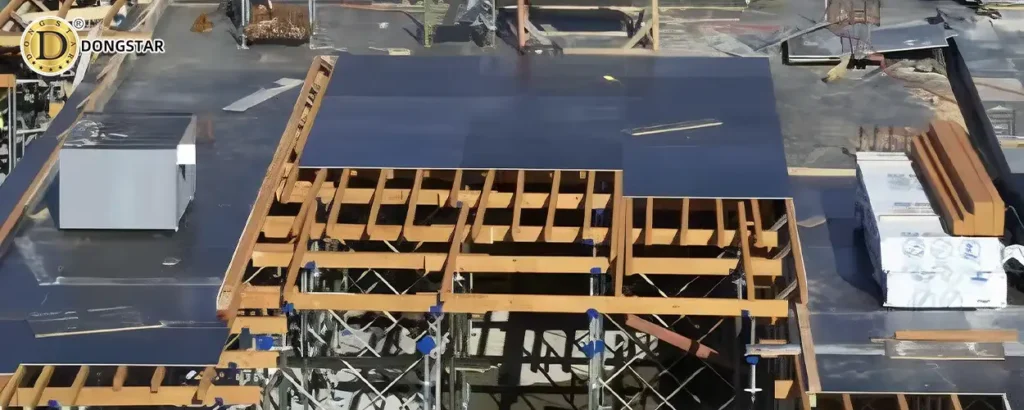
Table of Contents Whats is film faced plywood? Film-faced plywood, also known as shuttering plywood or formwork plywood, is a versatile and high-performance building material widely used in the construction industry. With a resilient film coating on both sides, this specialized plywood exhibits exceptional strength and water resistance, making it an ideal choice for various formwork and structural applications. As a reputable film-faced plywood manufacturer and supplier from China, Dongstar® takes pride in providing top-quality formwork plywood solutions that deliver unmatched performance and reliability for construction projects worldwide. Advantages of Film-Faced Plywood: Water Resistance The film coating on both sides of the plywood acts as a waterproof barrier, protecting it from moisture and humidity. This feature allows formwork plywood to endure harsh weather conditions, making it suitable for outdoor applications such as concrete formwork and scaffolding. Durability and Strength Film-faced plywood is engineered to withstand heavy loads and repetitive use. Its sturdy construction ensures it can endure the stresses of construction processes, providing consistent performance throughout the project. Reusability Film-faced plywood can be reused multiple times without compromising its structural integrity. Its reusability makes it a cost-effective choice for construction projects, reducing material waste and overall expenses. Smooth and Uniform Surface The film coating imparts a smooth and uniform surface to the plywood, ensuring a clean and even finish for concrete casting. This smooth surface reduces the need for excessive preparation and contributes to high-quality concrete finishes. Applications of Film Faced Plywood Concrete Formwork Formwork plywood is extensively used as concrete formwork due to its robustness, smooth surface, and water-resistant properties. It creates a stable and uniform mold for pouring concrete, resulting in superior-quality castings. Scaffolding and Shoring In construction sites, shuttering plywood  is commonly employed in scaffolding and shoring applications. Its strength and durability make it suitable for supporting workers and materials during construction and renovation projects. Road and Bridge Construction Shuttering plywood is utilized in the construction of roads and bridges, where it provides an ideal formwork solution for casting concrete in various shapes and dimensions. Building Facades Film-faced plywood is often used as cladding material for building facades, thanks to its attractive appearance and weather-resistant qualities. Dongstar® – China Plywood Manufacturer Film-faced plywood is a game-changer in the construction industry, offering water resistance, strength, and versatility in various applications. As a leading film-faced plywood manufacturer and supplier from China, Dongstar® provides top-quality products that meet international standards and ensure optimum performance in construction projects around the globe. Choose Dongstar® for reliable and durable shuttering plywood solutions that stand the test of time, empowering your construction endeavors with utmost efficiency and excellence.

Film Faced Plywood: Unveiling Versatility and Durability in Construction Read More »

What is particle board

What is particle board

Table of Contents Particle board, also known as chipboard, is an engineered wood product made from wood particles, such as wood chips, sawmill shavings, and other wood residues. These particles are mixed with synthetic resin or glue and compressed under high pressure and heat to form a dense and uniform board. The result is a cost-effective and versatile alternative to solid wood and plywood. Characteristics of Particle Board: Applications of Particle Board: Despite its advantages, particle board has some limitations, such as being sensitive to moisture and having lower load-bearing capacity compared to plywood or solid wood. However, when used appropriately and in suitable environments, particle board can be a reliable and practical choice for a wide range of applications. As a reputable plywood manufacturer from China, Dongstar® offers high-quality particle board that adheres to strict quality standards. Our particle board products are ideal for various applications in the construction and furniture industries, providing cost-effective solutions without compromising on performance and durability. Trust in Dongstar® as your reliable particle board supplier and manufacturer to meet your project requirements.

What is particle board Read More »

decorative plywood

What is decorative plywood

Table of Contents Decorative plywood, also known as fancy plywood or veneer plywood, is a type of engineered wood product that features a decorative face veneer on both sides. It is created by bonding thin slices of natural wood veneer to a plywood core using adhesive under high pressure and heat. The decorative veneer gives the plywood an attractive appearance, making it ideal for aesthetic applications in interior design, furniture manufacturing, and decorative finishes. Advantages of Decorative Plywood: Applications of Decorative Plywood: As a prominent plywood manufacturer from China, Dongstar® offers a diverse selection of high-quality decorative plywood options to meet various design and functional requirements. Our decorative plywood products feature premium veneers, precise craftsmanship, and reliable performance, ensuring exceptional results in your decorative projects. Choose Dongstar® as your trusted supplier and manufacturer of decorative plywood to elevate your interior spaces and furniture creations with stunning natural wood aesthetics.

What is decorative plywood Read More »

What is Plywood: A Comprehensive Guide to Types, Advantages, and Applications

What is Plywood: A Comprehensive Guide to Types, Advantages, and Applications

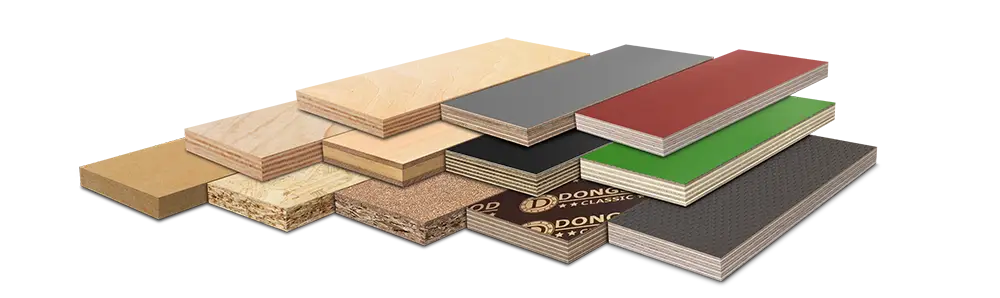
Table of Contents Plywood is a versatile and widely used building material known for its strength, durability, and versatility. It is composed of multiple thin layers of wood veneers that are bonded together with adhesives. This construction method gives plywood its unique properties, making it suitable for a wide range of applications in various industries. Types of Plywood: Film Faced Plywood: Film faced plywood is specially coated with a durable film, typically made of phenolic resin or melamine, which provides excellent resistance to moisture, chemicals, and abrasion. It is commonly used in construction for formwork, where its smooth surface finish ensures easy demolding and enhances the quality of concrete finishes. OSB (Oriented Strand Board): OSB is made by compressing and bonding wood strands with resin, creating a strong and durable panel. It is widely used in construction for sheathing, subfloors, and roof decking due to its structural integrity and cost-effectiveness. MDF (Medium Density Fiberboard): MDF is made by compressing wood fibers with resin, resulting in a dense and smooth panel. It is popular in the furniture and cabinetry industry due to its excellent machining properties, smooth surface finish, and dimensional stability. Melamine Board: Melamine board features a melamine-impregnated paper overlay on the surface, providing a decorative and durable finish. It is widely used in furniture manufacturing and interior applications where aesthetics and durability are important. Particle Board: Particle board is made from wood particles bonded together with resin under high pressure and heat. It is an affordable option for various applications, such as furniture, shelving, and cabinetry. Fancy Plywood: Fancy plywood, also known as decorative plywood, is characterized by its unique and visually appealing veneer patterns. It is used for decorative purposes in furniture, interior design, and architectural applications. Advantages and Applications: Common Sizes of Plywood: Plywood comes in standard sizes, including 4′ x 8′ (1220mm x 2440mm), 4′ x 10′ (1220mm x 3050mm), and 5′ x 10′ (1525mm x 3050mm). However, custom sizes can be produced to meet specific project requirements. Dongstar®: Your Trusted Plywood Manufacturer and Supplier from China As a leading plywood manufacturer and supplier from China, Dongstar® is dedicated to delivering high-quality plywood products. With our state-of-the-art manufacturing facilities, advanced technology, and stringent quality control processes, we ensure that our plywood meets international standards for strength, durability, and performance. Whether you need film faced plywood, OSB, MDF, melamine board, particle board, or fancy plywood, Dongstar® has you covered. Choose Dongstar® as your trusted plywood partner and experience the reliability, quality, and expertise that we bring to every project. Contact us today to explore our comprehensive range of plywood products and discover the difference of working with a leading plywood manufacturer and supplier from China.

What is Plywood: A Comprehensive Guide to Types, Advantages, and Applications Read More »

Scroll to Top

Submit Now, Get Best Quote Today.​

Get in Touch

Please feel free to leave your information.

Dongstar- Plywood