Table of Contents
MDF has become one of the most practical materials for decorative furniture and interior projects because it combines a smooth surface, consistent structure and flexible finishing options.
For project buyers, furniture manufacturers, wholesalers and importers, however, choosing MDF for decorative applications is not simply about selecting a color or pattern. The substrate, thickness, density, surface finish, machining quality and emission requirements can all affect the final result.
So, what makes MDF suitable for decorative applications, and which specifications should buyers confirm before placing a bulk order?
What Is MDF for Decorative Applications?
MDF for decorative applications is medium-density fibreboard used as a substrate for furniture, wall features, doors, cabinetry, retail displays, architectural millwork and other interior products.
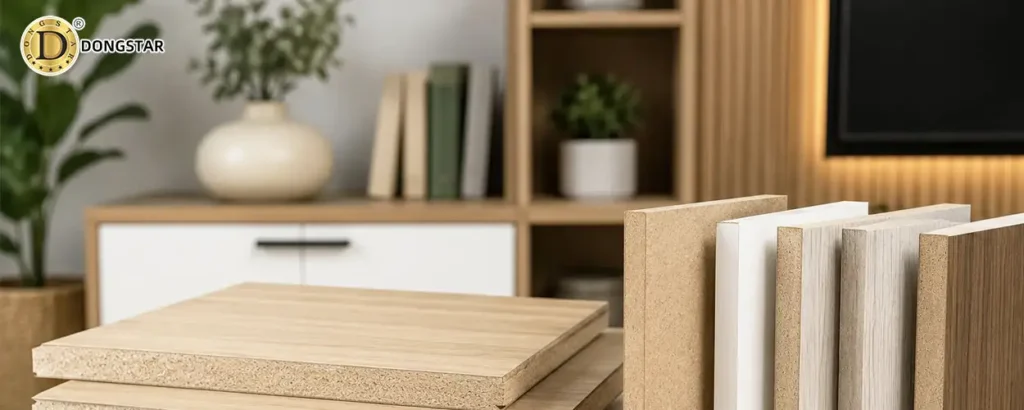
Its fine and relatively uniform fiber structure provides a smooth surface that can be painted, laminated, veneered, routed or finished with decorative materials. This makes MDF particularly useful when the appearance of the finished panel is as important as the basic board performance.
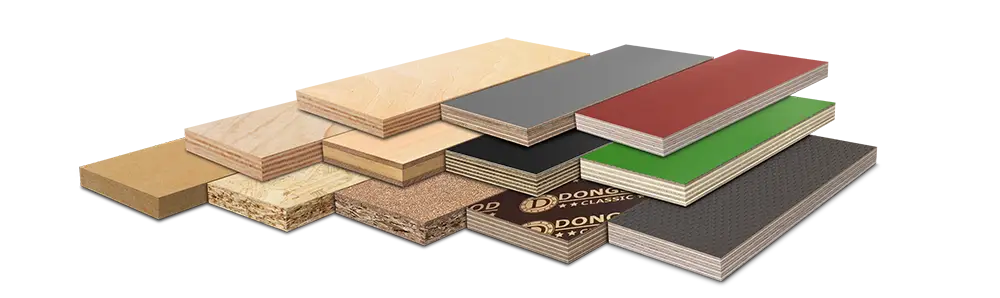
Dongstar’s current MDF/HDF range includes raw MDF, moisture-resistant MDF, fire-retardant MDF and HDF, with plain, melamine paper, HPL, PVC and other surface options. The company lists MDF thicknesses from 2–30 mm and standard 1220 × 2440 mm sheets, with custom specifications available.
Why Is MDF Popular for Decorative Projects?
The main advantage is not just appearance. It is the combination of surface quality and manufacturing flexibility.
For furniture and interior manufacturers, MDF can support:
Smooth painting and coating
Melamine lamination
PVC surface application
Natural or engineered wood veneer
CNC cutting and routing
Edge profiling
Decorative grooves and patterns
Customized furniture components
Unlike panels with a coarse or irregular surface, MDF provides a more consistent substrate for decorative finishing. This is one reason MDF continues to be widely used for furniture, cabinetry, wall panels and decorative interior components.
7 Common MDF Decorative Applications
1. Decorative Furniture Panels
MDF is widely used for cabinet doors, wardrobe components, shelving, tables, office furniture and storage systems.
For manufacturers producing large quantities, the uniform structure of MDF makes it suitable for repeated cutting, drilling, routing and finishing.
18mm MDF board is particularly common for furniture components where a relatively substantial panel is required, while thinner boards may be selected for backs, decorative inserts and lighter components.
2. Kitchen Cabinets and Wardrobes
MDF works well for cabinet doors and visible furniture surfaces because it can accept a wide range of decorative finishes.
Depending on the project, buyers may specify:
Raw MDF for painting or further processing
Melamine-faced MDF for ready-to-use surfaces
PVC-faced MDF for specific decorative effects
Veneered MDF for a natural wood appearance
For large furniture programs, buyers should confirm whether the decorative surface is required on one or both sides.
3. Decorative Wall Panels
MDF is increasingly used as a substrate for decorative wall panels, feature walls, retail displays and interior architectural elements.
Depending on the design, MDF can be processed into:
Slatted panels
Grooved panels
Routed designs
Embossed surfaces
Decorative wall sections
Custom architectural patterns
The important point for importers is that the MDF substrate and the finished decorative system are not always the same specification. Surface material, machining, installation method and project requirements should be confirmed separately.
4. Interior Doors and Decorative Door Components
MDF can be used for interior doors, door skins, panels and decorative door components where a smooth and machinable substrate is required.
For door manufacturing, buyers should pay particular attention to thickness consistency, density, surface quality and machining performance.
If the project has specific fire, acoustic or moisture requirements, those requirements should be included in the original RFQ rather than added after production.
5. Retail Displays and Commercial Interiors
Retail stores, showrooms, hotels, offices and commercial interiors often require large quantities of visually consistent panels.
MDF can be used for:
Display fixtures
Shelving systems
Counter panels
Decorative partitions
Feature walls
Branded furniture
Reception and office furniture
For these projects, color consistency and repeatability between production batches can be just as important as the board’s basic specifications.
6. CNC Decorative MDF Components
MDF is well suited to CNC routing and precision machining because of its relatively uniform internal structure.
Manufacturers can use CNC processing to create letters, grooves, profiles, geometric patterns, cabinet components and customized decorative shapes.
For CNC production, buyers should not evaluate MDF only by nominal thickness. Thickness tolerance, density consistency, surface quality and edge performance can directly influence machining efficiency and material waste.
7. Decorative Flooring and Interior Components
MDF and HDF can also be used in selected flooring and interior component applications.
Dongstar lists MDF/HDF applications including furniture, interior decoration and wood flooring, while HDF provides a denser panel option for applications requiring different physical characteristics.
Which Decorative MDF Finish Should You Choose?
The best finish depends on how the finished product will be used.
| MDF Finish | Typical B2B Applications |
|---|---|
| Raw MDF | Painting, CNC routing, veneering, custom finishing |
| Melamine MDF | Cabinets, wardrobes, shelving, office furniture |
| PVC-faced MDF | Decorative furniture and interior panels |
| HPL-faced MDF | Commercial furniture and higher-wear applications |
| Wood veneer MDF | Premium furniture and architectural interiors |
| Textured / embossed MDF | Decorative walls, furniture and feature panels |
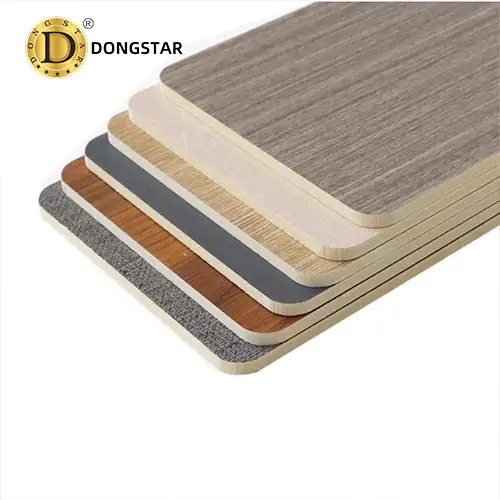
Dongstar currently lists plain, melamine paper, HPL, PVC and leather-type surface options, together with matte, textured, glossy, embossed and other surface treatments. Its product page also states that more than 1,000 color options are available across solid, wood-grain, cloth-grain and marble-grain designs.
For large projects, buyers should approve a physical sample or agreed decorative reference before mass production because screen colors and actual production finishes can differ.
What MDF Thickness Is Best for Decorative Applications?
There is no single thickness that fits every decorative application.
Dongstar lists MDF from 2–30 mm, including 2.7, 3, 6, 9, 12, 15 and 18 mm, with custom specifications available.
Typical purchasing considerations include:
2–6 mm: lightweight decorative parts, backs and inserts
9–12 mm: decorative panels and lighter furniture components
15 mm: furniture and interior components
18 mm: cabinets, shelving, furniture panels and heavier decorative components
25–30 mm: thicker furniture or specially designed project components
These are starting points rather than structural recommendations. The final thickness should be based on the design, span, fixing method, machining process and applicable project requirements.
What Should Importers Check Before Buying Decorative MDF?
A decorative MDF quotation should include more than price per sheet.
Before placing a bulk order, confirm:
MDF type: Raw, MHR, FR MDF or HDF
Panel size: such as 1220 × 2440 mm
Thickness: including acceptable tolerance
Density: required range
Surface: raw, melamine, HPL, PVC, veneer or other finish
Color or decor code: approved sample/reference
Emission requirement: E0, E1, E2 or destination-market requirement
Machining: CNC, grooves, profiles or other processing
Certification: documents required for the destination market
Packaging: export pallet or other agreed packing
Quantity: project quantity or container requirement
Destination: port and country
Dongstar’s current MDF specifications include density from 650–1200 kg/m³, E0/E1/E2 glue options, ±0.2–0.5 mm thickness tolerance and standard export pallet packing. Exact specifications should be confirmed against the quotation and production order.
Why Source Decorative MDF from Dongstar?
For international buyers, decorative MDF sourcing is ultimately a supply-chain decision.
Dongstar is a China-based wood panel manufacturer and supplier offering MDF/HDF together with plywood, OSB, particle board, melamine board and other engineered wood products. Its MDF product range supports different thicknesses, sizes, surface treatments and board types for furniture and interior applications.
For project and wholesale orders, buyers can provide the required size, thickness, density, surface finish, quantity, destination and documentation requirements so the specification can be confirmed before quotation.
MDF Decorative Applications: Buyer FAQ
Yes. MDF is widely used for decorative furniture, cabinetry, wall panels, doors, retail fixtures and interior components because of its smooth surface and machining flexibility.
Decorative MDF board generally refers to MDF used with a decorative finish or decorative processing, such as melamine, HPL, PVC, veneer, painting, grooves or CNC patterns.
18mm MDF can be suitable for many furniture and interior applications, but the appropriate thickness depends on the panel design, fixing method, span and required performance.
Yes. MDF can be supplied in different thicknesses, dimensions, densities and surface finishes. Decorative processing and packaging can also be discussed according to the project.
Neither is universally better. Raw MDF provides greater flexibility for painting, veneering and further processing, while melamine MDF provides a ready decorative surface and can reduce additional finishing work.
Final Thoughts
MDF remains a practical choice when a project requires a combination of smooth appearance, machining flexibility and decorative versatility.
For global buyers, the most important decision is not simply choosing “decorative MDF.” It is defining the complete specification: substrate, thickness, density, dimensions, surface, decor, emissions, machining, packaging and documentation.
For bulk orders, send the required MDF specification, decorative finish, quantity and destination to the manufacturer before requesting a quotation. A clear RFQ makes it much easier to compare suppliers and avoid costly specification changes later.