Table of Contents
If you are sourcing 1220×2440 MDF sheets for furniture production, cabinetry, interior projects, or wholesale distribution, thickness is one of the first specifications to confirm.
The 1220 × 2440 mm format, commonly referred to as 4×8 MDF, is widely used in international wood-panel supply chains. However, the available thickness can vary depending on the MDF grade, production line, surface treatment, and supplier.
For bulk buyers, the key question is not simply “What thickness is available?” It is whether the selected MDF thickness, density, surface, emission class, and tolerance are suitable for the intended application.
What Thickness Is 1220×2440 MDF Available In?
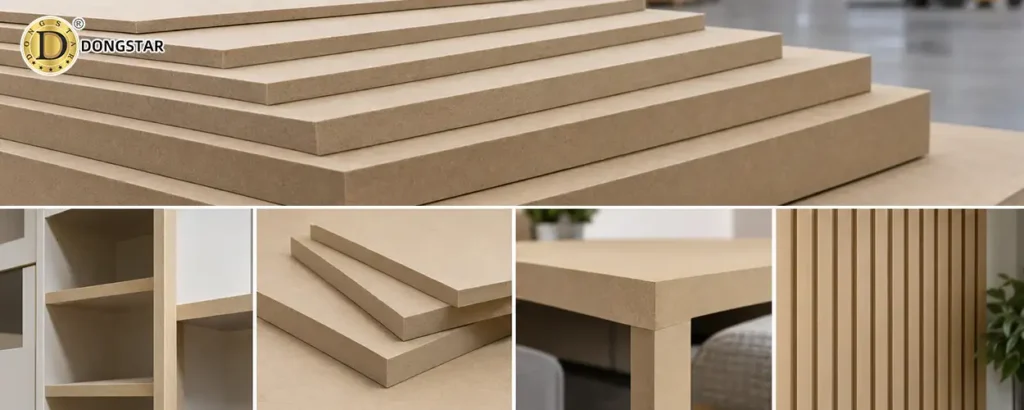
For 1220 × 2440 mm MDF, commonly available thicknesses include:
| MDF Thickness | Typical B2B Applications |
|---|---|
| 2–3 mm | Back panels, decorative parts, packaging and lightweight components |
| 6 mm | Cabinet backs, drawer components and interior panels |
| 9 mm | Furniture components, wall panels and general interior applications |
| 12 mm | Shelving, furniture parts, cabinet components |
| 15 mm | Furniture manufacturing, doors and interior applications |
| 18 mm | Cabinets, shelves, furniture and heavier-duty components |
| 22–25 mm | Heavy furniture, worktops and specialized applications |
| 30 mm | Thick furniture components and customized projects |
Dongstar currently lists MDF and HDF in 1220 × 2440 mm, with a thickness range of 2–30 mm. Its commonly listed thicknesses include 2.7 mm, 3 mm, 6 mm, 9 mm, 12 mm, 15 mm and 18 mm, while customized specifications can also be requested.
This means buyers looking for 18mm MDF 1220×2440, 15mm MDF 1220×2440, or 12mm MDF 1220×2440 can generally use these specifications as starting points for a bulk quotation.
Is 1220×2440 MDF a Standard 4×8 Size?
Yes. 1220 × 2440 mm is commonly marketed as a 4×8 MDF sheet.
For international buyers, the two descriptions are often used interchangeably:
1220 × 2440 mm MDF
2440 × 1220 mm MDF
4×8 MDF board
4×8 MDF sheet
48 × 96 inch MDF
However, buyers should confirm the supplier’s actual finished dimensions and tolerance rather than relying only on the “4×8” description.
For container orders, even a small dimensional difference can affect cutting plans, packaging and material utilization.
What Is the Most Popular MDF Thickness?
There is no single thickness that works for every application, but 12 mm, 15 mm and 18 mm MDF are particularly practical specifications for furniture and interior manufacturing.
12mm MDF
12mm MDF offers a useful balance between weight and rigidity.
It is commonly considered for:
Cabinet components
Furniture panels
Shelving
Interior wall applications
Decorative panels
General woodworking
For projects where reducing panel weight is important, 12 mm may be preferable to thicker MDF.
15mm MDF
15mm MDF provides more rigidity than 12 mm without the additional material weight of 18 mm.
It can be suitable for:
Furniture manufacturing
Cabinet components
Interior doors
Shelving
Decorative structures
For wholesalers, 15 mm can also be a useful middle specification when customers require more strength than standard 12 mm MDF.
18mm MDF
18mm MDF 1220×2440 is one of the most commercially important specifications for furniture and cabinetry.
It is commonly used for:
Cabinet carcasses
Shelves
Furniture panels
Doors
Tables and other furniture components
Interior fit-out projects
For many B2B applications, 18 mm is selected when panel rigidity and machining performance are more important than minimizing weight.
The final thickness should always be determined by the product design, span, fixing method and technical requirements rather than thickness alone.
How Do You Choose the Right MDF Thickness?
For commercial buyers, the easiest approach is to start with the application.
Furniture: 15–18 mm is often a practical starting range.
Cabinet components: 12–18 mm can be considered depending on the design and load requirements.
Back panels: 2.7–6 mm may be sufficient for some furniture constructions.
Decorative wall panels: 6–12 mm can be considered depending on the installation method.
Heavy furniture or specialized components: 18–30 mm or a customized specification may be required.
These are procurement guidelines rather than structural engineering recommendations. The final specification should follow the furniture design, applicable standards and manufacturer’s technical data.
Does MDF Thickness Affect Price?
Yes.
MDF thickness directly affects the amount of raw material used per square meter. Therefore, a 1220×2440 MDF 18mm price will normally be higher than a comparable 12 mm panel when the grade, density, surface and other specifications are the same.
For importers, however, the purchase price per sheet is not enough to evaluate the real cost.
A better comparison includes:
Price per sheet
Price per square meter
Sheet weight
Number of sheets per package
Container loading quantity
Packaging requirements
MDF grade and density
Glue and emission requirements
Surface treatment
Destination-market certification
A supplier offering a lower price may not actually provide the lower landed cost if the density, thickness tolerance, packaging or loading efficiency is different.
What MDF Specifications Should Bulk Buyers Confirm?
When requesting an MDF quotation, avoid sending only:
“Please quote 18mm MDF.”
That specification is incomplete.
A professional B2B RFQ should include:
| Specification | Example |
|---|---|
| Product | Raw MDF Board |
| Size | 1220 × 2440 mm |
| Thickness | 18 mm |
| Density | As required |
| Surface | Plain / Sanded |
| Emission | E0 / E1 / CARB / required standard |
| Grade | Standard / MR / FR / HDF |
| Tolerance | Supplier standard or specified |
| Quantity | Sheets / pallets / containers |
| Packaging | Export standard |
| Destination | Country / port |
| Certification | Required documents |
This makes supplier comparisons much more accurate.
For international procurement, buyers should also confirm whether the quoted thickness is nominal or actual thickness and ask for the applicable thickness tolerance.
Raw MDF or Melamine MDF: Which Should You Buy?
The correct choice depends on how the board will be used.
Raw MDF is normally selected when the buyer plans to paint, laminate, veneer or otherwise process the surface after purchase.
Melamine-faced MDF already has a decorative surface and can reduce additional finishing work.
For furniture manufacturers and distributors, the decision should consider:
- Required surface finish
- Color and design
- Edge treatment
- Machining process
- Production equipment
- End-market requirements
- Total processing cost
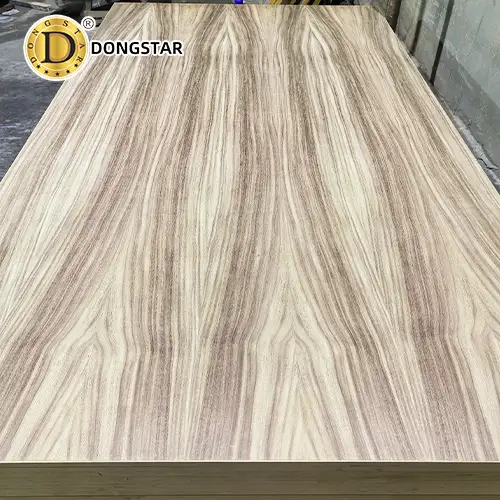
Dongstar offers MDF/HDF with different surface options, including plain boards and boards finished with melamine paper, HPL, PVC and other decorative materials.
Why Buy 1220×2440 MDF from a Manufacturer?
For large-volume purchasing, buying directly from a manufacturer can provide more flexibility than purchasing through several trading layers.
A manufacturer can potentially support:
- Container-scale orders
- Standard 4×8 MDF sheets
- Customized thickness
- Customized surface treatment
- Different MDF grades
- Export packaging
- Certification requirements
- OEM specifications
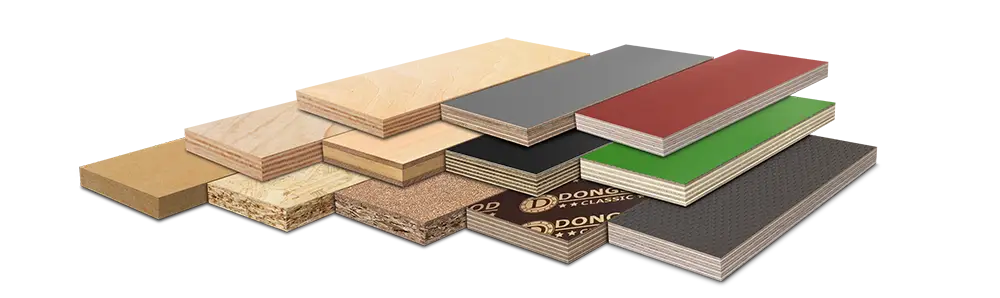
Dongstar identifies itself as a China-based wood-panel manufacturer and supplier, with MDF/HDF among its main product categories. The company’s product range also includes plywood, OSB, particle board and melamine board.
For buyers comparing MDF manufacturers, MDF suppliers or MDF wholesale prices, the most useful comparison is therefore based on the complete technical specification rather than the price of one sheet.
1220x2440 MDF Thickness FAQ
1220 × 2440 mm MDF can be supplied in various thicknesses. Dongstar lists 2–30 mm, with common options including 2.7, 3, 6, 9, 12, 15 and 18 mm. Customized thicknesses may also be available.
Yes. 18mm MDF 1220x2440 is a common specification for furniture, cabinets, shelving and interior applications. Dongstar lists 18 mm among its standard MDF thickness options.
18 mm MDF is thicker and generally provides greater rigidity, but it also weighs more and uses more material. 12 mm MDF can be more suitable where lower weight and material efficiency are important.
For many furniture applications, 15 mm or 18 mm MDF can be practical starting points. The correct thickness depends on the furniture design, span, fixing method, machining requirements and expected load.
Yes. MDF suppliers may offer customized thicknesses, surface treatments and other specifications depending on production capability and order quantity. Buyers should confirm MOQ, production lead time and technical tolerance before placing a bulk order.
Provide the supplier with the size, thickness, MDF grade, density, surface, emission standard, quantity, packaging requirements and destination port. A complete specification allows factories to provide a more accurate wholesale quotation and container-loading plan.
Final Takeaway
For buyers sourcing 1220×2440 MDF sheets, the most commonly requested thicknesses include 12 mm, 15 mm and 18 mm, while suppliers may provide a much wider range from approximately 2 mm to 30 mm.
The best thickness is not necessarily the thickest board. It is the specification that matches the product design, machining process, performance requirements and landed cost.
If you are sourcing MDF board wholesale, planning a container order or comparing MDF manufacturers, send the complete specification to the supplier before requesting a final quotation.
For current MDF specifications and bulk supply options, visit the [Dongstar MDF & HDF product page] and contact the supplier for a project-specific quotation.