
Table of Contents
18mm OSB Board 1220x2440mm: Why This Size and Thickness Matter
For an importer or construction-material wholesaler, buying OSB isn’t simply about finding the lowest price per sheet.
The more important question is whether the thickness, dimensions, grade, adhesive system, surface and certification match the final application.
Among the specifications requested by international buyers, 18mm OSB board 1220x2440mm is particularly relevant for structural and heavy-duty panel applications.
The 1220 × 2440 mm format is approximately 4 × 8 feet, making it familiar to buyers in many international markets. An 18mm panel is also substantially more rigid than thinner OSB options, although actual structural performance depends on the product grade and applicable standard.
For buyers sourcing from China, the same purchasing logic applies to thinner products such as:
15mm OSB sheets
12mm OSB boards
11mm OSB sheets
9mm OSB boards
The right product isn’t necessarily the thickest one. It is the one that meets the project’s requirements at a competitive landed cost.
This guide explains what global buyers should check before requesting an OSB quotation from a Chinese factory.
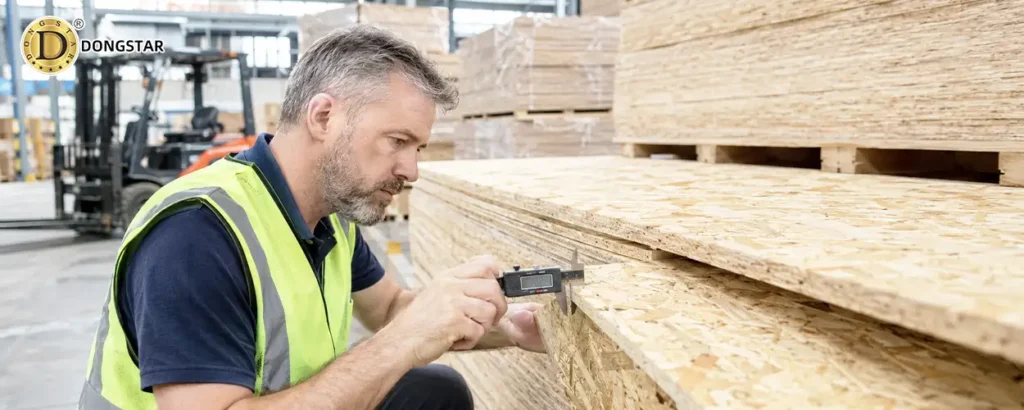
18mm OSB Board 1220x2440mm Specifications
A typical purchasing specification may look like this:
| Item | Example Specification |
|---|---|
| Product | OSB Board |
| Thickness | 18mm |
| Size | 1220 × 2440mm |
| Approx. Imperial Size | 4 × 8 ft |
| Application | Construction / structural use |
| Surface | Sanded or unsanded, as required |
| Edge | Square edge or T&G |
| Grade | To project/market requirement |
| Adhesive | As specified |
| Emission requirement | Destination-market requirement |
| Packaging | Export seaworthy packaging |
The key point is that 18mm + 1220×2440mm is not a complete specification.
A professional importer should also confirm the OSB grade and technical performance.
For example, European buyers may work with EN 300 classifications, while North American projects may use different standards and performance designations.
This is why the supplier quotation should clearly identify the standard against which the product is manufactured and tested.
Why 18mm Is Popular for Heavy-Duty Applications
Thicker OSB panels can offer greater stiffness than thinner panels, making them suitable for applications where the project calls for a more substantial structural panel.
Potential applications include:
Flooring and subfloor systems
Structural sheathing
Roof construction
Wall systems
Industrial construction
Heavy-duty packaging
However, thickness alone doesn’t determine whether a panel is suitable for a specific floor or roof.
Support spacing, span, loads, fastening, panel grade and local building regulations must also be considered.
15mm OSB Sheet Supplier: What Should You Check?
Buyers searching for a 15mm OSB sheet supplier are often looking for a balance between material cost, panel rigidity and weight.
15mm OSB can be suitable for a variety of construction and industrial applications, depending on its certified performance.
When evaluating a supplier, ask for:
Exact thickness and tolerance
Panel dimensions
OSB grade
Density
Adhesive system
Moisture resistance
Emission information
Available certifications
Packaging details
Container loading quantity
A supplier that answers these questions clearly is generally easier to evaluate than one that provides only a price list.
For a wholesale buyer, another question matters:
Can the supplier maintain the same specification over repeated orders?
A competitive first shipment is useful. Consistent quality on the fifth or tenth shipment is much more valuable.
12mm OSB Board Manufacturer: What Separates a Factory From a Trader?
A buyer searching for a 12mm OSB board manufacturer should look beyond the word “manufacturer” on a website.
Ask for evidence of actual production capability.
Useful information includes:
Factory location
Production lines
Daily or monthly capacity
Raw material sources
Quality-control procedures
Laboratory testing
Production photos or videos
Export experience
Technical documentation
The manufacturing process matters because OSB performance depends on more than thickness.
Wood strand quality, strand orientation, resin distribution, pressing conditions, density and moisture control all influence the finished panel.
For international projects, consistency is especially important.
If one shipment is 12mm and the next batch has noticeably different thickness, density or surface quality, the buyer may face installation problems or customer complaints.
A Better Question to Ask
Instead of asking:
“What is your lowest 12mm OSB price?”
ask:
“Please quote your 12mm OSB with full specifications, tolerance, grade, packing quantity, container loading and applicable test reports.”
That produces a much more useful comparison.
9mm OSB Board Wholesale: When Does It Make Sense?
9mm OSB board wholesale is relevant for buyers serving applications where a thinner panel is appropriate.
Compared with thicker OSB, 9mm panels can offer:
Lower material consumption
Lower sheet weight
Easier handling
Potentially lower transportation cost
Potential applications may include:
Interior panels
Partitions
Furniture components
Industrial packaging
Light-duty applications
But a wholesale buyer should be careful about using 9mm OSB for structural applications without checking the required performance.
A thinner panel isn’t automatically a cheaper replacement for a thicker structural product.
If a project specification calls for a certain span rating, load capacity or certified structural grade, those requirements take priority over the sheet price.
For Distributors
9mm OSB can be useful as part of a broader product range.
A distributor might stock:
9mm for lighter applications
12mm for general use
15mm for medium-duty requirements
18mm for heavier applications
This gives customers more choice without forcing every project into the same specification.
11mm OSB Sheet Factory Price: What Actually Determines the Cost?
Buyers searching for 11mm OSB sheet factory price are usually trying to answer one question:
What is the real cost of buying directly from China?
The answer depends on more than the thickness.
Important cost factors include:
Raw Material
The type, quality and availability of wood raw material can influence the factory cost.
Adhesive
Different resin and emission requirements can affect pricing.
Density
Higher material consumption can increase production cost.
Panel Dimensions
Larger or customized dimensions may affect production efficiency.
Surface
Sanded panels can cost more than basic unsanded panels.
Packaging
Export-grade packaging adds cost but protects the product during transportation.
Order Quantity
A full-container order normally has a different unit economics from a small trial order.
Destination and Incoterms
FOB, CIF and other trade terms can produce very different apparent prices.
That’s why buyers shouldn’t compare:
Supplier A: $X/sheet
with:
Supplier B: $Y/sheet
until the specifications are identical.
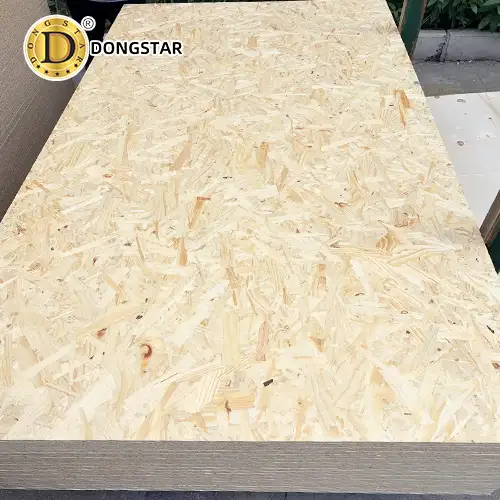
How to Compare OSB Prices Correctly
For international procurement, compare products using a standardized RFQ.
For example:
| Specification | Supplier A | Supplier B | Dongstar |
|---|---|---|---|
| Product | |||
| Size | |||
| Thickness | |||
| Grade | |||
| Density | |||
| Glue | |||
| Emission | |||
| Surface | |||
| Packaging | |||
| Sheets/container | |||
| Net weight | |||
| Gross weight | |||
| FOB price | |||
| Freight | |||
| Landed cost |
Then calculate:
Cost per square meter = Total product cost ÷ usable panel area
And, when possible:
Landed cost per square meter = Product + freight + duties + local charges ÷ usable area
This is much more useful than comparing the factory price alone.
18mm vs 15mm vs 12mm vs 11mm vs 9mm OSB
The following is a practical procurement framework.
| Thickness | Typical Position | Possible Applications |
|---|---|---|
| 9mm | Light | Interior panels, packaging, furniture |
| 11mm | Light-medium | Sheathing and general construction |
| 12mm | Medium | General construction, panels |
| 15mm | Medium-heavy | Structural and flooring applications |
| 18mm | Heavy | Flooring, structural and heavy-duty work |
These categories are not engineering specifications.
The actual application must be checked against the product’s certified performance and local requirements.
A good supplier should be willing to discuss this distinction.
How to Choose a China OSB Board Manufacturer
For large-volume buyers, supplier selection should cover five areas.
1. Manufacturing Capability
Confirm that the supplier has adequate production capacity for your order volume.
2. Quality Consistency
Ask how the factory controls:
Thickness
Density
Moisture
Surface
Bonding
Dimensions
3. Technical Documentation
Request relevant test reports and certification for the destination market.
4. Export Experience
An experienced exporter should understand:
Container loading
Export packaging
Shipping documents
Commercial invoices
Packing lists
Destination-market requirements
5. Communication
This sounds simple, but it matters.
If a supplier cannot clearly answer technical questions before receiving an order, resolving a quality issue after the container arrives won’t be easier.
What Global Importers Should Put on an OSB Purchase Order
A professional purchase order should identify the product precisely.
For example:
Product: OSB
Size: 1220 × 2440mm
Thickness: 18mm
Grade: According to agreed specification
Surface: As agreed
Edge: Square / T&G
Adhesive: As agreed
Emission: Destination-market requirement
Quantity: Agreed container quantity
Packaging: Export standard
Inspection: Pre-shipment inspection if required
The final document should match the approved quotation, sample and technical documentation.
This simple discipline can prevent many avoidable disputes.
Why Dongstar Can Be Considered for Bulk OSB Purchasing
Dongstar’s wood-panel product range includes OSB alongside plywood, film faced plywood, MDF, particle board and melamine board.
Its OSB product information includes multiple thickness options and a standard 1220 × 2440mm panel size, with customized specifications discussed according to buyer requirements.
For a global project buyer or distributor, the advantage of working with a supplier covering several panel categories can be practical.
A customer purchasing materials for one construction project may need:
Instead of managing several unrelated suppliers, buyers can explore whether a qualified manufacturer/exporter can consolidate part of the procurement.
As always, specifications and certification should be confirmed for each individual product before ordering.
OSB Export Checklist for Importers
Before confirming a container order, check these points:
Product
Thickness confirmed
Dimensions confirmed
Grade confirmed
Surface confirmed
Edge profile confirmed
Quality
Technical data received
Sample approved
Tolerance agreed
Moisture requirements confirmed
Compliance
Destination-market standard identified
Relevant test reports received
Emission requirements confirmed
Certification verified where required
Logistics
Packing method confirmed
Sheets per package confirmed
Container quantity calculated
Net/gross weight confirmed
Loading plan approved
Commercial
Incoterms confirmed
Payment terms agreed
Lead time confirmed
Inspection requirements agreed
This checklist is particularly useful for first-time buyers importing OSB from China.
FAQs About OSB Sheet Thickness
A common export specification is 1220 × 2440mm, approximately 4 × 8 feet. Buyers should confirm the exact dimensions and tolerance with the supplier.
18mm OSB can be used in flooring systems where its certified performance meets the project's requirements. Joist spacing, span, load, panel grade and local building regulations must also be considered.
18mm OSB is thicker and will generally use more material and weigh more than 15mm OSB. The appropriate choice depends on the required structural performance rather than thickness alone.
Yes, international buyers can source 12mm OSB from Chinese manufacturers and exporters. Before ordering, verify production capability, product specifications, testing, certification and export experience.
Send the supplier a complete RFQ including size, thickness, grade, quantity, packaging, destination and certification requirements. A complete specification produces a much more meaningful factory quotation.
It may be suitable for specific structural applications if the product is certified and the project design allows it. Buyers should never assume suitability based on thickness alone.
Final Recommendation
For global importers, wholesalers and project buyers, OSB procurement should begin with the project specification, not the factory price.
If your project calls for 18mm OSB board 1220x2440mm, confirm the complete technical specification before comparing quotations.
If you’re sourcing 15mm OSB sheet, 12mm OSB board, 9mm OSB board wholesale or looking for an 11mm OSB sheet factory price, use the same principle:
Compare like with like.
Confirm:
Size → Thickness → Grade → Density → Glue → Surface → Certification → Packaging → Container Loading → Landed Cost.
That’s how a professional buyer turns a simple OSB quotation into a reliable procurement decision.
For China-based sourcing, Dongstar can be approached for OSB and other engineered wood panels, with the final product specification, current availability, certification and commercial terms confirmed directly for each project.
For bulk buyers, the goal shouldn’t simply be to find the cheapest OSB.
It should be to find the right specification, reliable quality and predictable supply at a competitive total landed cost.