Table of Contents
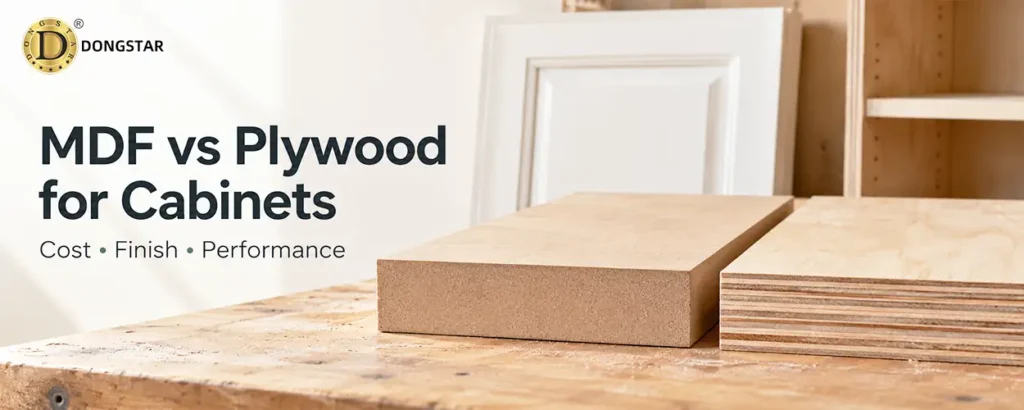
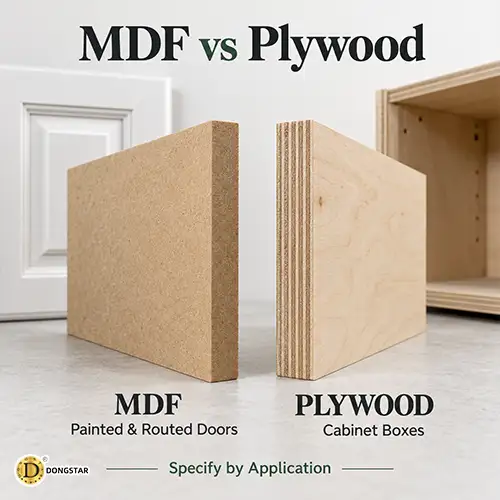
MDF is often the practical choice for painted cabinet doors and routed decorative panels. Quality plywood is usually better suited to cabinet boxes where stiffness, fastening and handling matter. For bulk buyers, the right specification may combine both materials within the same cabinet.
The purchasing decision goes beyond sheet price. Finishing labor, machining yield, hardware performance, freight and replacement costs all affect the final margin.
This guide compares MDF vs plywood for cabinets from the perspective of furniture manufacturers, project contractors, wholesalers and importers.
MDF vs Plywood: A Cabinet Buyer’s Comparison
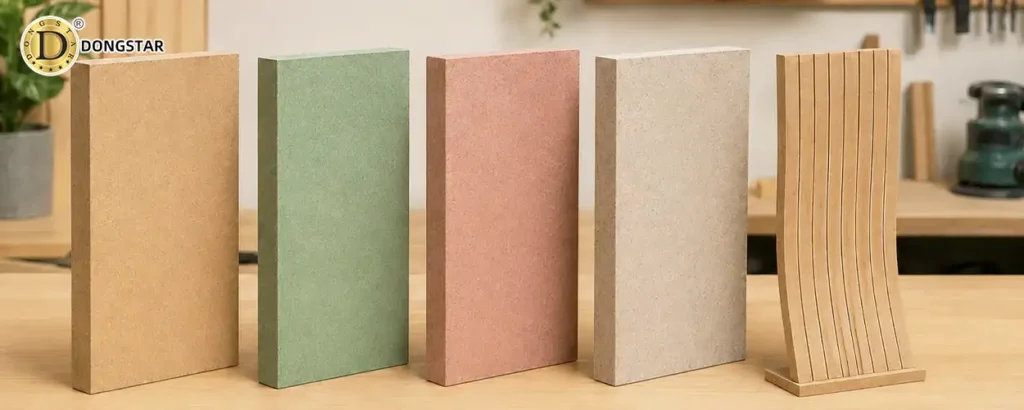
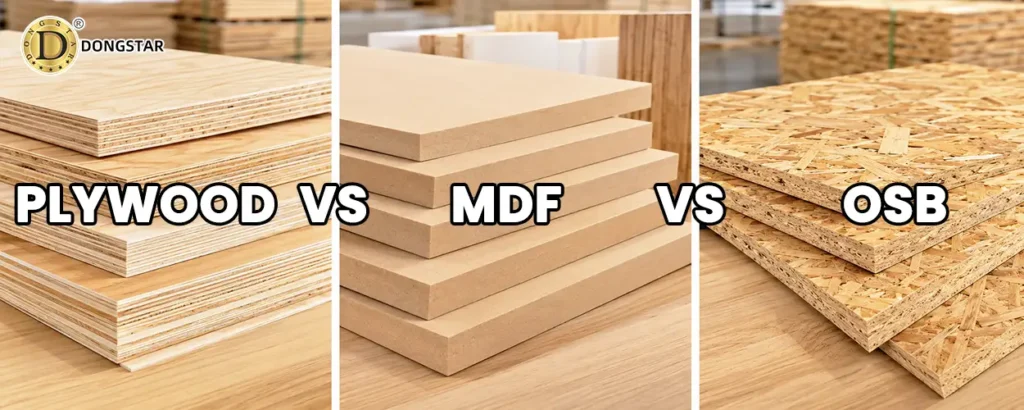
MDF consists of refined wood fibers bonded with resin and pressed into panels. Plywood consists of bonded wood veneers, usually arranged with alternating grain directions.
Their different structures influence how they machine, finish and perform.
| Purchasing Factor | MDF | Plywood |
|---|---|---|
| Painted finish | Smooth substrate without visible wood grain; edges require preparation | Face quality matters; grain and repairs may show through paint |
| Routed cabinet doors | Well suited to detailed profiles when the machining grade is appropriate | Routing can expose veneer layers or core gaps |
| Cabinet boxes | Suitable for properly designed interior cabinets | Often preferred where stiffness and fastening are priorities |
| Screw fixing | Requires suitable fasteners, pilot holes and edge distances | Quality cores generally provide dependable fixing; voids can weaken connections |
| Moisture exposure | Standard MDF is vulnerable; specify an appropriate moisture-resistant grade where needed | Performance depends on veneer quality, bond classification and edge protection |
| Weight | Often heavier than lightweight plywood at the same thickness | Varies substantially with wood species and construction |
| Purchase cost | Often lower than comparable decorative hardwood plywood | Varies with core, face veneer, grade and adhesive |
| Main inspection concern | Edge quality, thickness consistency and swelling performance | Core gaps, veneer quality, bonding and thickness consistency |
These are selection guidelines. Actual performance depends on the supplied grade, component design and service conditions.
1. Which Material Is Better for Cabinet Doors?
MDF for painted and routed doors
For opaque painted finishes, MDF offers a relatively uniform surface without the grain variation found in wood veneers. It also allows profiles to be routed directly into a panel.
The European Panel Federation identifies machining and finishing performance as important reasons for using MDF in furniture and interior components.
For MDF cabinet doors, assess more than the appearance of an unmachined sample. Ask the supplier to provide a sample with your intended profile, hinge drilling and coating system.
Check:
- Whether routed edges remain clean or become fuzzy.
- How much sealer and sanding the edges require.
- Whether hinge screws hold securely in the proposed design.
- Whether finished doors remain flat after conditioning.
A lower sheet price can lose its advantage if production requires extra sanding or repeated coating.
Plywood for veneered and wood-grain doors
Plywood is a useful option when the design calls for a visible wood veneer finish or a particular panel construction.
Specify face species, veneer grade, repair limits and color consistency. For routed designs, inspect the exposed core: internal gaps that are hidden on a full sheet may become visible after machining.
Practical choice: Start with MDF for smooth painted profiles. Consider plywood where the veneer appearance or component design justifies it.
2. Which Material Is Better for Cabinet Boxes and Shelves?
Cabinet boxes carry hinges, drawer runners, shelves and installed contents. Their performance depends on panel properties and joint design.
Quality cabinet plywood is often selected where stiffness, fastening and handling resistance are important. APA identifies plywood as a suitable material for cabinet and millwork manufacturing, with panel selection tied to the intended application.
MDF can also serve in interior cabinet construction, particularly with decorative surfaces and properly designed connections. However, long shelves and heavily loaded components require attention to deflection and long-term sag.
Before approving either material, confirm:
- Shelf span and expected load.
- Panel thickness and support arrangement.
- Joint and fastener design.
- Hinge and drawer-runner fixing positions.
- Requirements for repeated assembly or transport.
An 18mm board is not automatically suitable for every cabinet component. Validate the complete construction with a representative sample.
3. MDF vs Plywood for Kitchen and Bathroom Cabinets
Moisture is a common source of specification mistakes.
Standard MDF should not be treated as waterproof. Moisture-resistant MDF is designed for more demanding interior conditions, but its suitability still depends on the grade, finish and exposure.
The European Panel Federation distinguishes moisture-resistant MDF intended mainly for humid interiors from specialist exterior grades. It also emphasizes protecting surfaces and edges in bathroom applications.
For kitchen and bathroom cabinetry:
- Specify the required moisture-performance grade.
- Protect cut edges, drilled holes and joints.
- Avoid designs that trap standing water.
- Request relevant swelling-test results and test conditions.
- Confirm that the finished assembly suits the installation environment.
Plywood also needs a defined specification. A decorative face does not establish the adhesive’s moisture performance, and a moisture-durable glue line does not make exposed wood waterproof.
For sink cabinets, evaluate the entire assembly, including plumbing penetrations and leak protection.
4. Is MDF Cheaper Than Plywood?
MDF often costs less than comparable decorative hardwood plywood, but there is no reliable universal price difference.
A meaningful MDF vs plywood cost comparison requires matching sheet dimensions, thickness, finish, emission requirements, order quantity and delivery terms.
Calculate:
Cost per accepted component = total material, processing, logistics and rejection costs ÷ accepted components
For example, a lower-priced sheet may become more expensive if it produces greater machining waste. A higher-priced panel may justify its cost through better yield or reduced finishing work.
For imported orders, compare actual packing lists and payload limits. MDF’s weight can affect freight economics, while plywood weight varies by species and construction.
Request quotations on the same basis:
| Quote Item | What to Confirm |
|---|---|
| Panel specification | Material, grade, dimensions and thickness tolerance |
| Surface | Raw, painted, veneered, melamine-faced or another finish |
| Quality acceptance | Agreed defects, sampling method and rejection criteria |
| Documentation | Applicable test reports and destination requirements |
| Delivery | Incoterm, loading port, packing and shipment quantity |
5. When Does Combining MDF and Plywood Make Sense?
A cabinet does not need one substrate throughout.
A specification worth evaluating is:
- Painted doors and decorative fronts: suitable machining-grade MDF.
- Cabinet boxes: plywood selected for the required construction.
- Shelves: material and thickness matched to span and load.
- Back panels: thickness matched to fixing and cabinet rigidity.
This approach allocates material according to function. Whether it reduces cost depends on production methods, sourcing and assembly requirements.
For wholesalers, clearly identify each component’s substrate in product literature. “Wood cabinets” is too vague for buyers comparing competing offers.
6. What Should Bulk Buyers Specify Before Ordering?
A useful RFQ for MDF boards for cabinet manufacturing or cabinet plywood should include:
- Component: door, side panel, shelf, back or drawer part.
- Dimensions: sheet size, finished thickness and permitted tolerances.
- Material: MDF grade or plywood face, core and construction.
- Finish: coating, veneer, melamine, HPL or PVC requirements.
- Performance: moisture exposure, loading and hardware requirements.
- Emission documentation: requirements applicable to the destination market.
- Approval sample: production-representative material with the intended processing.
- Commercial details: quantity, packing, destination and delivery terms.
For US orders, regulated MDF, hardwood plywood and finished goods containing these panels fall within EPA’s composite-wood formaldehyde framework. Confirm applicable TSCA Title VI documentation rather than assuming a general emission label is sufficient.
Keep the approved sample and written acceptance criteria as references for shipment inspection.
FAQ
Yes. A suitable MDF grade can work well for painted or routed kitchen cabinet doors. Specify the finish, moisture conditions, hinge fixing and edge protection, then approve a finished sample.
No single comparison covers every grade and application. Quality plywood often offers advantages in stiffness and fastening, while MDF offers a uniform substrate for machining and finishing. Compare relevant test data and the actual component design.
It can be an alternative in some interior components. Moisture resistance alone does not establish equivalent stiffness, screw holding or suitability for the proposed cabinet.
It can be, provided the panel, joints, hardware and shelf design meet the application requirements. A melamine surface does not make exposed edges or drilled holes waterproof.
Check dimensions, flatness, surface defects, machining quality and hardware fixing. Where relevant, verify moisture-performance and emission documentation. Test a finished cabinet component as well as the raw panel.
Discuss Your Cabinet Panel Requirements with Dongstar
Dongstar’s published MDF and HDF board range includes raw and specialty panels, with melamine, HPL and PVC surface options. Confirm the exact grade and finish available for your order.
For a relevant recommendation and quotation, send your component drawings, thickness, finish, destination market and estimated quantity.