Table of Contents
When buying OSB by the container, choosing the thickness isn’t a small detail. It affects material performance, sheet weight, installation, packaging, transportation and, ultimately, the total project cost.
A contractor may need a relatively light panel for wall sheathing, while a flooring project may require a substantially thicker structural panel. A furniture manufacturer may have completely different requirements.
That’s why professional importers don’t normally ask only:
“What is your OSB price?”
They ask:
“What thickness, grade, size, glue system and certification do you offer?”
That’s the better question.
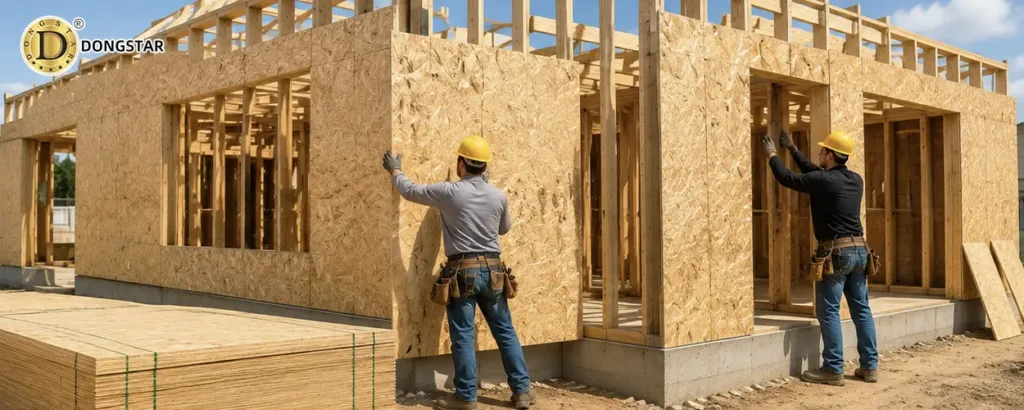
OSB is an engineered wood panel manufactured from wood strands arranged in oriented layers and bonded under pressure and heat. Its structure gives it consistent density and useful strength-to-weight performance. APA lists OSB for applications including subflooring, flooring, wall and roof sheathing, structural insulated panels, industrial containers and furniture.
For European buyers, thickness selection is also closely connected with the applicable performance class and project specification. EN 300-based OSB products are available in multiple thickness ranges, with technical properties changing according to thickness.
So, there isn’t one “best” OSB thickness.
The right thickness is the one that matches the structural requirement, application, local standard and purchasing specification.
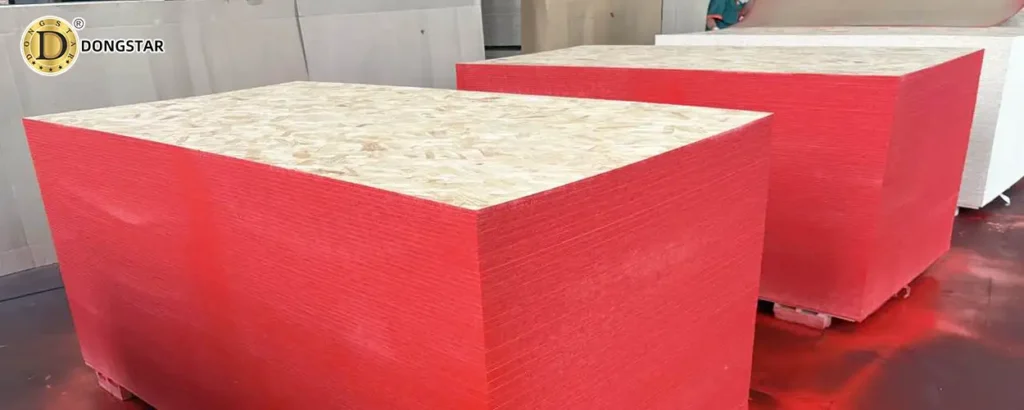
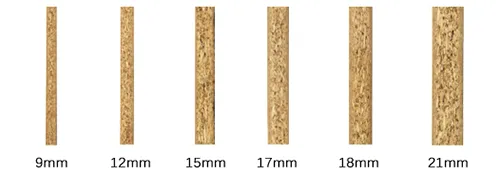
OSB Thickness Chart at a Glance
The following chart is a practical starting point for international buyers.
| Thickness | Approx. Imperial Equivalent | Typical Buyer Interest | Common Applications |
|---|---|---|---|
| 9mm OSB board | 0.35 in | Light panel applications | Walls, partitions, packaging, furniture |
| 11mm OSB sheet | 0.43 in | Sheathing applications | Walls, roofing, general construction |
| 12mm OSB board | 0.47 in | General-purpose panel | Walls, construction, furniture |
| 15mm OSB board | 0.59 in | Medium/heavy applications | Flooring, walls, structural work |
| 18mm OSB sheet | 0.71 in | Heavy-duty construction | Flooring, roofing, structural panels |
| 22mm OSB board | 0.87 in | High-load applications | Heavy-duty flooring and structural work |
Important: inch conversions above are approximate. Buyers should order according to the nominal metric thickness or the applicable local standard, rather than treating a rounded inch conversion as an exact specification.
Manufacturer product programs show that 9, 11, 12, 15, 18 and 22 mm are established OSB thickness options in the market.
Dongstar’s current OSB product page lists 8, 9, 11, 12, 15 and 18 mm as standard thickness options, with customized sizes available.
9mm OSB Board: Best Applications
9mm OSB board is a relatively thin engineered wood panel.
Its main advantage is straightforward: lower weight and easier handling.
For applications where the panel doesn’t need to carry heavy structural loads, 9 mm can be a cost-effective option.
Potential applications include:
- Interior partitions
- Furniture components
- Packaging
- Crates
- Decorative or functional panels
- Certain wall applications, subject to local design requirements
For B2B buyers, 9 mm can be attractive when shipping weight and material consumption are important.
However, there’s a catch.
A thinner board should never be selected simply because the factory price is lower. The buyer needs to confirm the required structural performance first.
For structural construction, the applicable building code, span, fastener schedule, support spacing and OSB performance classification all matter.
11mm OSB Sheet: When Should You Choose It?
An 11mm OSB sheet sits between light-duty and heavier structural panel requirements.
This thickness is particularly relevant to buyers serving markets where approximately 11 mm is a recognized panel specification.
European OSB product programs, for example, include 11 mm products, while North American structural panel specifications use different nominal thickness conventions.
Potential applications can include:
- Wall sheathing
- Roof sheathing
- Construction panels
- Industrial packaging
- General structural applications where the engineering specification permits it
For importers, this is an important lesson:
Don’t convert a customer’s required 7/16-inch or 1/2-inch specification into a metric thickness without checking the actual standard being requested.
Nominal thickness, actual thickness, performance rating and certification can differ between markets.
12mm OSB Board: A Practical Construction Option
A 12mm OSB board is one of the most practical thicknesses for buyers who want a balance between handling and panel rigidity.
Dongstar currently lists 12 mm among its OSB thickness options, alongside 9, 11, 15 and 18 mm.
Typical applications may include:
- Wall panels
- Interior construction
- General building applications
- Furniture
- Packaging
- Modular construction components
For international distributors, 12 mm can also be useful as a stock item because it sits in a middle thickness range rather than being limited to a highly specialized application.
But again, thickness alone doesn’t determine performance.
The OSB grade, density, adhesive system, manufacturing quality and applicable standard must all be reviewed.
15mm OSB Board: Strength and Versatility
A 15mm OSB board provides a noticeable step up in panel thickness compared with 9 or 11 mm.
This makes it interesting for:
- Flooring systems
- Wall construction
- Roof applications
- Structural panels
- Industrial applications
Technical data from EGGER, for example, groups 11–15 mm OSB 3 products within a defined structural performance range under EN 300.
For project buyers, 15 mm can be a useful compromise when:
- 12 mm isn’t sufficiently rigid
- 18 mm would add unnecessary weight or cost
- The engineering specification allows 15 mm
For bulk purchasing, this is where a supplier’s technical support becomes valuable. A good supplier should be able to explain not just what thickness is available, but what the board is designed to do.
18mm OSB Sheet: The Heavy-Duty Choice
Among the thicknesses requested by international buyers, the 18mm OSB sheet is one of the most commercially important.
It is approximately 0.71 inch thick and is widely associated with applications where greater stiffness and load capacity are needed.
Common applications include:
- Subflooring
- Flooring
- Roof structures
- Wall systems
- Structural panels
- Heavy-duty construction
APA lists OSB as a structural panel for flooring, roof and wall sheathing, while European technical documentation provides separate performance requirements for thicker OSB products.
For a wholesaler, 18 mm can also be a strong product to stock because it serves a broad range of construction customers.
However, don’t make the mistake of telling a customer that “18 mm is automatically suitable for flooring.”
The correct specification depends on:
- Joist spacing
- Span
- Panel orientation
- Tongue-and-groove profile
- Load requirements
- Building code
- OSB performance class
That distinction is exactly the kind of information that helps a B2B supplier demonstrate expertise rather than simply sell a commodity.
22mm OSB Board: When Extra Thickness Makes Sense
A 22mm OSB board is intended for applications where greater panel thickness is justified by the project requirements.
Potential applications include:
- Heavy-duty flooring
- Structural decks
- Industrial construction
- High-load applications
- Specialized building systems
22 mm is also a recognized thickness in European OSB product ranges.
For large buyers, though, there is an important purchasing consideration.
More thickness means more material per sheet.
That affects:
- Sheet weight
- Container payload
- Handling
- Freight cost
- Storage requirements
Therefore, a 22mm OSB board should be specified because the project needs its performance—not simply because “thicker must be better.”
Dongstar’s current online OSB specification lists standard thicknesses up to 18 mm and notes customized sizing. Buyers requiring 22 mm should therefore confirm current production availability and technical specifications directly before placing an order.
That kind of specification check is especially important for container-scale orders.
How OSB Thickness Affects Strength and Weight
Thickness matters because a thicker panel generally provides greater stiffness, but thickness should never be treated as a standalone measure of structural capacity.
OSB performance also depends on:
- Board grade
- Density
- Strand orientation
- Adhesive
- Manufacturing process
- Moisture conditions
- Panel size
- Support spacing
- Installation
European technical data illustrates this clearly: characteristic bending strength and stiffness requirements vary across thickness groups under EN 300.
A thicker panel will normally also weigh more.
For an importer, that creates a commercial trade-off:
Higher thickness → potentially higher performance → more material → greater weight → potentially higher freight cost.
That’s why professional procurement teams compare cost per square meter of usable performance, rather than simply comparing the price of one sheet against another.
OSB Thickness vs Application
Here’s a practical starting framework:
| Application | Possible Thickness Range | Key Consideration |
|---|---|---|
| Packaging / crates | 9–12mm | Weight and durability |
| Interior panels | 9–12mm | Appearance and handling |
| Wall sheathing | 11–15mm | Code and structural design |
| Roof sheathing | 11–18mm | Span, load and local code |
| Flooring | 15–22mm | Joist spacing and load |
| Heavy-duty structural work | 18–22mm+ | Engineering specification |
| Furniture | 9–18mm | Machining and appearance |
These are procurement starting points, not engineering instructions. The final specification should follow the applicable building code, project drawings and manufacturer’s technical data.
APA provides application and technical resources for OSB structural panels, including roof, wall and floor applications.
OSB Thickness and Export Logistics
For a global importer, the question isn’t just:
“How much does one OSB sheet cost?”
The better question is:
“What is my delivered cost per square meter?”
Thickness changes the economics of an entire container.
A thicker board generally means:
- More material per square meter
- Greater sheet weight
- Fewer sheets per package at the same packaging height
- Higher total container weight for an equivalent number of sheets
The supplier should therefore calculate:
- Sheet dimensions
- Thickness
- Number of sheets per pallet/package
- Number of packages per container
- Gross and net weight
- Container utilization
- FOB/CIF or other agreed trade terms
Dongstar currently lists 1220 × 2440 mm as its standard OSB size and also states that customized sizes are available.
For a buyer comparing 9 mm, 12 mm and 18 mm products, these loading calculations can make a major difference to the final landed cost.
What Global Importers Should Specify Before Ordering
A professional OSB purchase order should contain much more than “OSB board, 18 mm.”
At minimum, specify:
Size
For example:
1220 × 2440 mm
or another project-specific dimension.
Thickness
For example:
18 mm nominal thickness
Grade
Such as:
- OSB/1
- OSB/2
- OSB/3
- OSB/4
The required grade depends on the market and application. EN 300 distinguishes OSB grades by intended use and performance characteristics.
Glue / Emission Requirement
Depending on the destination market and project, buyers may require specific adhesive or emission performance.
Dongstar states that its OSB production can use options including MR, E1, E0, ENF, PMDI, WBP/phenolic and melamine-based systems.
Surface
Clarify whether the board should be:
- Unsanded
- Sanded
- Tongue and groove
- Straight edge
Packaging
Confirm:
- Pallet specification
- Protective wrapping
- Edge protection
- Package quantity
- Shipping marks
This prevents expensive misunderstandings after production has started.
Certification and Compliance
This is one of the biggest differences between a casual purchase and a professional B2B procurement process.
Before ordering, determine what your destination market requires.
Depending on the country and application, buyers may need to consider:
- EN 300
- CE-related requirements
- FSC
- Formaldehyde emission requirements
- EPA TSCA Title VI
- CARB requirements
- Project-specific testing
Don’t assume that a certificate suitable for Europe automatically satisfies a North American project.
Ask the supplier for the actual current test report or declaration applicable to the product being quoted.
Technical documentation from established manufacturers shows how OSB properties, dimensional tolerances, moisture behavior and structural performance are documented against relevant standards.
How to Choose a China OSB Board Supplier
For international buyers, choosing a supplier is often more important than choosing a few millimeters of thickness.
A capable China OSB board manufacturer should be able to answer questions about:
- Raw materials
- Density
- Glue system
- OSB grade
- Thickness tolerance
- Panel dimensions
- Moisture resistance
- Production capacity
- Packaging
- Container loading
- Certification
- Lead time
Dongstar identifies Linyi Dongstar Import & Export Co., Ltd. as part of Dongstar Group and presents OSB, plywood, MDF, particle board and other wood-based panels for international markets. Its current OSB page lists poplar, pine and eucalyptus as available core/raw-material options and multiple adhesive systems.
For buyers ordering full containers, it’s also sensible to ask for:
- Factory photos
- Production videos
- Samples
- Test reports
- Loading photos
- Pre-shipment inspection
- Reference projects, where available
A trustworthy supplier should be comfortable discussing these details.
Why Factory Specifications Matter More Than Thickness Alone
Here’s the point that experienced buyers know well:
Two 18mm OSB panels aren’t necessarily the same product.
They may differ in:
- Density
- Grade
- Glue
- Surface
- Moisture resistance
- Thickness tolerance
- Mechanical performance
- Formaldehyde emissions
- Certification
For example, technical data for an OSB 3 product shows that strength and stiffness are specified according to standardized test methods rather than inferred from thickness alone.
So when comparing suppliers, don’t create a spreadsheet containing only:
Thickness + Price.
A more useful purchasing matrix includes:
| Specification | Supplier A | Supplier B | Supplier C |
|---|---|---|---|
| Thickness | |||
| Size | |||
| Grade | |||
| Density | |||
| Glue | |||
| Formaldehyde class | |||
| Certification | |||
| Sheets/container | |||
| Net weight/container | |||
| Lead time | |||
| Price/㎡ | |||
| Landed cost/㎡ |
That approach gives procurement managers a much clearer picture of real value.
FAQs About OSB Thickness
There is no single best thickness. The correct option depends on the application, structural design, OSB grade, support spacing and local requirements. Common commercial thicknesses include 9, 11, 12, 15 and 18 mm, while 22 mm is also available in some product ranges.
9 mm OSB can be used for lighter panel applications such as partitions, furniture components and packaging, subject to the product's grade and project requirements.
It can be suitable for certain construction applications, including sheathing, when the product's structural performance and the project specification permit it.
Not necessarily. Flooring requirements depend on span, joist spacing, loads, panel grade and local building requirements. Buyers should not select flooring material based on thickness alone.
15 mm OSB is used in a range of structural and semi-structural applications, including certain flooring, wall and roof systems. The correct use depends on the certified performance of the specific product.
18 mm OSB is widely used for flooring and subfloor applications, but the appropriate specification must be confirmed against span, load, support spacing, panel profile and local building requirements.
22 mm OSB can make sense when the project calls for a thicker, stiffer structural panel. It should be selected according to engineering requirements rather than simply because it is thicker.
Some manufacturers can provide customized specifications. Dongstar currently lists several standard thicknesses and states that customized sizes are available; buyers requiring a non-standard thickness should confirm production capability before ordering.
The answer depends on the intended application and destination standard. Under EN 300, OSB grades have different performance and use characteristics. For structural projects, buyers should specify the required grade rather than simply asking for “OSB.”
Final Buying Recommendation for Importers and Wholesalers
If you’re buying OSB for an international project, don’t start with price.
Start with application.
Then define:
Application → Grade → Thickness → Size → Glue → Certification → Packaging → Quantity → Delivery terms.
As a simple purchasing guide:
- 9mm: lighter-duty panel requirements
- 11mm: sheathing and general construction possibilities
- 12mm: versatile mid-range option
- 15mm: greater rigidity for more demanding applications
- 18mm: widely used for heavier structural work
- 22mm: specialized higher-thickness applications
The final choice should always be based on the project’s technical specification.
For international buyers, the real advantage of working with an experienced China OSB supplier is not simply a lower factory quotation. It’s the ability to match the right panel specification with the right application, packaging and export requirement.
Dongstar’s current OSB range includes 9, 11, 12, 15 and 18 mm options in a standard 1220 × 2440 mm format, with customized sizes available. For 22 mm or other special specifications, buyers should request current technical and production confirmation before ordering.
That is the kind of detail that can save a container buyer from an expensive mistake.