Home » Blog » Page 9

Blog

What Are the Different Grades of Dongstar Plywood?

There are many types of plywood, such as film-faced plywood, hardwood plywood, particle board, etc.; if classified by grade, plywood is mainly divided into four grades. These are known as A, B, C, and D. Within each sheet of plywood, there are two grades present. This compound is written out as AB, AC, and so on. The first letter is what’s known as the face veneer grade, and the second letter represents the back veneer. If the plywood compound has an X at the end, it signifies that it is “exposure” plywood and can be exposed to a bit of moisture. The letters progress like grades in school — A is the highest grade, D is the lowest. A-grade plywood: A-grade plywood is the highest quality and is the most expensive, as most sheets will be free of flaws. If you’re looking for plywood that is smooth and can be easily painted, this is a great option. B-grade plywood: Another option for an almost perfect sheet of plywood is B-grade. B-grade plywood has a mostly smooth surface and a solid foundation. Some repairs might have been made on this plywood, but B-grade would have only minor flaws. C-grade plywood: A little lower down in quality, C-grade plywood has some knots throughout its sheets, up to 1.5 inches in diameter. D-grade plywood: D-grade plywood sheets are the most inexpensive. They haven’t been repaired, and the flaws can be a little larger and more noticeable. This grade of plywood can feature knots up to 2.5 inches.

What Are the Different Grades of Dongstar Plywood? Read More »

What are the Differences Between Exterior Plywoods?

Construction and cost are the biggest differences between types of exterior plywood. Marine plywood is often the most expensive and that is because of both its look and construction. CDX is the least expensive choice, but that doesn’t mean it won’t hold up well outside, just that it is better suited as the inner-core for a project that you’ll maybe cover in siding, rather than a focal point of a piece of furniture or a pergola, for instance. A good middle ground is ACX: less expensive than marine plywood but more attractive than CDX. Beside cost and look, each type of exterior plywood has a different thickness and weight, which will also affect the weight of the plywood and, therefore, the best ways to use it. Marine plywood is the heaviest, which is great for durability of a bench in your yard or on a boardwalk, but if used as shelving or siding, it may buckle under the weight. Fortunately, there are a variety of exterior plywoods to choose from for your outdoor building needs and picking the right one shouldn’t feel limiting at all. It’s best to consult with a professional so they can assess both your budget and needs in order to help you select the best plywood for your project. Ready to take on your outdoor projects with the perfect plywood choice? From strength to aesthetics, find the ideal option for your needs. Consult with a professional today and elevate your outdoor space!

What are the Differences Between Exterior Plywoods? Read More »

What are the advantages of Medium-density fibreboard

Medium-density fibreboard (MDF)  is a common building wood board. It can be used for furniture, packing, decoration etc. Its advantages are also very obvious. 1. MDF is very hard and dense, perfectly flat, and extremely resistant to warping. It’s also relatively inexpensive. 2. It has two super-smooth surfaces (front and back) that provide a near-perfect substrate for painting. 3. Because MDF is composed of wood byproducts, you can cut, rout and drill it using standard woodworking tools. 4. It expands and contracts less than solid wood. 5. MDF parts can be fastened together with a wide variety of nails or screws, including pocket screws. 6. MDF is an excellent substrate for wood veneer or plastic laminate.It can be glued together with virtually any type of adhesive, including carpenter’s glue, construction adhesive and polyurethane glue. 7. MDF can be machined, routed and shaped to create decorative moldings and raised door panels—without annoying tear-out or splintering. 8. MDF is highly compatible with solid wood. For example, you can install an MDF raised panel in a cabinet-door frame cut from hardwood. We offer plain MDF, HMR(High-Moisture Resistant) MDF, FR(fire resistant) MDF, and we can melamine MDF in different color, such as warm white color, wood grain color, matte or glossy colors etc. More details, please contact us directly.

What are the advantages of Medium-density fibreboard Read More »

What are the classifications of plywood?

Plywood is a common type of board used in the construction industry, and different types of plywood are required for different uses. 1. Plywood is divided into three or more layers of thin wood and glued. Most of the thin wood produced now is spun thin wood, which is often called veneer. Odd numbered veneers are usually used. The fiber directions of adjacent veneers are perpendicular to each other. Three ply, five ply, seven ply and other odd numbered plywood are commonly used. The outermost veneer is called veneer, the front veneer is called panel, the reverse veneer is called back plate, and the inner veneer is called core plate or middle plate. 2. The species of plywood panel is the species of the plywood. In China, the commonly used broad-leaved trees are basswood, Fraxinus mandshurica, birch, poplar, elm, maple, color wood, Huangbo, maple, nanmu, Schima superba, and Chinese wolfberry. The commonly used coniferous trees are masson pine, Yunnan pine, larch, spruce, etc. 3. There are many classification methods for plywood, which can be classified according to tree species, such as hardwood plywood (birch plywood, tropical hardwood plywood, etc.) and coniferous plywood; 4. According to the purpose, it can be divided into ordinary plywood and special plywood. Ordinary plywood is the plywood suitable for a wide range of purposes, and special plywood is the plywood for special purposes;   5. According to the water resistance and durability of the adhesive layer, ordinary plywood can be divided into weather resistant plywood (class I plywood, with durability, boiling resistance or steam treatment, can be used outdoors), water-resistant plywood (class II plywood, can be soaked in cold water, or often soaked in hot water for a short time, but not resistant to boiling) Moisture resistant plywood (Class III plywood, which can withstand short-term cold water immersion and is suitable for indoor use) and non moisture resistant plywood (class IV plywood, which is used under normal indoor conditions and has certain bonding strength). 6. According to the structure of plywood, it can be divided into plywood, sandwich plywood and composite plywood. The sandwich plywood is the plywood with plate core, and the composite plywood is the plywood with plate core (or some layers) composed of materials other than solid wood or veneer. The two sides of the plate core usually have at least two layers of veneers with wood grain vertically arranged with each other. 7. According to surface processing, it can be divided into sanded plywood, scraped plywood, veneered plywood and pre veneered plywood. The sanded plywood is the plywood whose surface is sanded by the sander, the scraped plywood is the plywood whose surface is scraped by the scraper, and the veneered plywood is the veneer material such as decorative veneer, wood grain paper, impregnated paper, plastic, resin adhesive film or metal sheet, The pre finished plywood is the plywood that has been specially treated at the time of manufacture and does not need to be modified during use. 8. According to the shape of plywood, it can be divided into plane plywood and formed plywood. Formed plywood refers to the plywood that has been directly pressed into curved surface shape in the mold according to the requirements of the product, for special needs, such as wall protection board, corrugated plywood of the ceiling, backrest and back legs of the chair. 9. The common manufacturing method of plywood is the dry heat method, that is, after the dry veneer is coated with glue, it is placed in a hot press to be glued into plywood. The main processes include log scribing and cross sawing, wood segment heat treatment, wood segment centering and rotary cutting, veneer drying, veneer sizing, slab preparation, slab pre pressing, hot pressing, and a series of post-treatment. The purpose of wood heat treatment is to soften the wood segments, increase the plasticity of the wood segments, facilitate the subsequent wood segments to be cut or planed, and improve the quality of veneer. Common methods of wood segment heat treatment include boiling, simultaneous heat treatment of water and air, and steam heat treatment.

What are the classifications of plywood? Read More »

Anti-slip Film Faced plywood

Usage scenarios of Anti-Slip plywood​

Table of Contents Anti-Slip Plywood is a type of plywood often used in construction. Where can it be used? Dongstar will tell you in detail. Birch: most suitable board material for outdoor use If you are looking for the most suitable panel material for outdoor use, we recommend: birch Anti-Slip Plywood. Birch wood is by nature very strong and easy to work with. The veneer layers of birch wood can therefore be made extra thin. Therefore, birch Anti-Slip Plywood  sheets consist of more layers than other types of wood. This makes birch Anti-Slip Plywood  boards stronger and flatter than other Anti-Slip Plywood boards. Because the veneer layers are glued moisture-resistant, the glue will not come off in humid conditions. Tropical hardwood; not suitable for outdoor use, but can be used in damp spaces The wood connoisseurs among us may ask themselves: “But can’t hardwood resist moisture better than birch? Why is hardwood Anti-Slip Plywood  not suitable for outdoor use? It is true that hardwood can resist moisture better than birch, but hardwood Anti-Slip Plywood consists of fewer layers than birch Anti-Slip Plywood. Because of the hard wood, the layers are thicker and therefore there is more tension on the plate. In hardwood Anti-Slip Plywood are also several types of tropical hardwood used. The wood will therefore work more at varying degrees of humidity and temperature. That is why hardwood Anti-Slip Plywood is not suitable for outdoor applications, but it is suitable for humid areas, because it is glued WBP. Spruce; flat boards for humid areas Anti-Slip Plywood made of pinewood is very flat due to the high bending strength of the wood. Therefore, it is often used to make flat walls or as an underlay for floors in wet rooms. The wood does have an increased risk of splitting, which should be taken into account when processing the material.

Usage scenarios of Anti-Slip plywood​ Read More »

DONGSTAR 135th Canton Fair Booth No.11.2 L31-L32

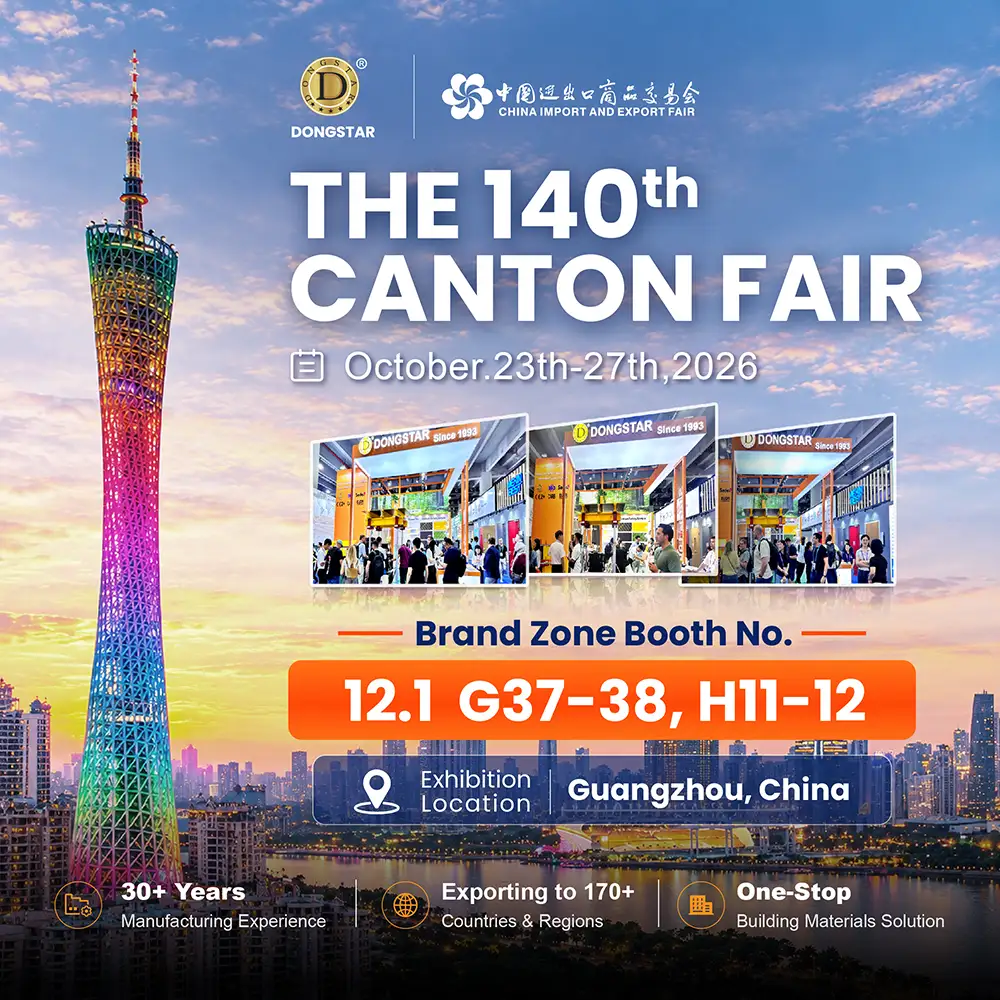
Dongstar, a renowned manufacturer specializing in a diverse range of building materials, made a splash at the Canton Fair, China’s largest trade exhibition, with its impressive showcase of plywood, film-faced plywood, melamine board, MDF, OSB, and WPC products. The company, situated at Booth 11.2 L31-L32, attracted a steady stream of visitors interested in its high-quality offerings. Dongstar’s plywood products, a key highlight of its display, are known for their durability, strength, and versatility. The company’s film-faced plywood, in particular, stands out for its smooth finish and resistance to scratches and moisture, making it a popular choice for various construction and furniture-making applications. The melamine board, another star attraction, is praised for its resistance to stains and scratches, as well as its ease of cleaning and maintenance. This product is ideal for use in kitchens, bathrooms, and other high-traffic areas. Dongstar’s MDF (Medium-Density Fiberboard) is another top seller, offering a smooth surface that is perfect for painting or laminating. Its OSB (Oriented Strand Board) products, meanwhile, provide excellent structural strength and stability, making them suitable for flooring, roofing, and wall sheathing. Rounding out Dongstar’s impressive lineup is its range of WPC (Wood-Plastic Composite) products, which combine the natural beauty of wood with the durability of plastic. These eco-friendly materials are ideal for outdoor applications such as decking, fencing, and cladding.The Canton Fair provides Dongstar with an excellent opportunity to showcase its products to a global audience and establish new business relationships. The company’s representatives were on hand to provide detailed information on the various products and answer questions from interested visitors. Dongstar’s commitment to quality and innovation is evident in every product it manufactures. The company’s participation in the Canton Fair is a testament to its dedication to meeting the needs of its customers and driving the industry forward. As the Canton Fair continues, Dongstar remains committed to providing its visitors with an exceptional experience and showcasing the best of its products. With its diverse range of high-quality building materials, Dongstar is sure to make a lasting impression on all those who visit its booth.welcome to visit our 135th caton fair booth No.11.2 L31-L32.

DONGSTAR 135th Canton Fair Booth No.11.2 L31-L32 Read More »

Oriented Strand Board OSB banner 1

Introduction to OSB Panel: A Versatile Structural Wood Solution

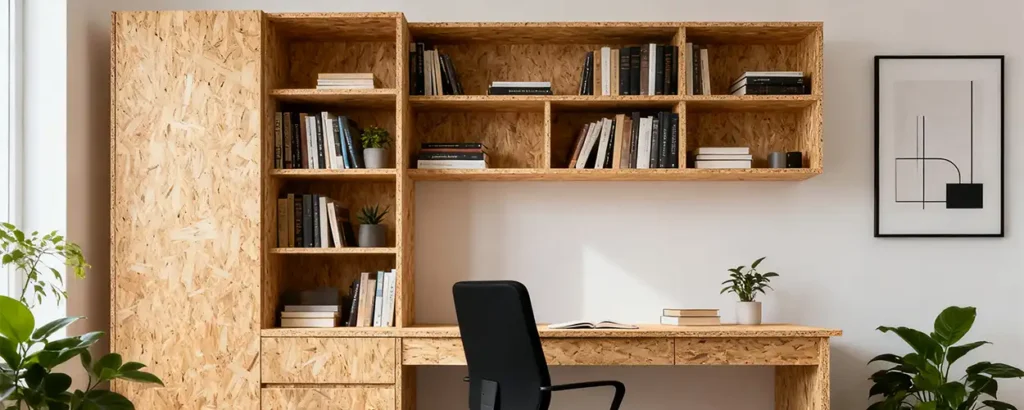
Table of Contents Oriented Strand Board, commonly known as OSB, stands as a testament to modern engineering’s ability to transform wood into a highly versatile and robust structural panel. Manufactured through a process involving heat-cured adhesives and precisely arranged rectangular wood strands, OSB offers exceptional strength and performance akin to traditional plywood. In this article, we will delve into the attributes of OSB panels, highlighting their benefits, applications, and contributions to the construction industry. Strength Meets Performance: OSB panels are engineered with a careful blend of wood strands and adhesives. This unique composition results in a dimensionally stable panel that defies deflection, delamination, and warping. Even under challenging conditions like strong winds and seismic activities, OSB panels remain steadfast, resisting racking and shape distortion. Lightweight Advantage: Despite their impressive strength, OSB panels are surprisingly lightweight. This characteristic makes them not only easier to handle but also simplifies installation procedures. The panels’ manageability translates to reduced installation time and labor, contributing to efficient project execution. Precision Manufacturing: The manufacturing process of OSB involves creating massive, continuous mats of wood strands. This meticulous arrangement ensures that finished panels exhibit consistent quality, eliminating the possibility of laps, gaps, or voids. This quality control results in panels that are robust and dependable. Large Dimensions for Enhanced Performance: OSB panels are available in large dimensions, minimizing the number of joints. This has two significant advantages: it reduces heat leakage, enhancing energy efficiency, and it curbs the transmission of airborne noise. This aspect is especially valuable for creating comfortable and acoustically efficient living and working spaces. Wide Range of Applications: The versatility of OSB panels extends across various applications. From roofing and wall sheathing to subflooring and furniture construction, OSB panels provide a reliable solution. Their adaptability, coupled with their affordability, makes them a go-to choice for both residential and commercial projects. Oriented Strand Board (OSB) panels represent a paradigm shift in the world of structural wood solutions. Combining the strength of wood with advanced adhesives, OSB panels offer durability, performance, and efficiency. Their lightweight nature, large dimensions, and wide range of applications make them an invaluable asset in the construction industry. Whether used in roofing, flooring, or wall sheathing, OSB panels stand as a testament to innovation that seamlessly blends natural materials with modern engineering prowess.

Introduction to OSB Panel: A Versatile Structural Wood Solution Read More »

Melamine-plywood

Exploring the Distinction: BWP and BWR Plywood for Your Furniture Projects

Plywood, with its versatility, has numerous variants distinguished by kind, grade, thickness, and size. Among the popular choices, BWP (boiling waterproof) and BWR (boiling water resistant) plywood stand out. Understanding the difference between these variants is crucial in selecting the ideal material for your furniture projects. Let’s delve into the distinctions and guide you in making the right choice. Plywood glue >> BWP and BWR plywood differ in their intended uses, as indicated by government grading standards. BWP is a grade assigned to ply and blockboards, while BWR pertains to manufacturing plywood. To comprehend the difference between the two, we must first explore the disparities between blockboards and plywood. Blockboard and plywood are distinct wood products, each serving specific purposes. Plywood finds extensive use in interior design and furniture projects, while blockboards serve more specialized roles. Blockboards consist of softwood wooden strips, while plywood is created by applying intense pressure to wood, resulting in unique qualities for each. Although BWP and BWR plywood aim for waterproofing, they are technically similar. The main difference lies in their uses, with BWP being tougher, less flexible, and heavier. It can withstand substantial weight and exhibits higher termite resistance, making it ideal for heavy-duty outdoor and indoor furniture. BWP blockboards excel in building patio furniture, doors, and shelves in kitchens and bathrooms. On the other hand, BWR plywood is more malleable, affordable, and lightweight, being used predominantly for interior and semi-outdoor applications. It finds its place in kitchen and bathroom cabinet doors, customized furniture, wall units, TV units, and shoe racks. Choosing between BWP and BWR plywood depends on the nature of your project and your budget. For sturdy furniture capable of handling weather fluctuations, BWP blockboards are the preferred option, identifiable by their ISI specification number — IS:710. While BWP plywood may be costlier, it provides long-lasting durability and resistance. It’s crucial to consider the utility of these products when selecting the right wood for your project. Quality should not be compromised for cost-saving, as it ensures that your furniture endures and serves you for a lifetime. To ensure top-quality plywood, trust only reputable manufacturers. At Dongstar® , we prioritize quality, earning ourselves a reputation as a trusted trademark among reliable and authentic plywood suppliers. Choosing the right plywood is essential, and our factory offers top-quality materials from the best manufacturers. Head over to Dongstar® Plywoods to embark on your furniture project with confidence. Select wisely and create furniture that stands the test of time. [contact-form-7 id=”858″ title=”Contact Dongstar”] Dongstar® Products Fancy Plywood Particle Board Film Faced Plywood MDF & HDF Melamine Board OSB

Exploring the Distinction: BWP and BWR Plywood for Your Furniture Projects Read More »

Plywood - A Versatile Building Material

Plywood: A Versatile Building Material for Indoor and Outdoor Projects

Table of Contents What is plywood? Plywood is an incredibly useful material with a wide range of practical applications, making it a popular choice for interior, structural, and exterior projects. This versatile wood product is created by layering thin sheets of wood veneer and gluing them together, with each adjacent layer having its wood grain rotated up to 90 degrees to one another. The result is a sturdy and flat sheet that can be used in various construction tasks. What is Plywood: A Comprehensive Guide to Types, Advantages, and Applications >>> The Plywood Manufacturing Process: The process of creating plywood varies depending on its intended use. For building purposes, the plywood is pressed into large flat sheets, while for applications in aircraft or boat construction or furniture-making, it is formed into curves. Each layer of ply has its grain running at right angles, ensuring strength, durability, and minimal chances of shrinking. The plywood typically consists of a minimum of three layers of wood held together with an adhesive. Plywood Materials: The materials used in plywood production play a significant role in determining its properties. Plywood can be made from softwoods, hardwoods, or a combination of both. Common softwoods used include cedar, pine, redwood, and spruce, with Douglas fir being the most frequently used. Hardwood plywood, on the other hand, is commonly created using oak, mahogany, teak, maple, or ash. Composite plywood, featuring very thick sheets, is made using either solid lumber pieces or particle board for its core. Dongstar® Plywood Core >>> Adhesive Types: Various types of adhesives are used to bond the layers of wood in plywood, depending on their intended usage. Phenol-formaldehyde resin is employed for exterior sheets as it provides exceptional strength and moisture resistance, making it ideal for outdoor projects. Interior plywood sheets usually use soybean protein or blood protein-based adhesives, but they may also adopt the same phenol-formaldehyde resin as the exterior sheets. For furniture-making, the urea-formaldehyde resin is commonly used. Dongstar® Plywood Glue >>> Additional Plywood Materials: Some projects require additional materials to enhance plywood’s properties. Overlaid plywood has a layer of metal, plastic, paper, or fabric bonded to its back or face, increasing its resistance to moisture. This type is prevalent in transportation, agriculture, and construction industries. Plywood can also have a layer of liquid stain applied to give it a polished look, perfect for decorative projects. Additionally, various chemicals can be used to treat plywood to enhance its properties, such as increasing flame or decay resistance. Dongstar® Plywood Film >>> Plywood Classification: Plywood is classified into two categories, each with its own grading system. The construction/industrial classification focuses on strength and is rated based on veneer grade, exposure capability (exterior or interior), and the type of adhesive used. Grades range from D (lowest, multiple defects) to N (highest, very few defects). The hardwood/decorative classification emphasizes appearance, with grades based on the plywood’s resistance to moisture. The face of this type is usually free from defects, used primarily for decorative purposes. Plywood Sizes: Plywood comes in a wide range of sizes, with thicknesses ranging from 0.6 inches to 3 inches. The most commonly used thickness falls between 0.25 to 0.75 inches. For uniformity, the back and face of the veneer must have the same thickness, and the top and bottom crossbands must also be of equal size. Dongstar® plywood’s universal properties and versatile nature make it an ideal choice for a wide array of building and decorative projects. Whether for interior, structural, or exterior applications, plywood is an invaluable material that brings durability and functionality to construction endeavors. For more information about plywood and its manufacturing process, feel free to contact Dongstar®, a plywood supplier and manufacturer from China. Dongstar® Plywood: Film Faced Plywood: Film faced plywood is a durable and versatile construction material. It is overlaid with a protective film on both sides, making it resistant to moisture, chemicals, and abrasion.  OSB Board: OSB (Oriented Strand Board) is a popular wood-based panel known for its versatility and strength.  MDF & HDF: Thanks to flexible applications and customizable functions, MDF & HDF boards have become the first choice for DIY enthusiasts and professionals. Marine Board: Marine plywood is a type of high-quality plywood known for its exceptional durability and water-resistant properties.  Particle Board: Particle board, also known as chipboard, is an engineered wood product made from wood particles, such as wood chips, sawmill shavings, and other wood residues.  Melamine Board: Melamine board is a popular and versatile material used in a wide range of interior applications, known for its exceptional durability and attractive surface finish.

Plywood: A Versatile Building Material for Indoor and Outdoor Projects Read More »

building material widely used in the construction industry

Film Faced Plywood: Unveiling Versatility and Durability in Construction

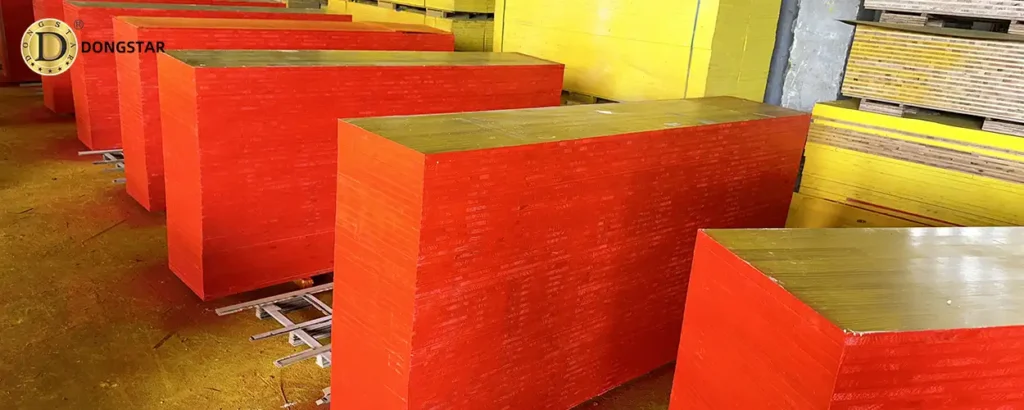
Table of Contents Whats is film faced plywood? Film-faced plywood, also known as shuttering plywood or formwork plywood, is a versatile and high-performance building material widely used in the construction industry. With a resilient film coating on both sides, this specialized plywood exhibits exceptional strength and water resistance, making it an ideal choice for various formwork and structural applications. As a reputable film-faced plywood manufacturer and supplier from China, Dongstar® takes pride in providing top-quality formwork plywood solutions that deliver unmatched performance and reliability for construction projects worldwide. Advantages of Film-Faced Plywood: Water Resistance The film coating on both sides of the plywood acts as a waterproof barrier, protecting it from moisture and humidity. This feature allows formwork plywood to endure harsh weather conditions, making it suitable for outdoor applications such as concrete formwork and scaffolding. Durability and Strength Film-faced plywood is engineered to withstand heavy loads and repetitive use. Its sturdy construction ensures it can endure the stresses of construction processes, providing consistent performance throughout the project. Reusability Film-faced plywood can be reused multiple times without compromising its structural integrity. Its reusability makes it a cost-effective choice for construction projects, reducing material waste and overall expenses. Smooth and Uniform Surface The film coating imparts a smooth and uniform surface to the plywood, ensuring a clean and even finish for concrete casting. This smooth surface reduces the need for excessive preparation and contributes to high-quality concrete finishes. Applications of Film Faced Plywood Concrete Formwork Formwork plywood is extensively used as concrete formwork due to its robustness, smooth surface, and water-resistant properties. It creates a stable and uniform mold for pouring concrete, resulting in superior-quality castings. Scaffolding and Shoring In construction sites, shuttering plywood  is commonly employed in scaffolding and shoring applications. Its strength and durability make it suitable for supporting workers and materials during construction and renovation projects. Road and Bridge Construction Shuttering plywood is utilized in the construction of roads and bridges, where it provides an ideal formwork solution for casting concrete in various shapes and dimensions. Building Facades Film-faced plywood is often used as cladding material for building facades, thanks to its attractive appearance and weather-resistant qualities. Dongstar® – China Plywood Manufacturer Film-faced plywood is a game-changer in the construction industry, offering water resistance, strength, and versatility in various applications. As a leading film-faced plywood manufacturer and supplier from China, Dongstar® provides top-quality products that meet international standards and ensure optimum performance in construction projects around the globe. Choose Dongstar® for reliable and durable shuttering plywood solutions that stand the test of time, empowering your construction endeavors with utmost efficiency and excellence.

Film Faced Plywood: Unveiling Versatility and Durability in Construction Read More »

Scroll to Top

Submit Now, Get Best Quote Today.​

Get in Touch

Please feel free to leave your information.

Dongstar- Plywood