Table of Contents
For years, European construction companies have been searching for a panel material that combines strength, consistency, and long-term dimensional stability. This is exactly why Three-layer Plywood has been gaining so much attention across the EU market. From large commercial builds to modular houses and high-traffic public interiors, its performance is proving to be a step ahead of many traditional engineered wood products.
What Makes Three-layer Plywood Different?
Unlike standard plywood, which typically relies on multiple thin veneers, Three-layer Plywood uses three thicker layers arranged crosswise. This simple but effective structure gives the board several advantages:
- Outstanding stability even under temperature and humidity shifts
- Reduced warping and cupping, which is a common issue with cheaper plywood
- Higher load-bearing performance due to balanced grain orientation
- A cleaner, stronger surface suitable for visible use or further finishing
For project contractors, these benefits translate into fewer material failures, lower maintenance costs, and more predictable performance on long-term projects.
Why European Markets Are Increasingly Choosing Three-layer Plywood
1. Reliable Quality for Commercial-Scale Projects
European wholesalers and project buyers often prioritize material consistency, especially for projects that span months or operate under strict compliance requirements.
Three-layer Plywood offers uniform thickness, dependable strength, and stable moisture behaviour—key factors for hotel developments, retail interiors, airports, and public buildings.
2. A Better Fit for Modern Modular and Prefab Construction
Prefab and modular construction continues to grow across Germany, Austria, the Netherlands, and Scandinavia. These systems demand materials that can maintain exact dimensions and resist deformation during transport and installation.
Three-layer Plywood fits this demand well:
- Easy to machine
- Maintains shape even in oversized panels
- Suitable for interior walls, floors, and structural components
3. Sustainable Sourcing and EU-Friendly Standards
Sustainability remains a major purchasing standard across Europe. Because Three-layer Plywood is often produced from faster-growing conifer species, it aligns with the region’s environmental policies and certification requirements.
Manufacturers can also offer FSC/PEFC certification, ensuring the material meets procurement expectations for green building projects.
4. Excellent Surface Quality for Visible Applications
A growing number of architects prefer materials that offer both structural capability and aesthetic value. Three-layer Plywood provides a natural wood appearance that can easily be:
- oiled
- lacquered
- stained
- UV-coated
This makes it suitable for furniture manufacturing, interior wall panels, shopfitting, and décor-grade components.
5. Lower Risk and Higher Predictability for Wholesalers
Bulk buyers need products that offer stable margins and minimal risk of returns.
Three-layer Plywood delivers precisely that:
- Fewer defects
- Less shrinkage and swelling
- Higher acceptance among EU builders
- Lower waste in cutting and machining
For wholesalers, this often results in smoother logistics, fewer customer complaints, and more repeat orders from project clients.
Where Three-layer Plywood Is Most Commonly Used
Below are the applications steadily expanding across Europe:
- Modular buildings and prefab components
- Commercial shopfitting and retail interiors
- Furniture frames and high-end cabinetry
- Wall and ceiling panels
- Subflooring and load-bearing interior elements
- Packaging, crates, and industrial transport structures
- Acoustic panels and specialized interior products
This versatility is one of the main reasons the material is gaining popularity quickly.
What B2B Buyers Should Consider When Sourcing Three-layer Plywood
When evaluating suppliers, wholesalers and project contractors should pay attention to:
- Wood species (spruce, pine, fir, etc.)
- Glue type and bonding quality
- Panel thickness accuracy
- Moisture content control
- Surface grade and sanding quality
- Certification availability (FSC, PEFC, CE)
Reliable suppliers typically offer consistent quality control reports and clear documentation for EU compliance.
Conclusion: A Material That Matches Europe’s Building Priorities
Three-layer Plywood is becoming a preferred material in Europe not by chance, but because it aligns perfectly with the region’s construction demands:
high strength, environmental responsibility, stable performance, and suitability for modern building systems.
For wholesalers and project contractors seeking dependable, long-term supply, Three-layer Plywood represents a material with growing market demand and strong commercial potential.
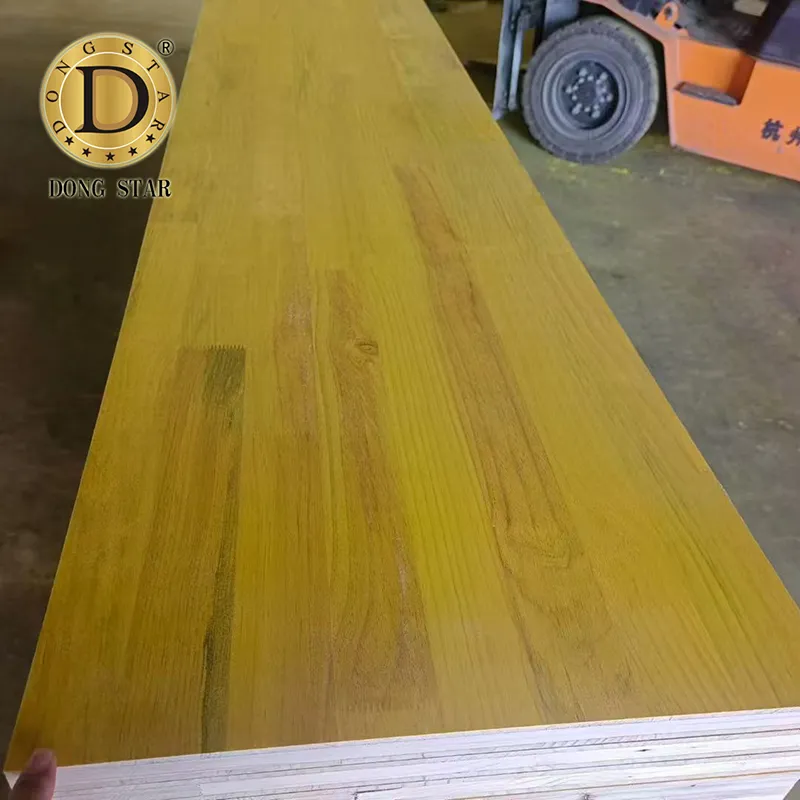
Our 3 Layer Plywood is a high-performance, cost-effective plywood panel designed especially for large-scale construction and commercial projects. With a simple yet robust three-ply construction (core layer sandwiched between two face veneers), it offers stable dimensional performance, good strength, and ease of processing.