Table of Contents
Three-layer Plywood has become one of the most dependable and versatile engineered wood materials in today’s construction market. Its layered strength, consistent performance, and adaptability make it especially valuable for commercial and industrial projects across Europe. In this guide, we explore everything wholesalers, contractors, and project managers need to know to make confident, profitable decisions when choosing this material.
Understanding Three-layer Plywood and Its Core Advantages
What Makes Three-layer Plywood Structurally Unique?
Three-layer Plywood is made by bonding three solid wood veneers with alternating grain directions. This cross-laminated design dramatically improves stability, reduces movement caused by humidity, and prevents bending under load. Because each layer reinforces the next, the board maintains a uniform strength that outperform many traditional panels.
Key Performance Benefits for Large Projects
In commercial construction—where safety, consistency, and durability matter—the material performs exceptionally well. It resists warping, offers excellent surface flatness, and supports high mechanical stress. For large-scale builds like offices, schools, or retail facilities, such reliability saves both time and replacement costs.
Manufacturing Process of Three-layer Plywood
Material Selection & Grading Standards
Manufacturers select graded logs like spruce, pine, fir, or hardwoods depending on the required quality. The veneers are carefully measured to provide uniform thickness and strength. Only wood meeting European commercial standards is used for premium boards.
Cross-Lamination & Pressing Technology
Layers are glued using moisture-resistant adhesives and pressed at high temperature. The alternating grain structure ensures dimensional stability. Modern factories use automated systems to monitor pressure, temperature, and adhesive spread—important for ensuring repeatable performance in bulk orders.
Physical Properties and Technical Specifications
Strength, Density & Moisture Resistance
Three-layer Plywood offers excellent bending strength and holds screws exceptionally well. Its density varies by species but typically stays light enough for easy installation. Thanks to its construction, the board maintains stability even with humidity changes.
Surface Quality and Finishing Options
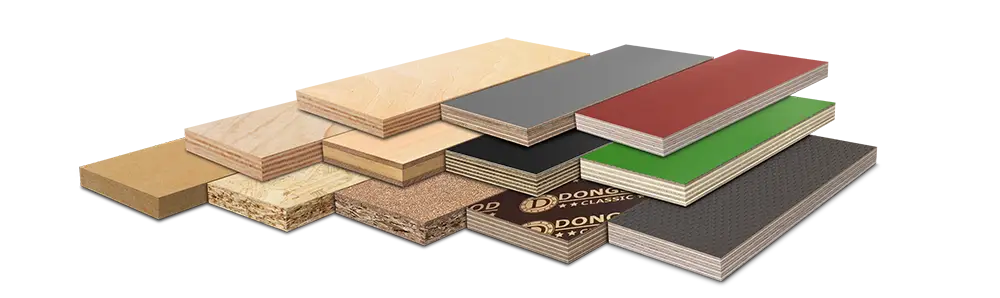
Surfaces are available in sanded, unsanded, or decorative finishes. High-grade boards allow smooth coatings, laminates, or veneers, making them ideal for furniture and premium interiors.
Applications in European Commercial Construction
Use in Interior Projects: Walls, Ceilings, Furniture
Interior carpentry benefits from the board’s flatness and solid feel. It installs cleanly for wall panels, ceilings, cabinetry, and built-ins—frequent requirements in hotels, schools, and retail facilities.
Use in Exterior & Industrial Settings
When treated properly, the board can be used for exterior cladding, formwork, or industrial partitions. Its durability helps maintain structure even in demanding environments.
Sustainability and Environmental Certifications
Low Carbon Footprint & Renewable Sourcing
Three-layer Plywood is produced from responsibly managed forests. Its long lifespan reduces waste, supporting Europe’s shift toward greener construction.
EU Standards: FSC, PEFC, and EN 636 Compliance
Boards meeting FSC or PEFC certification confirm responsible harvesting. EN 636 ensures durability and application suitability—important when sourcing panels for government or commercial contracts.
Comparing Three-layer Plywood with Other Panels
Versus MDF, OSB, and LVL
Compared to MDF, it handles screws better and resists swelling. It’s stronger than OSB in many structural uses. LVL is stronger but more expensive, making Three-layer Plywood a balanced option.
Cost Efficiency vs. High-performance Panels
Its production cost is lower than many high-performance engineered materials, giving it excellent value for money in large-volume orders.
Choosing the Right Thickness & Grade
Decorative Grades vs. Construction Grades
Decorative grades have clean surfaces and fine veneers. Construction grades focus on strength over appearance and are used behind walls, floors, and roofs.
Selecting Thickness for Specific Applications
9–12 mm is common for furniture, while 16–27 mm is used for structural sections. Thicker boards handle higher loads and offer stronger fastening.
Installation Best Practices
Tools and Handling Techniques
Standard cutting tools work well due to the board’s consistent density. Edges should be sealed when used in humid environments.
Fixing, Cutting, and Maintenance Tips
Use screws or nails at proper intervals to prevent movement. Protect edges and surfaces for long-term durability.
Common Challenges and How to Avoid Them
Moisture Control & Storage Methods
Boards should be stored flat and protected from excessive moisture. Proper airflow prevents fungal stains or swelling.
Preventing Delamination and Edge Wear
Choosing certified suppliers reduces risks. Edge sealing further protects against peeling or moisture ingress.
Common Challenges and How to Avoid Them
Moisture Control & Storage Methods
Boards should be stored flat and protected from excessive moisture. Proper airflow prevents fungal stains or swelling.
Preventing Delamination and Edge Wear
Choosing certified suppliers reduces risks. Edge sealing further protects against peeling or moisture ingress.
Pricing Factors for Wholesalers and Contractors
Regional Cost Differences Across Europe
Prices vary based on lumber species and regional supply. Northern Europe often has higher-grade softwood options, while Central Europe offers competitive pricing.
What Influences Bulk Order Pricing
Key factors include grade, thickness, finishing, and transportation distance. Bulk buyers benefit from stable long-term contracts.
Market Trends in Europe
Growth of Sustainable Construction Materials
Eco-friendly materials are increasingly preferred in public tenders. Three-layer Plywood fits well with low-carbon building initiatives.
Demand in Commercial, Educational & Retail Projects
Large-scale facilities often choose this panel because of its predictable quality and low lifetime maintenance cost.
How Three-layer Plywood Supports B2B Supply Chains
Logistics Efficiency for Wholesalers
Stackable, uniform boards simplify warehousing and reduce storage waste.
Benefits for Large Project Contractors
Consistent quality means fewer on-site issues, reduced rework, and quicker installation times.
Real-world Case Studies (Europe)
Retail chains & hospitality developments
Hotels and retail floors benefit from the material’s strength and appearance, offering long-term cost savings.
Public buildings & school projects
Schools choose the material for acoustic performance, safety, and environmental compliance.
FAQs
- Is Three-layer Plywood strong enough for heavy commercial use?
Yes, its cross-laminated design gives it excellent load-bearing strength. - Can it be used outdoors?
With proper treatment and sealing, it performs well in outdoor settings. - What certifications should buyers look for?
FSC, PEFC, and EN 636 are most important in Europe. - How does it compare with MDF?
It is stronger, more stable, and handles screws better. - Is it suitable for furniture production?
Decorative grades provide excellent surfaces for furniture and interior work. - Does it warp easily?
No, its cross-laminated structure significantly reduces warping.
Final Thoughts
Three-layer Plywood stands out as a durable, stable, and cost-effective material for Europe’s fast-growing commercial construction sector. Its performance, sustainability credentials, and versatility make it a top choice for wholesalers and contractors seeking long-term reliability and competitive advantage.