Table of Contents
When you’re planning a project that will face moisture, humidity, rain, or even salt spray, the materials you choose determine how long your build will actually last. One of the most frequent questions from builders, architects, and DIYers is: Why does marine plywood use exterior-grade glue? Let’s break that down in plain English so you can specify the right plywood every time.
What Is Marine Plywood?
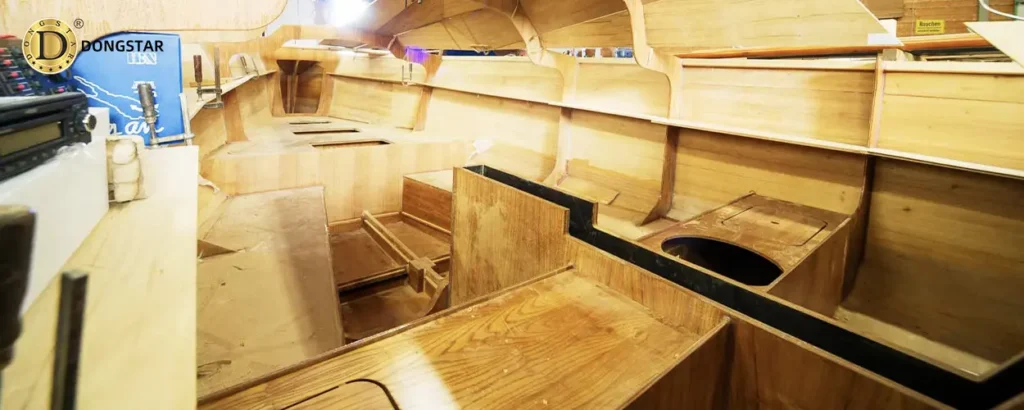
Simply put, marine plywood is a premium type of plywood manufactured for use in environments where moisture exposure is expected — like boat building, decks, docks, outdoor furniture, and coastal structures. Unlike standard interior plywood, marine plywood is made from higher-quality veneers and is bonded using a waterproof adhesive that resists lasting exposure to water and humidity.
So what does glue have to do with all of this? Quite a lot.
The Glue Is the Heart of Marine Plywood Durability
The key factor that differentiates Marine Plywood from ordinary plywood is the type of adhesive used to bind the layers together. Marine plywood uses exterior-grade, waterproof glue — often a phenol-formaldehyde resin — that can withstand prolonged exposure to moisture and extreme changes in humidity without delaminating.
This adhesive meets strict standards known as WBP (Weather and Boil Proof), meaning that plywood bonded with this glue won’t fail even when boiled in water for extended periods — a common industry test.
For builders, that’s vital: if glue lines weaken, the plywood layers separate under moisture, and the entire structure loses strength. That’s exactly what exterior-grade glue is designed to prevent.
Why Ordinary Wood Glue Won’t Cut It
Standard plywood adhesives (like urea-formaldehyde or PVA glue) don’t survive repeated wetting and drying cycles. They’re fine for interior applications like cabinetry, but outdoors or near water, they break down and weaken, leading to swelling, warping, and delamination.
Exterior-grade glues — especially phenol-formaldehyde or related resins — are thermosetting. Once cured, they resist water and heat much better than regular adhesives, maintaining bond strength even when wet. That’s why marine plywood is chosen for applications where structural integrity matters.
More Than Just Glue: Voids, Veneer Quality, and Core Bonding
Beyond glue type, marine plywood also uses high-quality veneers with minimal voids and tighter manufacturing tolerances. Voids in plywood can trap moisture and accelerate decay from the inside out. Marine plywood minimizes these voids, helping the glue do its job more effectively, even in damp conditions.
Exterior plywood also uses waterproof glue, but it doesn’t always require the same void-free core or high veneer grades that marine plywood does. That makes marine plywood more reliable for demanding or long-term projects.
What This Means for Your Projects
Here’s how using marine plywood with exterior-grade glue changes your build quality:
- Better moisture resistance: prevents layer separation under humidity or rain.
- Higher structural reliability|: ideal where strength and stability matter.
- Reduced repair needs: fewer chances of warping or rot when sealed correctly.
- Longer lifespan outdoors: especially in coastal or high-moisture environments.
Whether you’re making outdoor furniture, decking, boat interiors, or exterior cladding, exterior-grade glue is the reason marine plywood holds up where typical plywood doesn’t.
Checklist: When to Choose Marine Plywood
Choose marine plywood if your project will face:
- Constant moisture exposure
- Outdoor weather (rain or coastal air)
- Structural loads
- Long service life expectations
If your work is entirely indoors and rarely wet, a standard exterior plywood might be sufficient — but for anything outdoors or near water, marine plywood’s exterior-grade glue makes all the difference.
Final Thoughts
The phrase “marine plywood uses exterior-grade glue” sounds simple, but for builders and project planners it carries real performance implications. Exterior-grade glue ensures that your plywood layers stay bonded even when water, humidity, or weather try to break them apart.
The takeaway? If your project is meant to stand the test of time, especially in damp or outdoor environments, choose plywood made with high-performance, waterproof adhesives — that’s what makes marine plywood worth the investment.