Table of Contents
What Is CDX Plywood? Your Go-To Guide for Construction & Outdoor Projects
If you’ve ever walked through the lumber aisle at your local home improvement store—or scrolled through online building material suppliers—you’ve probably seen “CDX plywood” listed as an option. But what exactly is it? And more importantly, should you be using it on your next project?
Whether you’re a seasoned contractor or a weekend DIYer tackling a shed, roof repair, or subfloor installation, understanding CDX plywood can save you time, money, and future headaches. Let’s break it down—no jargon, just practical info.
So, What Does “CDX” Actually Mean?
CDX isn’t a brand or a fancy tech term—it’s a grading system that tells you about the quality and intended use of the plywood:
- C = One side is graded “C” (fairly smooth, with some repairs like patches or filled knots)
- D = The other side is “D” grade (rougher, with more visible knots and defects)
- X = The glue used is exterior-grade, meaning it’s water-resistant (but not waterproof)
That “X” is key. It’s what makes CDX suitable for temporary exposure to moisture—like during a roofing job where rain might delay your shingle installation.
What Is CDX Plywood Made Of?
Most CDXE (often just called CDX) is made from softwood veneers—typically pine, fir, or spruce—layered and bonded with phenolic resin glue. The plies are cross-laminated (each layer rotated 90 degrees), which adds strength and reduces warping.
Important note: CDX is not the same as marine plywood or pressure-treated plywood. It’s not meant for long-term outdoor use or ground contact. Think of it as “weather-tolerant for short periods,” not “weatherproof forever.”
Common Uses for CDX Plywood
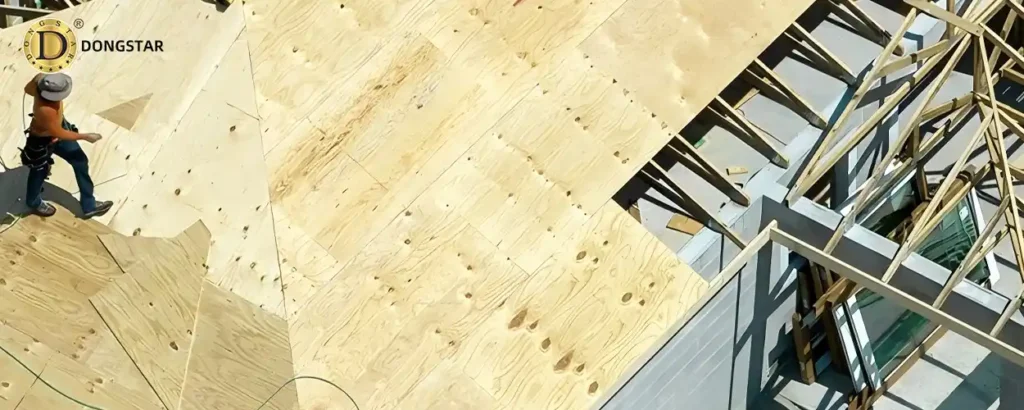
Roof sheathing – Its go-to application. Holds up well under roofing felt or underlayment.
- Wall sheathing – Provides structural support before siding goes on.
- Subflooring – Often used as a base layer (though higher grades like BC or AB are preferred for finished floors).
- Concrete formwork – Reusable for simple pours (though it may warp after contact with wet concrete).
- Temporary structures – Job site sheds, fencing, or scaffold platforms.
Just remember: if your project will face constant rain, humidity, or ground contact, consider pressure-treated plywood or a higher-grade exterior panel.
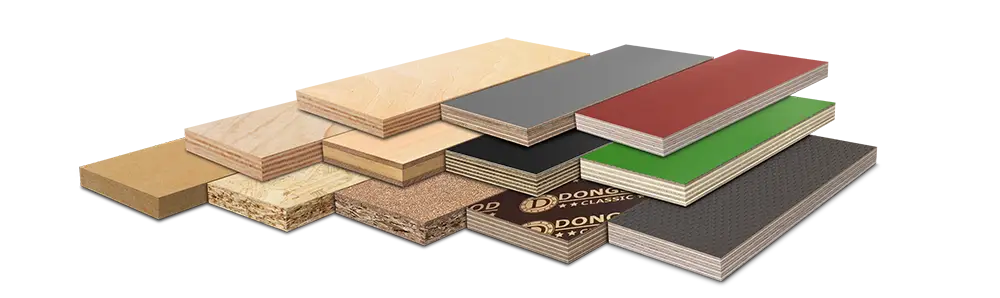
CDX vs. Other Plywood Types: Quick Comparison
| Type | Best For | Moisture Resistance | Surface Finish |
| CDX | Roofing, sheathing, forms | Short-term exposure | Rough (C/D sides) |
| ACX | Siding, visible exteriors | Good | Smooth (A side) |
| OSB | Sheathing, subfloor | Similar to CDX | Uniform, rough |
| Marine | Boats, wet environments | Excellent | Very smooth |
OSB (oriented strand board) is often cheaper and competes directly with CDX in sheathing—but many builders still prefer plywood for its nail-holding strength and ease of cutting.
Things to Watch Out for When Buying CDX
- Check the stamps: Look for APA (American Plywood Association) or TPI (Truss Plate Institute) certification. This ensures it meets industry standards.
- Avoid warped or swollen sheets: Even “dry” CDX can absorb moisture during storage. Inspect before buying.
- Thickness matters: Common thicknesses are 1/2″, 5/8″, and 3/4″. For roof sheathing, 1/2″ is standard—but check local building codes.
- Don’t assume “exterior” means waterproof: CDX can handle dew or a weekend rainstorm, but prolonged exposure leads to delamination.
Final Thoughts: Is CDX Right for Your Project?
If you’re working on a budget-conscious build that requires structural strength and short-term weather resistance—yes, CDX plywood is likely your best bet. It’s widely available, easy to work with, and trusted by pros across North America.
But if your project involves long-term outdoor exposure, high humidity (like in a bathroom subfloor), or needs a smooth finish, explore alternatives like ACX, pressure-treated plywood, or even MDO (Medium Density Overlay).
Bottom line? CDX isn’t glamorous—but it gets the job done. And in construction, that’s often all you need.