Table of Contents
If you’re sourcing plywood for construction, infrastructure, or outdoor projects, chances are you’ve seen the terms EN314 Plywood and WBP Plywood on supplier catalogs.
At first glance, they look similar. Many suppliers even use them interchangeably. But for project buyers, developers, and contractors, misunderstanding these terms can lead to costly specification mistakes.
This guide breaks down the real differences between EN314 Plywood and WBP Plywood, explains how global standards work, and shows you how to choose the right material for long-term performance.
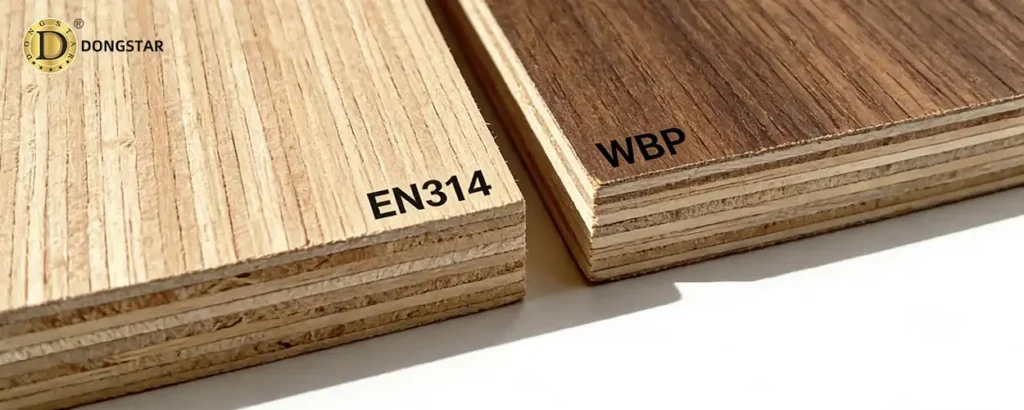
What is WBP Plywood?
WBP plywood stands for Weather and Boil Proof plywood, referring to the type of adhesive used to bond veneer layers.
Unlike ordinary plywood, WBP plywood uses phenolic or melamine resin adhesives designed to resist water, heat, and weather exposure.
Key characteristics of WBP plywood
- Waterproof adhesive bonding
- High resistance to humidity and rain
- Suitable for outdoor construction
- Resistant to boiling water tests
The “boil proof” name comes from laboratory tests where plywood is immersed or boiled in water without delamination.
This durability makes WBP plywood common in:
- Construction formwork
- Exterior furniture
- Packaging and transport crates
- Marine or humid environments
- Kitchen and bathroom cabinetry
However, it’s important to understand one critical point:
WBP describes glue performance, not a structural certification.
That’s where EN standards come in.
What is EN314 Plywood?
| Class | Environment | Typical Use |
|---|---|---|
| EN314 Class 1 | Dry conditions | Interior furniture |
| EN314 Class 2 | Humid conditions | Interior construction |
| EN314 Class 3 | Exterior conditions | Outdoor construction |
Why WBP and EN314 Are Often Confused
Many plywood buyers assume WBP = exterior plywood.
In reality, the terminology evolved over time.
Industry experts note that WBP terminology has largely been replaced by European classifications such as EN314 and EN636.
In simple terms:
- WBP = glue performance description
- EN314 = official bonding test standard
So modern specifications usually combine both ideas.
For example:
- Phenolic WBP glue
- EN314-2 Class 3 certification
Together, they confirm both adhesive quality and tested durability.
EN314 vs WBP Plywood: Key Differences
For project buyers, understanding the difference is crucial.
Here’s a practical comparison:
| Feature | EN314 Plywood | WBP Plywood |
|---|---|---|
| Definition | Bonding strength test standard | Glue performance description |
| Standard type | European certification | Adhesive classification |
| Focus | Bonding quality | Waterproof adhesive |
| Typical label | EN314-2 Class 3 | Phenolic WBP glue |
| Use case | Structural specification | Manufacturing method |
Simple rule for buyers
If you need guaranteed exterior performance, specify:
- EN314-2 Class 3 plywood with WBP phenolic glue
That ensures the plywood meets both testing standards and adhesive durability.
Which One Should Project Buyers Specify?
For large projects, relying on only one specification can be risky.
Professional procurement teams usually require three technical indicators:
1. Bonding standard
EN314-2 Class 3
2. Adhesive type
Phenolic WBP glue
3. Plywood grade
Such as:
- Marine plywood
- Film faced plywood
- Hardwood plywood
Combining these parameters ensures the plywood can handle:
- Outdoor exposure
- Concrete formwork pressure
- Long-term moisture cycles
Common Applications of EN314 and WBP Plywood
Both types are widely used in construction and infrastructure.
1. Construction formwork
Phenolic WBP plywood is widely used in concrete shuttering systems because it can survive repeated wet cycles.
2. Exterior wall sheathing
EN314-certified plywood maintains structural strength in humid environments.
3. Marine and transport industries
WBP adhesives resist water immersion and weather exposure.
4. Industrial packaging
Heavy equipment crates often use EN314 Class 2 or 3 plywood.
How to Identify Real EN314 Plywood
Unfortunately, plywood labeling in international trade isn’t always reliable.
Here’s how professional buyers verify quality:
1. Request test reports
Ask suppliers for:
- EN314 test certificate
- EN636 classification
- CE certification
2. Check glue type
Reliable exterior plywood typically uses:
- Phenolic resin
- Melamine phenolic resin
3. Ask about boil test results
High-quality plywood can pass 24-72 hour boiling tests without delamination.
4. Inspect core structure
Look for:
- Hardwood core
- Minimal voids
- Cross-grain veneer layers
Buying Tips for Importers and Contractors
If you import plywood for projects, these tips can help avoid expensive mistakes.
Always confirm standards
Never rely only on the term WBP plywood.
Ask for:
- EN314 certification
- EN636 classification
- CE compliance
- Evaluate supplier production
Reliable plywood manufacturers usually provide:
- Hot-press production lines
- Moisture control systems
- Strict glue mixing procedures
Understand your project environment
Different projects require different plywood grades.
| Environment | Recommended plywood |
|---|---|
| Interior furniture | EN314 Class 1 |
| Indoor humid areas | EN314 Class 2 |
| Outdoor construction | EN314 Class 3 |
FAQ
WBP plywood is highly water resistant, but not fully waterproof.
The glue can resist boiling water and weather exposure without delamination.
No. Marine plywood has stricter veneer quality and fewer core voids.
Both may use WBP adhesives, but marine plywood follows additional standards.
EN314 Class 3 means the plywood bonding is tested for exterior environments and can withstand severe moisture conditions.
Yes. WBP plywood is commonly used outdoors when properly sealed or coated.
They measure different things.
EN314 tests bonding strength, while WBP refers to adhesive durability.
The best specification combines both.
Most contractors use film faced plywood with WBP phenolic glue and EN314-2 Class 3 certification.
Final Thoughts
Understanding the difference between EN314 Plywood and WBP Plywood is essential for anyone sourcing materials for construction or industrial projects.
To summarize:
- WBP describes the adhesive’s resistance to water and heat
- EN314 certifies the bonding strength through testing
- The best exterior plywood usually combines WBP glue + EN314 Class 3 certification
For contractors, developers, and importers, specifying both standards ensures your plywood can handle weather exposure, structural stress, and long-term durability.
When sourcing plywood internationally, always request test reports and technical specifications—not just product names.