Home » Oriented Strand Board

Oriented Strand Board

Why Oriented Strand Board Is Replacing Plywood in Many Markets

Why Oriented Strand Board Is Replacing Plywood in Many Markets?

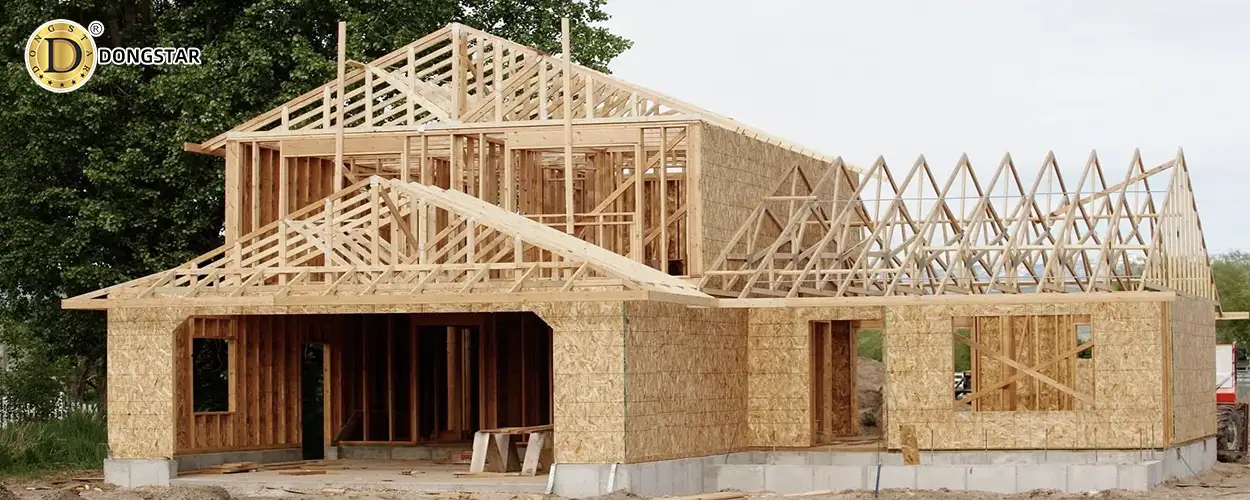
Table of Contents If you manage construction projects, source building materials, or oversee procurement for commercial developments, you have likely noticed a shift. More contractors, developers, and engineering firms are specifying Oriented Strand Board OSB instead of traditional plywood for structural sheathing, subflooring, and wall systems. This is not a temporary trend. Market data shows the global Oriented Strand Board market is projected to reach USD 59.67 billion by 2032, growing at a 7.6% CAGR For project-focused buyers, the question is no longer whether to consider OSB, but how to source reliable, high-performance Oriented Strand Board-OSB that meets schedule, budget, and compliance requirements. Below, we break down the real-world factors driving this transition—and what to look for when selecting an Oriented Strand Board Supplier for your next project. The Numbers Project Managers Care About When evaluating materials for large-scale builds, three metrics dominate decision-making: cost per square foot, structural performance consistency, and supply chain reliability. Cost efficiency without compromising strength OSB typically costs 15–30% less than comparable plywood panels. For a 2,500 sq. ft. commercial structure, substituting OSB for plywood on floors, walls, and roofs can save over $700 in material costs alone. These savings compound across multi-unit developments or phased projects. Predictable performance panel to panel Unlike plywood, which can contain core voids or variable veneer quality, Oriented Strand Board-OSB is engineered from layered wood strands bonded with advanced adhesives under controlled pressure. The result: consistent density, uniform shear strength, and reliable fastener holding across every sheet. Independent studies confirm OSB and plywood share equivalent span ratings and structural classifications under building codes. Supply stability from scalable production China OSB production capacity has expanded significantly, with exports rising 58% year-over-year to 259,000 cubic meters in 202. For international project teams, partnering with a verified Oriented Strand Board Supplier in China means access to bulk inventory, flexible thickness options (9.5mm to 25mm+), and container-load shipments aligned with construction timelines. What Project Teams Actually Experience on Site Beyond specifications, field performance matters. Here is what contractors and site supervisors report when using OSB: Faster installation: Larger panel sizes (up to 2.4m x 7.3m) reduce seam count and labor time versus standard plywood sheets. Reduced waste: Engineered consistency means fewer rejected panels due to knots, delamination, or edge defects. Moisture management: Modern OSB panels feature edge-sealed coatings and Exposure 1 ratings, performing reliably when stored properly and installed with standard vapor barriers. . Compatibility: OSB works seamlessly with common fasteners, adhesives, and finishing systems used in commercial framing. One frequent concern involves edge swelling after prolonged moisture exposure. Reputable manufacturers now apply factory edge treatments and provide clear handling guidelines. When stored off-ground, covered, and installed per code, OSB performs equivalently to plywood in wall, roof, and floor applications. Selecting the Right China OSB Partner for Project Delivery Not all Oriented Strand Board Supplier operations are equal. For project procurement, prioritize partners who offer: Certified product grades: OSB/2, OSB/3, or OSB/4 classifications aligned with EN 300 or ASTM standards Batch traceability: Mill test reports, formaldehyde emission data (E0/E1), and load documentation Logistics coordination: FOB, CIF, or DDP options with experienced export handling Technical support: Pre-sales guidance on panel selection, span tables, and installation best practices Scalable capacity: Ability to fulfill repeat orders across multi-phase developments Dongstar Plywood specializes in supplying high-specification Oriented Strand Board OSB to international construction projects. Our China OSB production lines prioritize dimensional stability, edge integrity, and compliance with global building standards. Key Takeaways for Project Decision-Makers Oriented Strand Board-OSB delivers equivalent structural performance to plywood at lower cost per unit. Global OSB demand is rising, driven by modular construction growth and sustainable building incentives. Sourcing from a qualified Oriented Strand Board Supplier ensures consistency, certification, and on-time delivery. Proper storage and installation mitigate moisture-related concerns—same as with any wood-based panel. China OSB exporters now offer competitive pricing, flexible specs, and reliable container logistics for project-scale orders. Ready to Evaluate OSB for Your Next Project? If your team is reviewing structural panel options for an upcoming commercial, industrial, or multi-family development, request a specification sheet and sample from our Oriented Strand Board OSB line. We provide technical documentation, volume pricing, and export support tailored to project procurement workflows. [Contact Dongstar Plywood] for bulk OSB quotations, certification packages, or custom thickness requests. Related Articles Dongstar® Products Fancy Plywood Particle Board Film Faced Plywood MDF & HDF Melamine Board OSB
Why Oriented Strand Board Is Replacing Plywood in Many Markets? Read More »

What is OSB

What is Oriented Strand Board?

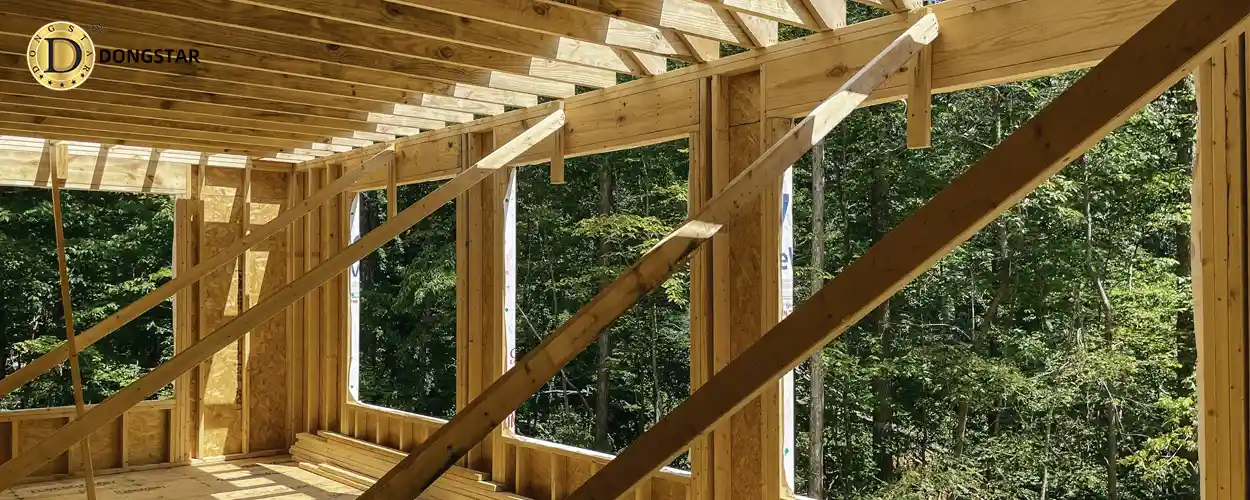
Table of Contents If you’ve ever walked through a lumber yard or reviewed a framing plan, you’ve likely seen stacks of Oriented Strand Board (OSB)—those large, rough-surfaced panels with a distinctive wood-strand pattern. But not all OSB is created equal. Depending on your project’s demands—whether it’s a dry interior wall or a load-bearing roof in a rainy climate—the right grade matters more than you might think. In this guide, we’ll cut through the confusion and explain exactly what Oriented Strand Board is, how the four main types (OSB1, OSB2, OSB3, and OSB4) differ, and which one you should specify for your next build. What Is Oriented Strand Board? Oriented Strand Board is an engineered wood panel made by compressing layers of thin, rectangular wood strands with waterproof resins under high heat and pressure. The strands are “oriented”—meaning they’re aligned in specific directions—to maximize strength and structural performance. Unlike solid wood, OSB offers consistent quality, fewer voids, and better dimensional stability. It’s also made from fast-growing softwoods and mill residuals, making it a more sustainable choice than many traditional materials. But here’s the key: not every OSB panel can handle moisture, heavy loads, or outdoor exposure. That’s where the European grading system (EN 300) comes in—with four distinct classes: OSB1, OSB2, OSB3, and OSB4. Understanding OSB Grades: Which One Fits Your Project? OSB1 – For Dry, Non-Structural Use Best for: Interior furniture, shelving, decorative panelsMoisture resistance: None (dry conditions only)Load capacity: LowDon’t use it for: Walls, floors, roofs, or anything structuralThink of OSB1 as the “light-duty” option. It’s affordable and smooth enough for painted cabinetry—but if there’s any chance of humidity or weight, skip it. OSB2 OSB2 – General Structural Use (Dry Conditions) Best for: Interior walls, flooring, roof sheathing in climate-controlled buildingsMoisture resistance: Minimal (short-term exposure OK during construction)Load capacity: MediumCommon in: Residential framing, partition walls, attic storage platformsThis is the most widely used grade in North America (often just labeled “OSB” without a number). It meets APA PRP-108 standards and works well when protected from long-term moisture. OSB3 OSB3 – Structural Use in Humid Conditions Best for: Exterior walls, roofs, subfloors, garages, shedsMoisture resistance: High (designed for humid or temporarily wet environments)Load capacity: HighKey feature: Contains more resin for better water resistanceIf your project is exposed to rain during construction—or will be in a damp environment like a basement or coastal home—OSB3 is your go-to. It’s the standard for most modern residential builds in Europe and increasingly common in U.S. markets. OSB4 OSB4 – Heavy-Duty Structural Performance Best for: Load-bearing floors, industrial applications, commercial roofingMoisture resistance: Very highLoad capacity: Highest of all gradesRarity: Less common; used in specialized projectsOSB4 is overkill for a backyard deck but essential for multi-story buildings or warehouse flooring where deflection and long-term durability are critical. Always check the panel stamp. Look for “OSB/3” or “EN 300 OSB3” to confirm you’re getting the right grade. In North America, many products labeled simply “OSB” meet OSB2 or OSB3 performance—ask your supplier for test reports if in doubt. Matching Grade to Job Project Type Recommended OSB Grade Kitchen cabinet backing OSB1 Interior wall sheathing OSB2 Roof decking (exposed) OSB3 Garage subfloor OSB3 Multi-family housing floor OSB3 or OSB4 Outdoor shed walls OSB3 (with proper siding & flashing) Even OSB3 isn’t meant for direct ground contact or prolonged soaking. Always pair it with proper flashing, vapor barriers, and drainage. Why Choose OSB Over Plywood? Cost: OSB is typically 15–25% cheaper than plywood. Consistency: No knots, splits, or core gaps. Eco-Friendly: Uses smaller trees and wood waste. Strength: Higher shear strength than plywood—great for seismic zones. That said, plywood still wins for surface finish and edge stability in high-moisture scenarios. But for 90% of structural sheathing needs? OSB delivers more value per square foot. Final Thoughts Oriented Strand Board isn’t a one-size-fits-all product. Knowing the difference between OSB1, OSB2, OSB3, and OSB4 could save you from callbacks, warping, or even structural failure down the line. When in doubt, default to OSB3—it’s the safest bet for most residential and light commercial work. And always—always—store panels flat, covered, and off the ground until installation day. Related Articles

What is Oriented Strand Board? Read More »

Scroll to Top

Submit Now, Get Best Quote Today.​

Get in Touch

Please feel free to leave your information.

Dongstar- Plywood