Home » Dongstarplywood » Page 8

Author name: Dongstarplywood

Birch Plywood-banner

Birch Plywood: The High-Quality Choice for Craftsmen and Artisans

Table of Contents Birch plywood, derived from the versatile Betula Alleghaniensis—commonly referred to as American birch, Quebec birch, Hard birch, Silver birch, or Swamp birch—is a premium material that has captured the attention of artisans and craftsmen. Its exceptional durability, fine grain, and versatility make it a top choice for furniture, cabinetry, and various construction projects. 1. Introduction to Birch Plywood Birch plywood is a high-grade material renowned for its stability and aesthetic appeal. It consists of layers of thin birch veneers bonded together with strong adhesives, giving it a smooth surface and solid structure. Birch plywood has become synonymous with quality, often preferred over other types of plywood due to its resilience and uniform grain pattern.Key Features:Fine, even textureDurable and strongResistant to warpingSmooth, paint-friendly surfaceOriginating from birch trees in colder climates such as North America and parts of Europe, birch plywood holds its own as a high-performance material suitable for a variety of projects. 2. The Botanical Origins: Betula Alleghaniensis The birch tree (Betula Alleghaniensis)—also known as yellow birch—is a remarkable species native to the northeastern United States and Canada. The hardwood from these trees is sought after for its flexibility and fine texture, making it ideal for plywood production.Growing predominantly in cool, moist environments, the birch tree has a unique growth pattern, which contributes to the evenness of its grain. It is harvested sustainably, with forest management practices in place to ensure the species remains abundant. 3. Types of Birch Plywood Though all birch plywood shares similar characteristics, various species have distinct properties, making them suited for different applications:American Birch: Known for its toughness and light coloring, often used in cabinetry.Quebec Birch: A dense variety from Canada, prized for its stability in high-moisture environments.Hard Birch: Offers superior strength and is often used in industrial applications.Silver Birch: More flexible, with a pale, fine grain, suitable for artistic projects.Swamp Birch: Known for its water resistance, ideal for outdoor applications.Understanding the differences in these types helps craftsmen choose the right material for their specific needs. 4. Birch Plywood Manufacturing Process The process of creating birch plywood begins with carefully selecting and harvesting birch logs. The logs are debarked and peeled into thin layers known as veneers. These veneers are stacked in alternating grain directions and glued together under heat and pressure, which gives the plywood its strength.Key Manufacturing Steps:Log Selection: Only the finest birch trees are chosen for high-grade plywood.Veneer Production: Thin slices are carefully peeled from the log.Layering and Pressing: Veneers are bonded in alternating directions to improve durability.Finishing: The plywood is sanded for smoothness and graded based on visual quality.This multi-step process ensures that birch plywood maintains its signature strength and appearance.

Birch Plywood: The High-Quality Choice for Craftsmen and Artisans Read More »

MDF-banner

Medium Density Fiberboard (MDF) in Construction and Carpentry

Table of Contents 1. Introduction to MDF Definition and Composition of MDF Medium Density Fiberboard, commonly known as Medium Density Fiberboard(MDF), is a versatile engineered wood product made from wood fibers, wax, and resin. The fibers are compressed under high temperature and pressure, resulting in a dense and smooth panel. MDF is favored for its uniform texture, which makes it an ideal material for a variety of applications in construction and carpentry. History and Evolution of MDF The origins of MDF date back to the 1960s, when it was developed as an alternative to plywood. Initially, MDF was primarily used for interior applications, but over the years, its use has expanded to include a wide range of construction and carpentry projects. Its consistent quality and adaptability have contributed to its growing popularity. Overview of MDF Manufacturing Process MDF production begins with breaking down hardwood or softwood residuals into wood fibers. These fibers are then combined with wax and a resin binder, typically urea-formaldehyde, and formed into panels by applying high temperature and pressure. The result is a stable and durable board that can be cut, shaped, and finished with ease. 2. MDF vs. Other Wood Products Comparison with Plywood While MDF and plywood are both popular in construction and carpentry, they differ significantly in terms of composition and performance. Plywood is made by layering thin sheets of wood veneer, creating a cross-grain structure that provides strength and durability. MDF, on the other hand, is composed of wood fibers, giving it a smoother finish but less structural strength compared to plywood. Comparison with Particleboard Particleboard, like MDF, is an engineered wood product, but it is made from wood chips rather than fibers. This makes particleboard less dense and less smooth than MDF. MDF is generally stronger and offers a better surface for painting and finishing, making it a superior choice for visible applications like cabinetry and furniture. Pros and Cons of MDF Compared to Natural Wood MDF offers several advantages over natural wood, including cost-effectiveness, ease of machining, and a uniform surface ideal for painting. However, MDF is heavier than most natural woods and is more susceptible to moisture damage. Natural wood, while more expensive, offers greater strength and durability, especially in structural applications. Dongstar® Products Fancy Plywood Particle Board Film Faced Plywood MDF & HDF Melamine Board OSB

Medium Density Fiberboard (MDF) in Construction and Carpentry Read More »

Advantages and Common Uses of Hardwood Plywood

Table of Contents Advantages of Hardwood Plywood Hardwood plywood offers several advantages that make it a preferred material in various industries.Strength and Durability: The cross-grain structure of hardwood plywood gives it remarkable strength, making it less prone to warping, splitting, or cracking. It can withstand heavy loads and is durable enough to last for decades when properly maintained.Aesthetic Appeal: Hardwood plywood is available in a wide range of wood species, each with its own unique grain pattern and color. This makes it ideal for applications where appearance is important, such as in furniture, cabinetry, and interior paneling.Versatility in Applications: Hardwood plywood can be used in a variety of settings, from structural components in construction to decorative elements in high-end furniture. Its versatility extends to its ability to be cut, shaped, and finished in numerous ways.Cost-Effectiveness: Compared to solid wood, hardwood plywood is generally more affordable while offering similar aesthetic qualities. Its efficient use of wood resources also makes it a more economical choice for large-scale projects.The combination of these advantages makes hardwood plywood a go-to material for many builders, woodworkers, and designers. Common Uses of Hardwood Plywood The uses of hardwood plywood are as diverse as the material itself. It plays a crucial role in both residential and commercial projects.Residential and Commercial Construction: Hardwood plywood is often used for subflooring, roofing, and wall sheathing due to its strength and stability. It is also employed in building exterior walls, where its durability helps withstand the elements.Furniture and Cabinetry: Its aesthetic appeal and workability make hardwood plywood a favorite for furniture and cabinetry. It can be used for everything from sleek, modern designs to traditional, ornate pieces.Flooring: Hardwood plywood can be used as an underlayment for hardwood floors, providing a stable and smooth base that enhances the durability and appearance of the final flooring material.Decorative Panels and Wall Paneling: Because of its attractive appearance, hardwood plywood is often used for wall paneling in both homes and commercial spaces. It adds warmth and character to interiors while also serving as a functional building material.These applications highlight the importance of hardwood plywood in creating durable, beautiful, and functional spaces.

Advantages and Common Uses of Hardwood Plywood Read More »

Long-Form Article: Understanding Oriented Strand Board (OSB)

Table of Contents Introduction to Oriented Strand Board (OSB) Oriented Strand Board (OSB) is a type of engineered wood that has become a cornerstone in modern construction, particularly for its strength, versatility, and cost-effectiveness. Defined as a material made from compressed wood strands or flakes combined with adhesives, OSB is used extensively in both structural and non-structural applications. The creation of OSB represents a significant advancement in the use of wood resources, offering an alternative to plywood and other wood panels. OSB emerged as a more uniform and economical alternative to plywood during the latter half of the 20th century. Since its introduction, OSB has grown in popularity due to its favorable mechanical properties, which are suitable for load-bearing applications such as flooring, wall sheathing, and roof decking. Its structure, which relies on the specific orientation of wood strands, gives it a high level of strength and durability, making it indispensable in construction. The popularity of OSB has continued to rise as construction practices evolve, and sustainability becomes more critical. It plays a crucial role in various construction and industrial applications, offering an efficient and reliable material option. OSB’s widespread use in residential and commercial buildings highlights its importance in the construction industry. Manufacturing Process of OSB The production of Oriented Strand Board involves several stages, beginning with the selection of raw materials. The primary materials used are wood strands or flakes, typically sourced from softwoods like aspen, poplar, and southern yellow pine. These wood species are chosen for their availability, workability, and strength characteristics. The manufacturing process starts with debarking the logs, which are then cut into strands. These strands are typically 3 to 4 inches long, 1 inch wide, and about 0.03 inches thick. The wood strands are then dried to reduce moisture content, which is crucial for bonding them with adhesives later in the process. Once dried, the wood strands are coated with adhesive resins. These resins are vital to the performance of the final OSB product, as they provide the necessary bonding strength and influence the board’s moisture resistance. The strands are then aligned in specific orientations, with different layers placed perpendicular to each other. This cross-orientation is what gives OSB its high strength and stability. The layered strands are then subjected to high pressure and temperature in a press, which compresses the strands and cures the adhesive, forming a solid, dense board. The resulting OSB panels are then cut to size and may be sanded or surface-treated, depending on the intended use. Throughout the process, quality control is maintained to ensure that the OSB meets industry standards for strength, durability, and performance. The entire manufacturing process is designed to maximize the use of wood resources, making OSB not only a strong and versatile material but also an environmentally friendly choice.

Long-Form Article: Understanding Oriented Strand Board (OSB) Read More »

The Comprehensive Guide to Particle Board: A Versatile and Cost-Effective Wood Alternative

Table of Contents Particle board, also known as chipboard, is an engineered wood product that provides a cost-effective and versatile alternative to solid wood and plywood. Made from wood particles such as wood chips, sawmill shavings, and other wood residues bonded together using synthetic resin or glue under high pressure and heat, particle board has found widespread use in various applications due to its affordability and functional properties. What is Particle Board? Particle board, often referred to as chipboard, is a type of engineered wood product composed of wood particles such as wood chips, sawmill shavings, and other wood residues. These materials are bonded together using synthetic resin or glue under high pressure and heat to form a dense, flat sheet. It is a popular material in the furniture and construction industries due to its affordability and versatility. History of Particle Board The development of particle board can be traced back to the early 20th century, with significant advancements occurring during and after World War II. The need for efficient use of wood resources and the development of synthetic resins spurred the innovation and mass production of particle board. Over the decades, improvements in manufacturing techniques and adhesive technologies have enhanced the quality and applications of particle board. Manufacturing Process of Particle Board The manufacturing process of particle board involves several steps: 1. Collection of Raw Materials: Wood residues like chips, shavings, and sawdust are collected from sawmills and other wood-processing facilities. 2. Drying: The wood particles are dried to reduce moisture content, ensuring better adhesion and stability. 3. Mixing with Adhesive: The dried particles are mixed with synthetic resin or glue. 4. Forming: The mixture is formed into a mat. 5. Pressing: The mat is pressed under high pressure and heat to cure the adhesive and form a solid board. 6. Cooling and Trimming: The boards are cooled and trimmed to the desired dimensions. 7. Sanding and Finishing: The surface of the board is sanded smooth, and sometimes a veneer or laminate is applied for aesthetic purposes. Types of Particle Board There are several types of particle board, each designed for specific applications: Standard Particle Board: Used in furniture and cabinetry. Melamine Particle Board: Coated with a melamine finish for a durable, decorative surface. Laminated Particle Board: Covered with a laminate veneer for added strength and aesthetics. Moisture-Resistant Particle Board: Treated to resist moisture, suitable for areas with high humidity. Advantages of Particle Board Cost-Effective: One of the most affordable wood products available. Versatile: Can be used in a variety of applications. Uniformity: Provides a consistent surface without knots or grain variations. Easy to Work With: Can be easily cut, drilled, and shaped with standard woodworking tools. Disadvantages of Particle Board Lower Strength: Not as strong as plywood or solid wood. Susceptible to Moisture: Can swell and degrade when exposed to moisture. Limited Aesthetic Appeal: Requires veneers or laminates for a finished look. Environmental Concerns: Contains synthetic resins that may release formaldehyde. Common Uses of Particle Board Particle board is widely used in: Furniture Manufacturing: Particularly in budget-friendly furniture. Cabinetry: Often used for kitchen cabinets and shelving. Flooring: Used as a subfloor materi.

The Comprehensive Guide to Particle Board: A Versatile and Cost-Effective Wood Alternative Read More »

Fancy Plywood: Enhancing Aesthetics in Interior Design and Furniture

Table of Contents Fancy plywood is a versatile and aesthetically pleasing material ideal for enhancing the look of interior spaces. Its natural wood veneer finish, combined with the strength and stability of plywood, makes it a preferred choice for interior design, furniture manufacturing, and decorative finishes. By considering factors such as veneer type, core material, application environment, and budget, you can select the perfect decorative plywood to meet your design needs and create stunning, long-lasting interiors. Key Characteristics of Fancy Plywood 1. Aesthetic Appeal Natural Wood Look: The face veneer replicates the appearance of natural wood, offering a high-end look without the cost of solid wood.Variety of Designs: Available in various wood species, grains, and finishes to match diverse design preferences. 2. Versatility Wide Range of Applications: Suitable for numerous interior applications, from wall paneling to furniture making.Customizable: Can be cut, shaped, and finished to meet specific design requirements. 3. Durability Strength: The plywood core provides structural stability and strength, making it suitable for load-bearing applications.Resistance: Offers resistance to warping and splitting compared to solid wood. 4. Cost-Effective Affordable Alternative: Provides the look and feel of natural wood at a lower cost, making it a budget-friendly option for high-end finishes. Applications of Decorative Plywood 1. Interior Design Applications: Wall Paneling: Used to create feature walls, accent walls, and wainscoting in residential and commercial spaces.Ceilings: Adds a sophisticated touch to ceiling designs, including coffered and beamed ceilings.Functions:Visual Appeal: Enhances the aesthetic value of interior spaces with its natural wood look.Acoustic Properties: Can improve the acoustics in a room by absorbing sound. 2. Furniture Manufacturing Applications:Cabinetry: Ideal for kitchen cabinets, bathroom vanities, and storage units.Tables and Desks: Used in the construction of dining tables, coffee tables, office desks, and more.Functions:Aesthetic Consistency: Provides a uniform and attractive finish, ensuring all pieces match the design theme.Durability: Ensures long-lasting furniture that can withstand everyday use. 3. Decorative Finishes Applications:Doors: Used for interior doors, providing a polished and elegant look.Trim and Molding: Ideal for baseboards, crown molding, and other trim work to add decorative details.Functions:Enhancement: Elevates the overall look of interiors with detailed and high-quality finishes.Customization: Allows for creative designs and bespoke finishes to suit specific aesthetic goals. Considerations for Choosing Decorative Plywood 1. Type of Veneer Species Selection: Choose from a variety of wood species such as oak, walnut, maple, and cherry to match your design vision.Grain and Finish: Consider the grain pattern and finish to ensure it complements the intended space. 2. Core Material Plywood Core: Typically made from hardwood or softwood layers, providing strength and stability.MDF or Particleboard Core: These alternatives can offer a smoother surface for certain applications but may not provide the same strength. 3. Application Environment Interior Use: Primarily suited for indoor applications where it is protected from moisture and extreme conditions.Maintenance Needs: Consider the ease of maintenance and cleaning based on the application area. 4. Cost and Budget Price Range: Decorative plywood comes in various price ranges depending on the veneer species and core material.Budget Constraints: Balance aesthetic preferences with budget constraints to choose the most suitable option.

Fancy Plywood: Enhancing Aesthetics in Interior Design and Furniture Read More »

Overview of Melamine Board

Table of Contents Melamine board is a highly popular and versatile material widely used in interior applications. It is renowned for its exceptional durability and attractive surface finish, thanks to the melamine resin-infused decorative papers that create various patterns and designs. This type of plywood combines style, functionality, and ease of maintenance, making it a preferred choice for designers, architects, and homeowners. Key Characteristics Durability: Resistant to scratches, stains, and moisture, ensuring a long lifespan.Aesthetic Appeal: Available in a wide range of colors, patterns, and textures, allowing for diverse design possibilities.Ease of Maintenance: Simple to clean and maintain, requiring minimal effort to keep it looking new.Affordability: Offers a cost-effective alternative to solid wood and other high-end materials without compromising on aesthetics. Applications of Melamine Board 1. Furniture Applications: Cabinets and Wardrobes: Commonly used in the construction of kitchen cabinets, bathroom vanities, and bedroom wardrobes.Shelving Units: Ideal for bookshelves, storage units, and display shelves.Office Furniture: Used in desks, filing cabinets, and office partitions. Functions: Aesthetic Enhancement: Adds a modern and sleek look to furniture pieces.Durability: Withstands daily wear and tear, making it suitable for high-traffic areas.Customizability: Available in numerous designs to match various interior styles. 2. Wall Paneling Applications: Feature Walls: Used to create accent walls in living rooms, bedrooms, and commercial spaces.Interior Cladding: Applied to walls in offices, hotels, and retail environments to enhance visual appeal. Functions: Visual Interest: Offers a wide array of designs to create visually striking wall features.Protection: Provides a durable surface that protects walls from damage.Ease of Installation: Simple to install, allowing for quick renovations. 3. Countertops and Worktops Applications: Kitchen Countertops: Commonly used in residential kitchens for a stylish and durable work surface.Office Worktops: Applied in offices and commercial spaces for desks and workstations. Functions: Durability: Resistant to heat, moisture, and stains, making it ideal for kitchen environments.Maintenance: Easy to clean and maintain, ensuring a hygienic surface.Aesthetic Variety: Available in various finishes to complement different design schemes. 4. Interior Doors Applications: Residential Doors: Used for interior doors in homes, including bedroom, bathroom, and closet doors.Commercial Doors: Applied in office buildings, hotels, and other commercial properties. Functions: Aesthetic Consistency: Ensures a cohesive look throughout the interior spaces.Durability: Provides a robust and long-lasting door solution.Customization: Can be tailored to match the overall design theme of the interior. Summary Melamine board is an excellent material for a wide range of interior applications due to its durability, attractive surface finish, and ease of maintenance. Its versatility allows it to be used in furniture, wall paneling, countertops, and interior doors, offering both functionality and aesthetic appeal. As a cost-effective and stylish solution, melamine board continues to be a top choice for designers, architects, and homeowners looking to enhance their interior spaces.

Overview of Melamine Board Read More »

Applications and Functions of Film Faced Plywood in Construction

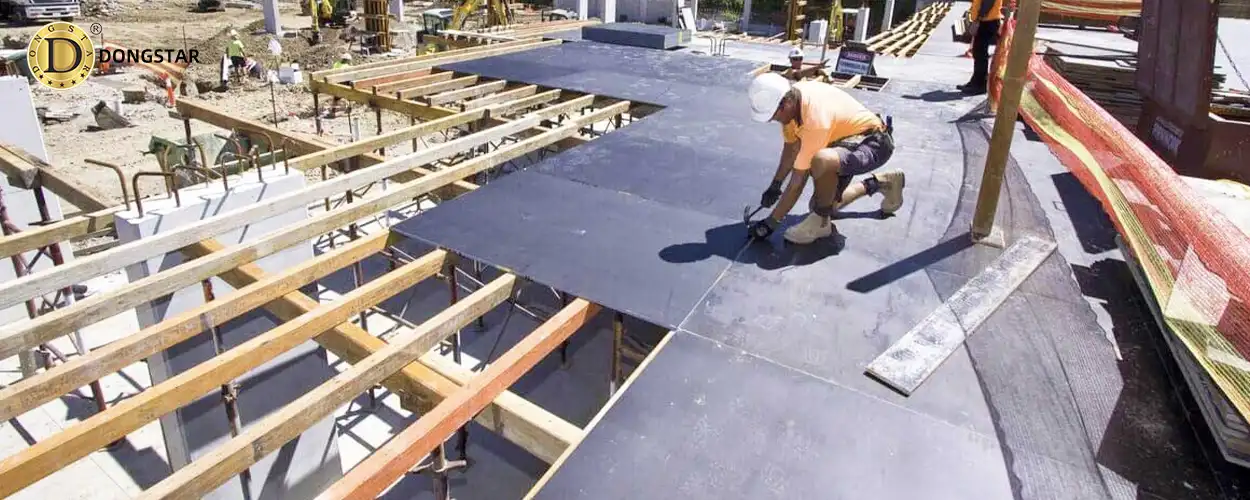
Table of Contents Film faced plywood is a highly durable and versatile construction material, widely appreciated for its protective film overlay on both sides. This coating makes it resistant to moisture, chemicals, and abrasion, extending its usability and efficiency in various construction applications. 1. Concrete Formwork Applications: Concrete Pouring Platforms: Used extensively as a reliable platform for pouring concrete.Reinforced Concrete Structures: Ideal for creating molds for beams, columns, and other structural components.Infrastructure Projects: Utilized in the construction of bridges, tunnels, and highways. Functions: Strength: Provides a strong base that supports the weight of wet concrete.Reusability: Can be used multiple times without significant wear, making it cost-effective.Smooth Finish: Ensures a smooth finish on the concrete surface, reducing the need for additional finishing work.Moisture Resistance: Prevents the plywood from warping or swelling when exposed to wet concrete. Applications: Concrete Pouring Platforms: Used extensively as a reliable platform for pouring concrete.Reinforced Concrete Structures: Ideal for creating molds for beams, columns, and other structural components.Infrastructure Projects: Utilized in the construction of bridges, tunnels, and highways. Functions: Strength: Provides a strong base that supports the weight of wet concrete.Reusability: Can be used multiple times without significant wear, making it cost-effective.Smooth Finish: Ensures a smooth finish on the concrete surface, reducing the need for additional finishing work.Moisture Resistance: Prevents the plywood from warping or swelling when exposed to wet concrete. 2. Walls Applications: Temporary Structures: Used in building temporary partitions or walls in construction sites.Exterior Sheathing: Acts as a durable sheathing material for exterior walls.Formwork for Wall Construction: Essential in forming concrete walls and other vertical structures. Functions: Durability: Resists damage from exposure to the elements, ensuring a long-lasting structure.Ease of Handling: Lightweight and easy to cut, facilitating quick and efficient installation.Consistency: Provides uniformity and precision in the construction of walls.Chemical Resistance: Withstands exposure to construction chemicals and harsh environments. 3. Floors Applications: Subflooring: Used as a sturdy subfloor material in residential and commercial buildings.Temporary Flooring: Ideal for temporary walkways and platforms on construction sites.Concrete Flooring Forms: Acts as a formwork for casting concrete floors. Functions: Strength and Stability: Offers a solid base that can support heavy loads.Smooth Surface: Provides a smooth, level surface for finishing flooring materials.Abrasion Resistance: Protects against wear and tear from foot traffic and equipment.Moisture Resistance: Prevents deterioration from exposure to moisture and damp conditions. 4. Roofs  Applications: Roof Sheathing: Serves as a robust sheathing material for roofing systems.Temporary Roof Covers: Used to create temporary roofs during construction or repair work.Concrete Roof Formwork: Essential in casting concrete roof structures. Functions: Water Resistance: Protects against moisture penetration, ensuring a durable roof structure.Insulation Support: Acts as a base for installing insulation materials.Durability: Withstands environmental stressors such as wind, rain, and UV exposure.Ease of Installation: Lightweight and easy to handle, simplifying the roofing process. Summary  Film faced plywood is an indispensable material in construction, known for its durability and versatility. Its applications span from concrete formwork to walls, floors, and roofs, each benefiting from the material’s strength, moisture resistance, and reusability. These qualities make film faced plywood a preferred choice in both residential and commercial construction projects, ensuring reliable and high-quality results.

Applications and Functions of Film Faced Plywood in Construction Read More »

What is the difference between melamine panels and plastic laminates?

Table of Contents Melamine plywood and plastic laminates are common wooden products commonly used in the production of cabinets, furniture, etc. However, these two materials are slightly different. Plywood manufacturer China Fortuna has its own views on how to distinguish and use them: melamine board Melamine is considered (commonly referred to as) direct or low-pressure laminates (LPL) because it is manufactured at pressures of 300-500 psi. The paper layer is soaked with melamine resin until it is melted and transformed into a solid plastic surface. Melamine board is molded into a layer of plastic laminated board, which is then bonded to particle board or other backing materials to form a durable plastic board that can be used to provide a beautiful surface for products such as Fomika.Melamine board has a variety of textures and natural wood grain, making it an economically efficient and versatile choice to add color and finish to designs and projects. Melamine boards are usually glued onto particle boards for sale, making them durable, scratch resistant, shatterproof, and waterproof. Of course, although the material itself is waterproof, if water enters the particle board below, it will cause the melamine board to warp. In addition, although melamine board is very sturdy, improper installation may damage the particle board and cause it to shatter. Due to the gaps at both ends of the melamine board, edge sealing is required to cover the area. Projects built with melamine can typically last up to five years. plastic laminate Plastic laminates also come in various colors and textures, made from multi-layer kraft paper soaked in plastic resin and placed in a drying room. This material is a high-pressure laminate (HPL) with a pressure of 1400 pounds per square inch during manufacturing, which is more than three times that of melamine board. Plastic laminates have three levels: universal, vertical surface, and post formed, with the latter typically not bonded to wood.Universal laminates are most commonly used on countertops. Vertical laminates are typically used for cabinets or other surfaces that do not directly wear out, while later formed laminates have plasticity and can be used for bending or curling applications. Although the cost of plastic laminates is slightly higher than that of melamine, they are more resistant to moisture, chemicals, heat, and have higher strength. Compared to using melamine for construction, using plastic laminates requires considerable skills and more specialized machinery.

What is the difference between melamine panels and plastic laminates? Read More »

How to Choose and Buy Hardwood Plywood?

Table of Contents High-end furniture, outdoor paneling, decks, and flooring and other wooden products have higher requirements for wood. Therefore, hardwood plywood has become the first choice for such products. How to choose hardwood plywood? Dongstar will tell you: Some of the most popular hardwoods include ash, birch, cherry, mahogany, maple, oak, poplar, teak, and walnut. In addition to the decorative quality of the grain, look for boards that will be as stable as possible during changes in humidity. Still unsure whether hardwood or softwood is best for your project? Our blog post breaks down the advantages of Hardwood Versus Softwood. Hardness Of Hardwood Lumber Hardwoods are significantly more dense than common softwood lumber such as pine and fir. In order to withstand everyday use, most high-end furniture and wood flooring is made of harder wood species. The lumber industry uses the “Janka hardness test” to test and rate common woods for hardness. The test measures the force required to embed a steel ball halfway into a sample of wood. A higher number on the scale indicates a harder and more durable wood. Because hardwood is denser, it has the advantage of taking stain better than more porous softwood. Hardwood Lumber Cuts During the milling process, lumber can be Flat Sawn, Rift Sawn, or Quarter Sawn. Flat Sawn – Least Stable This is the most common, but least stable, cut. The milling process involves simply slicing horizontal layers along the length of the log. Although it is the most affordable option, this type of wood may have problems with twist, cupping, and bowing over time. Instead of an even grain, flat sawn wood has an irregular, wavy pattern. Rift Sawn – More Stable Rift Sawn hardwood is more stable than Flat Sawn hardwood and has an end grain that is slanted between 30 to 60 degrees. Quarter Sawn – Very Stable Quarter sawn planks have a fairly straight grain. Quarter Sawn lumber has a fairly straight 60 to 90-degree vertical grain, with an end grain that runs up and down. Quarter sawn lumber may have ray flecks that add an interesting pattern in many species of hardwood lumber including maple, oak, sycamore, and beech. However, because it’s not possible to use all the wood in a cut of timber with this method, these planks are generally more expensive. Tip for the budget-conscious  Quarter Sawn and Rift Sawn lumber can be found on the edges of a flat sewn plank. It can be cut off, and the less stable center portion used for firewood or other purposes.

How to Choose and Buy Hardwood Plywood? Read More »

Scroll to Top

Submit Now, Get Best Quote Today.​

Get in Touch

Please feel free to leave your information.

Dongstar- Plywood